You’re trying to do the right thing—cooking a modest portion for yourself to avoid waste and, you assume, save energy. It feels efficient. But here’s the counterintuitive truth: that small meal cooking energy waste is often a hidden drain on your utility bill and a surprisingly inefficient use of resources. The problem isn’t the food; it’s that our kitchens are engineered for feasts, not solo suppers. Most ovens, stoves, and even some microwaves operate at fixed power levels designed for larger loads, meaning you’re using nearly the same amount of energy to heat a single chicken breast as you would for a whole roast. This article will help you diagnose where your kitchen habits are leaking energy and provide the simplest, no-tool-required fixes to make your cooking for one genuinely efficient.
Cooking small meals often wastes energy because ovens, stoves, and even some microwaves operate at fixed power levels designed for larger quantities. The key to efficiency is choosing the right-sized appliance and avoiding common habits like over-preheating. Your fix starts with matching your cooking method to the meal size, which can stop the disproportionate energy drain from heating elements and motors.
The Hidden Math of Small-Batch Cooking
It feels logical: less food should mean less energy. But your kitchen appliances don’t work that way. Most are engineered for average family-sized loads, and using them for a single portion throws their efficiency completely out of whack. The core issue is that energy use is often fixed, while your meal size is variable.
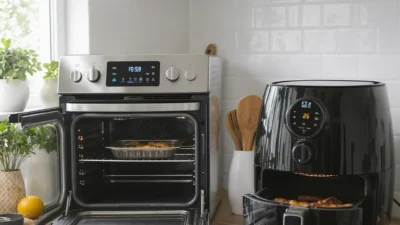
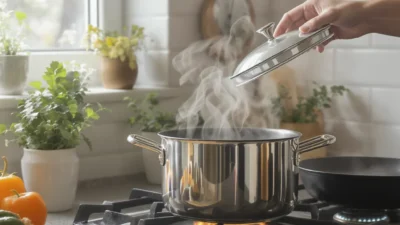
Think of your oven. To reach 400°F, its heating elements draw a certain amount of power, whether it’s full of a casserole or holding one lonely chicken breast. You’re paying to heat a large, empty cavity—a concept called “thermal mass.” The oven works harder to bring all that metal and air up to temperature, a significant energy waste cooking small portions. On the stovetop, a large burner under a small pot wastes heat that simply radiates around the sides of the cookware instead of into your food.
This inefficiency is baked into standards and designs. As the ENERGY STAR program notes, efficiency gains often focus on better insulation or more precise controls for standard use, not for tiny loads. The result is that your attempt at efficient cooking for one person can paradoxically use more energy per ounce of food than cooking for four.
Diagnose Your Kitchen’s Energy Leaks
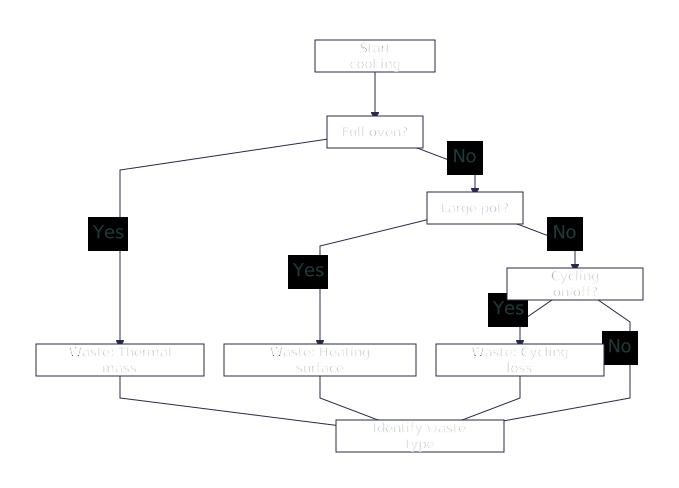
Before you can fix the problem, you need to find it. Use this simple diagnostic flow to pinpoint where your appliance energy loss for one is happening. (Remember, this is for educational self-assessment, not a formal energy audit.)
The Symptom Check
Long preheat times with little inside: If your oven takes 15 minutes to preheat for a single serving, most of that energy is just heating the appliance itself.
Excess steam and noise: A pot boiling violently with just a cup of water means your burner is too powerful for the task, wasting heat as steam.
Frequent cycling: Hear your oven or stovetop element click on and off repeatedly? It’s working hard to maintain a temperature for a tiny thermal mass, which is inefficient.
Feeling the heat: If your kitchen gets noticeably warmer when you cook a small meal, that’s wasted energy escaping into the room instead of into your food.
Appliance-Specific Fixes (No Tools Required)
The fixes are about smarter habits, not buying new gear. Match the tool to the task size to build true low energy cooking habits.
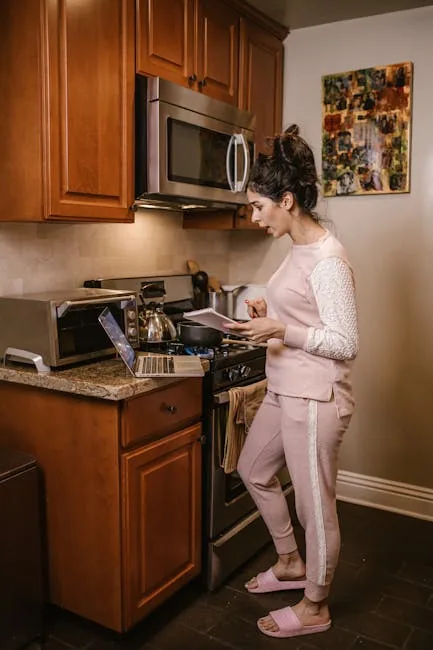
Photo by RDNE Stock project on Pexels
Oven & Stovetop
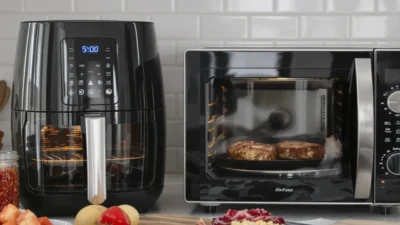
Do: Use a toaster oven, air fryer, or microwave for single servings. If you must use the full oven, batch-cook multiple items at once (e.g., roast veggies and a protein). On the stove, match the pot to the burner size—a small pot on a small burner.
Don’t: Preheat longer than necessary. For many foods, you can put them in as the oven heats. Avoid using the “keep warm” function for extended periods for a small plate of food.
Microwave
Do: Use it for steaming vegetables, reheating leftovers, or “baking” a single potato. It heats the food directly, not the air around it.
Don’t: Assume it’s always the best choice. For crispy textures, a toaster oven might use less total energy than trying to crisp something in a microwave in stages.
Small Appliances (Toaster Oven, Air Fryer, Electric Kettle)
Do: Embrace them! They have smaller cavities and heating elements suited to small loads. Boil only the water you need in a kettle, then transfer it to a pot.
Don’t: Leave them plugged in if they have a digital display that draws “phantom” power. Use a power strip to turn them completely off.
Common Mistakes That Undo Your Savings
Even with the best intentions, a few easy-to-make errors can cancel out your efficiency gains. Watch out for these pitfalls in your cooking for one person energy use routine.
Defaulting to the oven for tiny tasks: Baking a single potato or reheating a slice of pizza in a full-sized oven is often the worst choice. The toaster oven or even a skillet on the stove will be faster and use a fraction of the energy.
Overfilling the kettle: Boiling a full kettle for one cup of tea wastes both energy and time. Fill it only to the minimum line you need.
Running a half-empty dishwasher right after cooking: The urge to clean up is strong, but a dishwasher uses the same hot water and power whether it’s half-full or packed. Wait until you have a full load, or use the “half-load” or “eco” setting if your model has one.
Neglecting to batch-prep components: While cooking a full meal for four might not make sense, cooking a larger batch of a versatile component does. Roast a whole tray of vegetables or cook a cup of quinoa. Use some now and refrigerate or freeze the rest for effortless small batch cooking efficiency later in the week.
Small Shifts, Consistent Savings
The path to reducing appliance energy loss for one isn’t about a complete kitchen overhaul. It’s about awareness and slight adjustments. The goal is to break the autopilot habit of reaching for the biggest appliance and instead choose the right-sized tool for the job.
Start by auditing just one appliance this week. Notice when you use the big oven and ask if the toaster oven could do it. Feel the heat from a too-large burner. These small, conscious choices add up to noticeable savings on your bill and a lighter footprint, proving that low energy cooking habits are truly about working smarter, not harder.