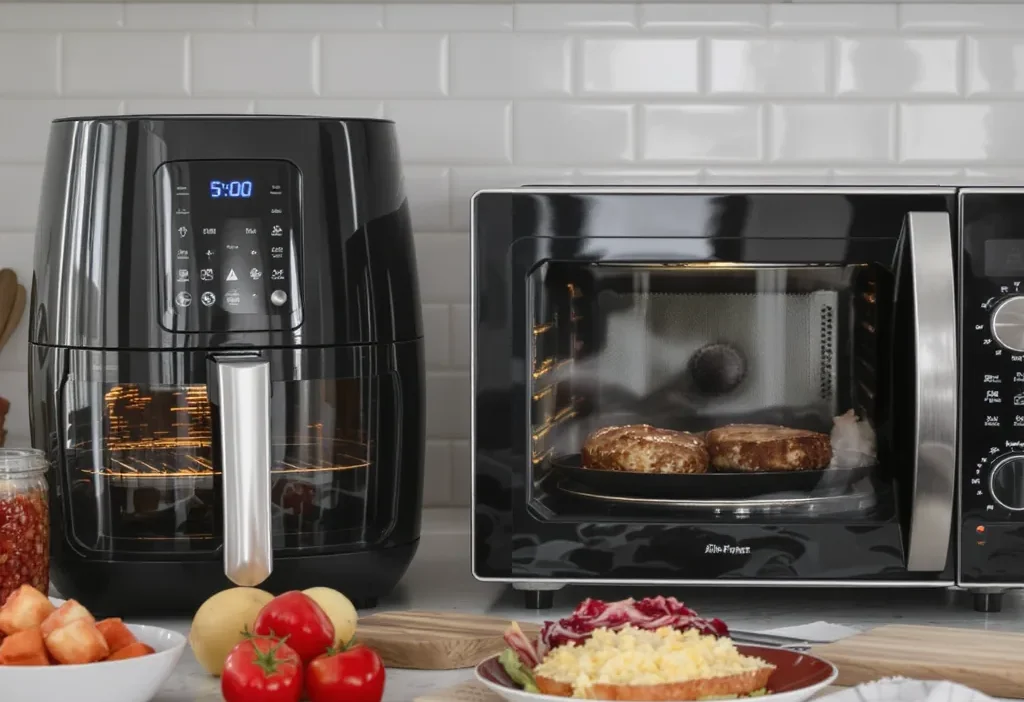
You’re standing in your kitchen, staring at last night’s pizza, a frozen chicken breast, and a bag of fries. You’re hungry, but you’re also watching your electricity bill. Which appliance do you reach for? The familiar hum of the microwave promises speed, the air fryer guarantees crunch, and the oven offers reliable, even heat. This everyday moment of hesitation is at the heart of a practical energy-saving question: how do you navigate the trade-off between speed, quality, and efficiency? Understanding the real-world oven vs air fryer vs microwave energy use isn’t about declaring one appliance the winner; it’s about learning to match the right tool to the task. By making a few smart choices, you can cook what you want while significantly cutting down on wasted power and cost.
The best way to save energy when cooking is to match the appliance to the task. Use your microwave for reheating liquids and small portions, your air fryer for crispy foods and small-batch roasting, and your oven for large meals or baking that requires even, ambient heat. This simple matching strategy can cut your cooking energy use significantly.
The Energy Basics: How Each Appliance Works
To understand which appliance saves the most electricity, you first need to know how they create heat. It’s not just about wattage—it’s about how effectively that power is used to cook your food.
A conventional oven uses radiant heating elements to warm the entire cavity. This is great for even, ambient heat but inefficient for small jobs because you’re paying to heat a large space. An air fryer is essentially a mini convection oven; it uses a heating element and a powerful fan to circulate hot air intensely around a small basket. This focused convection cooks food faster and uses less energy because the space is small. A microwave is different altogether; it uses radiation to excite water molecules in the food, generating heat from the inside out. This is incredibly efficient for heating the food itself but doesn’t create browning or crispiness.
The key variables for appliance power consumption are time, temperature, and space. Heating a large oven to 400°F for 30 minutes uses more energy than an air fryer reaching the same temperature in 3 minutes for a small batch. For a deeper dive into typical wattage ranges, resources like Energy Star’s cooking appliance guide can be helpful.
Head-to-Head: A Quick-Reference Energy Comparison
This table breaks down the core differences at a glance, giving you a practical framework for your appliance energy comparison cooking decisions. The estimated costs are illustrative, based on a national average electricity rate, but the relative efficiency is clear.
| Conventional Oven | Air Fryer | Microwave | |
|---|---|---|---|
| Heating Method | Radiant (elements heat air) | Focused Convection (fan + element) | Radiation (excites water molecules) |
| Avg. Wattage | 2,000 – 5,000 W | 1,200 – 1,800 W | 600 – 1,200 W |
| Best For (Key Tasks) | Large roasts, baked goods, family casseroles | Crispy fries, roasted veggies for 1-2, reheating fried foods | Reheating liquids/plates, defrosting, steaming vegetables |
| Estimated Cost per 10-min Use | ~$0.08 – $0.20 | ~$0.04 – $0.06 | ~$0.02 – $0.04 |
| Pre-heat Time | 10-15 minutes | 3-5 minutes | None |
| Ideal Batch Size | Large | Small to Medium | Small |
Cost illustrative. Highlights the “small space, focused heat” advantage of the air fryer versus the “large space” energy cost of the oven.
The Speed Path: When Quick Wins Matter Most
You’re hungry, you’re in a rush, and you want to use as little energy as possible. This is where matching the appliance to the task pays off instantly. For small, quick jobs, heating a large oven is almost always an energy loss.
Reach for the Microwave
Its sheer speed makes it the king of efficiency for specific tasks. Because it heats the food directly, not the air around it, it uses less power for a shorter time. This is a top energy efficient cooking method for reheating a single bowl of soup, steaming a portion of broccoli, or quickly defrosting a chicken breast. The energy saved versus preheating an oven is substantial.
Choose the Air Fryer
When you want crispy results fast, the air fryer beats the oven. Its quick preheat and concentrated hot air mean you can have crispy fries for one or perfectly roasted Brussels sprouts in half the time of a full oven cycle. For these small-batch, crispy-outcome tasks, it’s the clear efficiency winner.
The Quality Path: When Results Trump the Clock
Sometimes, the perfect texture or even cooking is non-negotiable. On these occasions, using more energy is the justified trade-off for a superior result. Understanding this helps you avoid inefficiently using the “wrong” appliance for a quality-focused job.
The Oven’s Domain
For baking a loaf of sourdough, roasting a whole chicken to juicy perfection, or making a large, bubbling lasagna for the family, the oven’s even, ambient heat is essential. The larger cavity and steady temperature are what these tasks require. While it uses more energy, it’s the correct tool, making the cooking appliance energy costs worthwhile for the outcome.
Air Fryer as a Quality Tool
Don’t think of the air fryer as just for speed. For achieving deeply caramelized roasted vegetables or incredibly crispy chicken wings without a vat of oil, it can deliver “oven-quality” results for small batches in less time, which still translates to energy savings over using the big oven.
Your Decision Guide: Key Questions to Ask
Instead of memorizing rules, run through this quick mental checklist before you cook. It synthesizes the speed and quality paths into a simple filter for choosing the most energy efficient cooking appliance for your immediate need.
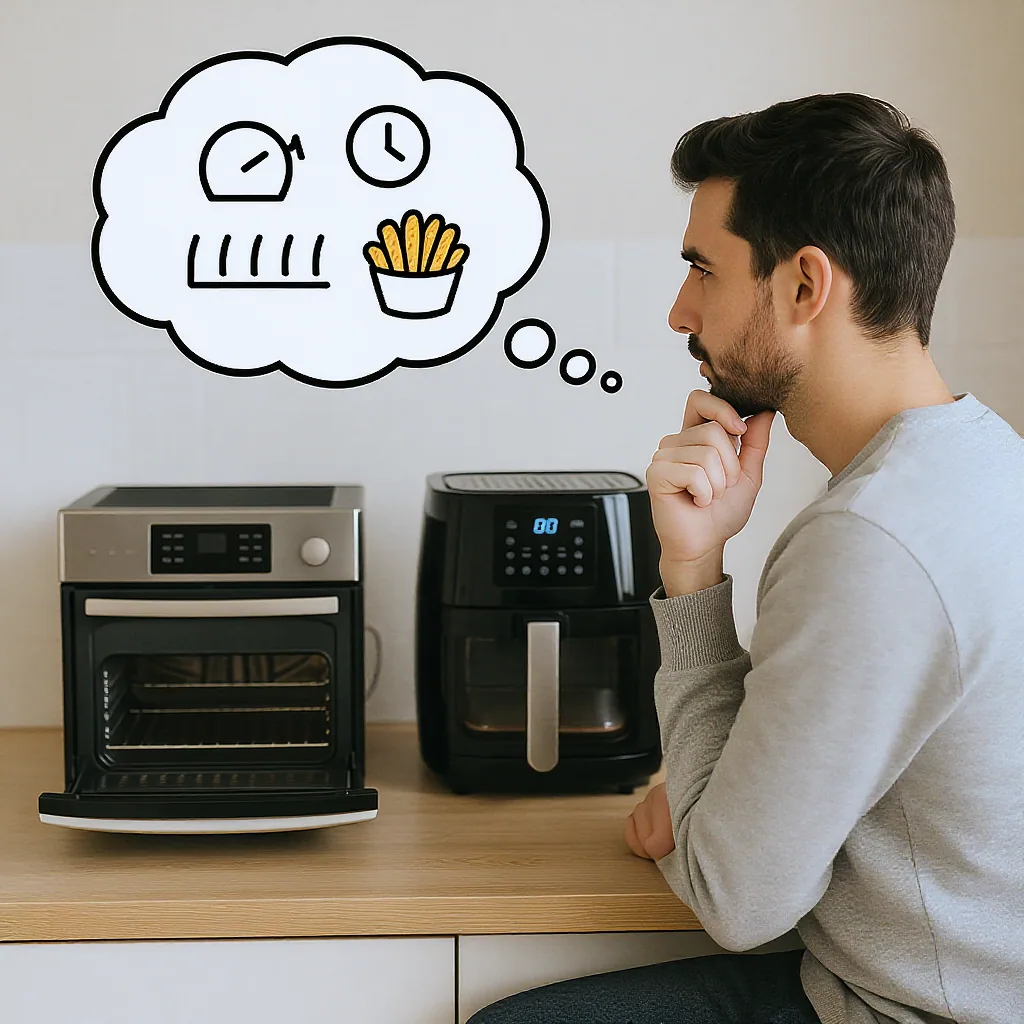
- How much food am I making? Small batch (1-2 servings)? Lean toward microwave or air fryer. Cooking for a family or meal prepping? The oven’s capacity becomes efficient.
- What texture do I want? Hot and steamy (soup, leftovers)? Microwave. Crispy and browned (fries, wings, veggies)? Air fryer. Evenly baked or roasted (bread, casserole, whole chicken)? Oven.
- How much time do I have? In a big hurry? The microwave’s instant heat or the air fryer’s short preheat will save time and energy compared to a full oven cycle.
Smart Choices, Not New Gadgets
So, which appliance wins the energy showdown? The truth is, your kitchen wins when you use all three strategically. There’s no single “best” appliance for every task. The real energy saver isn’t necessarily buying a new gadget—it’s the informed choice you make each time you cook.
By matching the tool to the job based on portion size, desired texture, and your time, you actively cut down on waste. Keep this simple trade-off in mind: speed and efficiency often come from the microwave or air fryer, while the oven earns its keep for quality results on a larger scale. Your electricity bill—and your dinner—will thank you.
Q: Does using an air fryer really save that much money compared to an oven?
A: For small to medium batches, yes, significantly. Because an air fryer heats a tiny space quickly and cooks food faster, it uses less total energy. You save on both the shorter cooking time and by not wasting energy heating a large oven cavity for a small portion of fries or veggies.
Q: Is it bad to use the microwave for everything to save energy?
A: It’s not “bad,” but you’ll sacrifice texture and quality. Microwaves excel at reheating and cooking with moisture but can’t brown or crisp food. Using it for everything is an energy-efficient choice but may lead to soggy fries or rubbery chicken. It’s about balancing efficiency with the result you want.
Q: Should I unplug these appliances when not in use to save phantom energy?
A: The phantom load (or standby power) from modern ovens, air fryers, and microwaves is typically very low—often just a watt or two to power a clock or digital display. While unplugging is a good habit for true energy vampires like old cable boxes, the savings here are minimal. Your focus is better spent on choosing the right appliance when cooking.