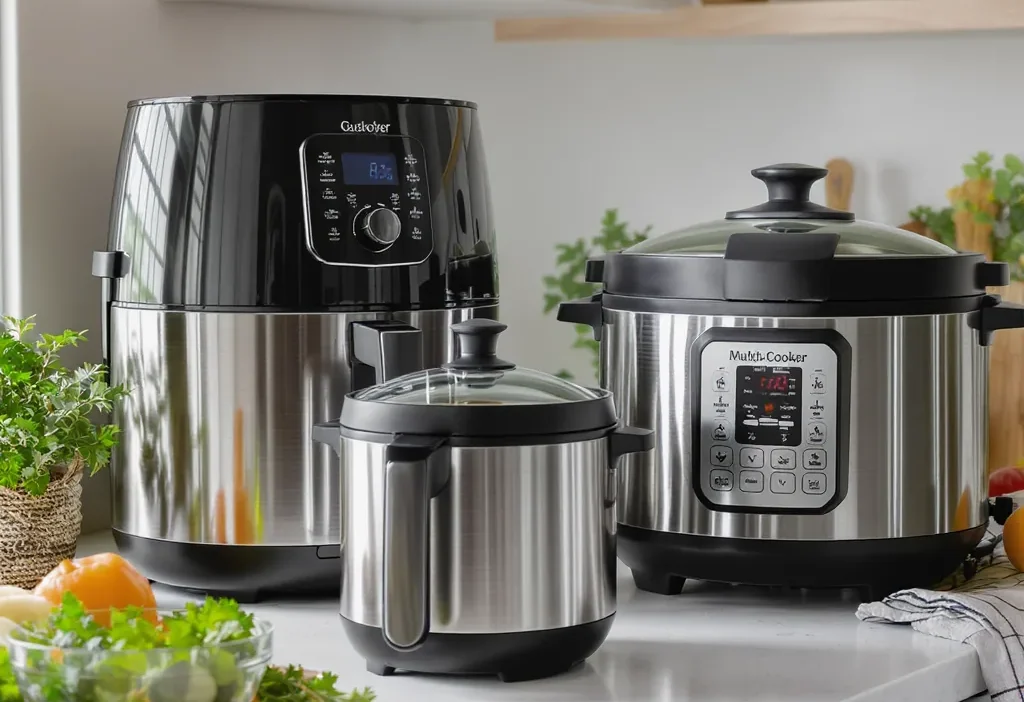
Think of your kitchen’s energy use like a leaky faucet. It’s not the single, gushing flow of a major appliance that drains your wallet and resources the most; it’s the constant, small drips of inefficient habits that add up over weeks and months. You bought your air fryer and multicooker promising convenience and, perhaps, savings. But are you actually using them in the most energy-efficient way, or are you falling for common myths that let those precious watts slip away? This guide cuts through the marketing hype to deliver a myth-busting journey. We’ll separate the genuine, physics-backed air fryer and multicooker energy-saving cooking techniques from the well-intentioned mistakes, giving you practical strategies to reduce your kitchen’s footprint without sacrificing the speed and results you love.
Yes, air fryers and multicookers can be significant energy savers compared to traditional ovens and stovetops, but only when used strategically. Their efficiency comes from cooking food faster and in a smaller, well-insulated space, not just from having a lower wattage. To maximize savings, focus on batch cooking, using residual heat, and avoiding ‘preheating’ for tasks that don’t require it. Understanding these unique efficiency profiles is the key to unlocking real reductions in your electricity use.
The Great Appliance Myth: Are They Really Energy Savers?
Let’s tackle the biggest misconception head-on: the idea that simply owning an air fryer or multicooker automatically slashes your energy bill. The truth is more nuanced. These appliances are incredibly efficient tools, but their energy-saving potential is unlocked by how you use them, not just by their existence on your counter.
The core physics is simple: total energy consumption is measured in kilowatt-hours (kWh), which is wattage multiplied by time. A common myth is that a high-wattage appliance (like a 1500W air fryer) must be a power hog. But if it cooks your fries in 12 minutes while your 3000W oven would take 45, the math is clear: the air fryer uses significantly less total energy. The savings come from a combination of speed, smaller cooking space, and superior insulation (in the case of a pressure cooker), which drastically reduces heat loss.
This makes them prime examples of efficient countertop cooking appliances. They are designed to do a specific job with minimal wasted energy, unlike a large oven that heats a cavernous space for a single tray of food. Understanding this principle—that efficiency is about total energy use, not peak power—is the foundation for all the strategic methods that follow.
Air Fryer Efficiency: Beyond Just ‘Faster than an Oven’
Knowing an air fryer is faster is just the start. To maximize its energy-efficient air fryer cooking potential, you need to optimize its operation. The key is working with its convection system, which relies on hot air circulating rapidly.
Do: Batch Cook with Strategy
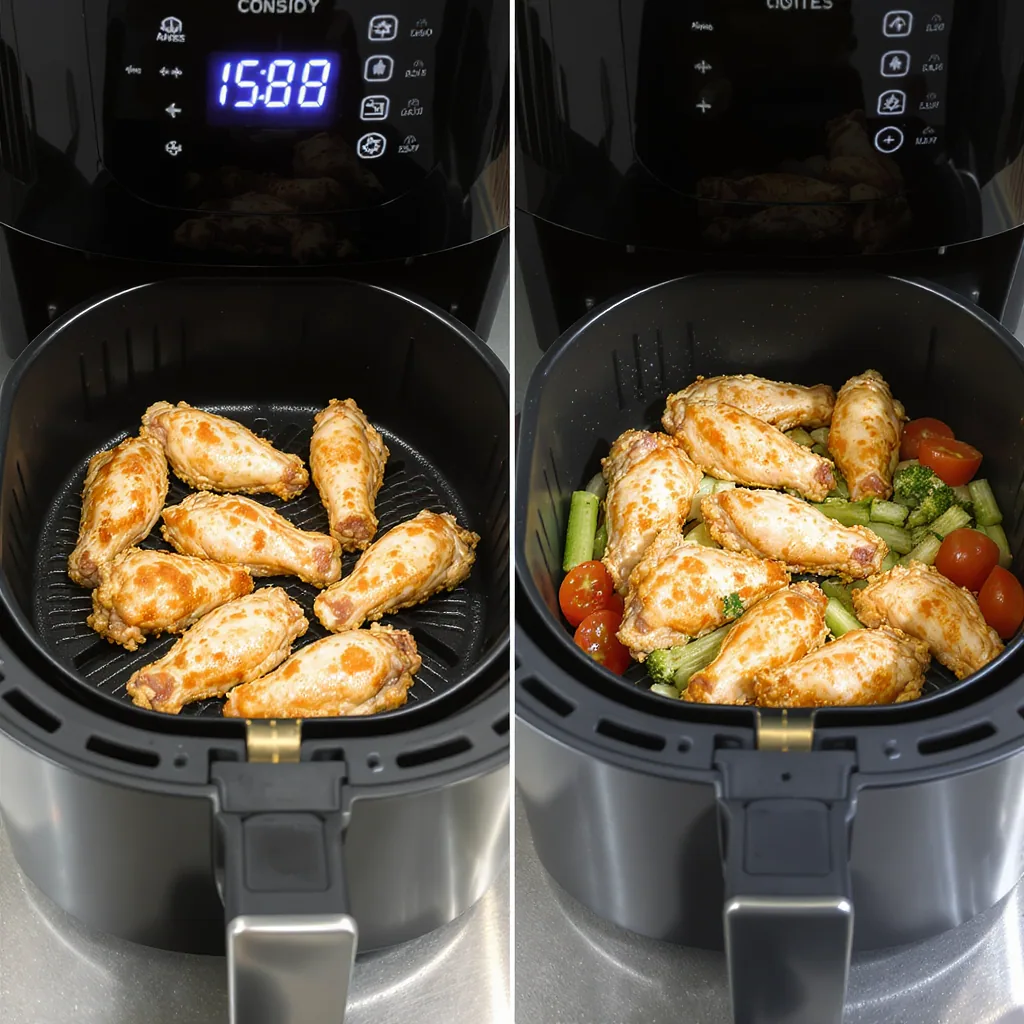
Don’t just cook one thing at a time. Plan meals where you can cook components with similar temperatures sequentially. For example, roast vegetables at 400°F, then use the residual heat for chicken tenders. This avoids multiple full preheat cycles. Just ensure you don’t overcrowd a single batch, as blocking airflow forces the appliance to work harder and longer.
Don’t: Always Preheat
For most foods (fresh veggies, leftovers, most proteins), you can skip preheating. Place the food in a cold basket, start the cycle, and you’ll save those 3-5 minutes of energy use. The main exceptions are frozen foods or items with a wet batter, where a hot start is needed for proper texture.
Do: Shake, Don’t Add Time
Instead of adding extra minutes because one side isn’t crispy, pause the cook and shake the basket. This simple action promotes even cooking far more efficiently than extending the timer, ensuring you use only the energy you absolutely need.
Multicooker Mastery: Pressure, Slow, and Sauté Modes Decoded
Your multicooker is a Swiss Army knife, but not all blades are equally efficient for every task. To achieve genuine pressure cooker energy saving, you must match the function to the job.
Pressure Cooking is the undisputed champion for speed and efficiency. By creating a sealed, high-pressure environment, it raises the boiling point of water, cooking food incredibly fast while using minimal energy to maintain heat. This is ideal for tough cuts of meat, beans from dry, and soups. The real energy saving trick here is using the “Natural Release” method when possible, allowing the pressure to drop without using electricity, instead of the quick-release valve.
Sauté Mode is your efficient browning tool. Using it directly in the pot (instead of a separate skillet) saves energy by utilizing the appliance’s built-in heater and avoids cleaning another pan. However, use it judiciously—just until aromatics are soft or meat is seared—then switch to pressure.
Slow Cook Mode seems counterintuitive, but for all-day, unattended cooking, it can be more efficient than leaving a large oven on for 8 hours. It uses very low, consistent wattage in a well-insulated pot. The key is to only use it when the “set and forget” convenience outweighs the faster pressure cook option.
The Hidden Energy Drains: Common Mistakes That Waste Watts
Even with the best intentions, small habits can erode your savings. Here are the subtle mistakes to avoid.
1. The Eternal “Keep Warm” Function: Your multicooker’s “Keep Warm” can use a surprising amount of power over hours. If the food is done and you’re ready to eat, turn it off. Transfer leftovers to storage containers instead of letting the appliance maintain heat all night.
2. Ignoring Residual Heat: As mentioned, not using natural pressure release wastes free cooking time. Similarly, for foods in the air fryer, turning it off a minute early and letting the existing heat finish the job can shave off energy use.
3. Peeking in the Air Fryer: Every time you open the basket, you release a burst of hot air. The appliance then has to work to regain that lost temperature, extending cook time. Trust the timer and visual cues through the window.
4. Using the Wrong Size Appliance: Firing up a 6-quart multicooker to reheat a single cup of soup is overkill. For very small jobs, a microwave might be the more efficient countertop cooking choice. Match the appliance size to the task.
Strategic Kitchen Synergy: Pairing Appliances for Maximum Savings
The ultimate goal is to view your kitchen as an integrated system. By pairing your air fryer and multicooker strategically, you can cook entire meals without ever turning on the oven, which is often the biggest energy drain in the kitchen.
Scenario: A Weeknight Chicken Dinner. Use your multicooker to pressure cook chicken breasts or thighs (which keeps them juicy) with a little broth. While that’s happening (taking about 10 minutes of active energy use), use the air fryer to roast broccoli and crisp some potato slices. You’ve prepared a complete, varied meal using two focused, efficient appliances simultaneously, in less time and with less total energy than using the oven for any part of it.
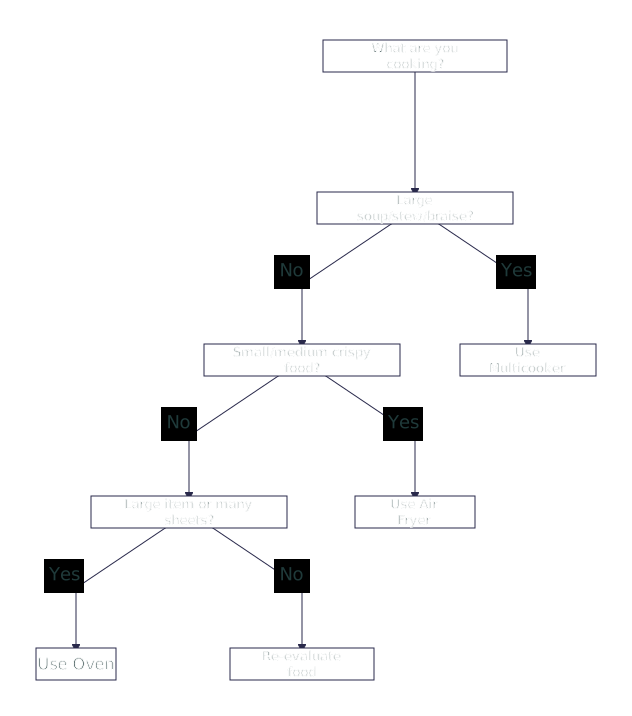
This synergy extends to other appliances, too. Use a microwave to parcook potatoes before finishing them in the air fryer for extra crispiness, reducing the air fryer’s runtime. The principle is to delegate each task to the appliance that does it with the least wasted heat and time.
Your Energy-Saving Cooking Action Plan
The journey from myth to mastery ends with action. Here is your simple, immediate plan to start saving electricity with your pressure cooker and air fryer tonight.
- Audit Your Preheat Habit: For your next three air fryer meals, try skipping the preheat. Note if you see any difference in results for foods like veggies or reheated pizza.
- Embrace One-Pot Pressure: Plan one meal this week that uses the pressure function of your multicooker from start to finish, using sauté mode first if needed.
- Try a Natural Release: Next time you pressure cook, allow for a 10-15 minute natural pressure release before turning the valve. Taste the difference in tenderness and note the energy saved.
- Cook in Sequence: Instead of separate meals, use your air fryer to cook two components of one dinner back-to-back.
- Unplug or Switch Off: Get in the habit of turning the appliance off at the plug when not in use for extended periods to eliminate phantom load.
Pro-Level Move: The Weekly Power Hour
Dedicate one hour to batch-cooking components with both appliances:
- Pressure cook a batch of beans or shredded chicken for the week.
- Simultaneously, air fry a large batch of roasted vegetables or chickpeas.
- This upfront energy investment prevents less-efficient, piecemeal cooking daily.
Turning Knowledge into Kilowatt Savings
The real power of efficient countertop cooking appliances isn’t just in their engineering—it’s in your hands. By moving beyond the marketing hype and adopting these strategic habits, you transform these devices from convenient gadgets into genuine tools for reducing your kitchen’s energy footprint. The savings on your bill are a direct result of informed choices: choosing pressure over slow cooking when speed matters, leveraging residual heat, and pairing appliances intelligently.
Start small. Pick just one action from the plan above—perhaps skipping the air fryer preheat or using natural release—and implement it with your next meal. That single change is the first step in a more efficient cooking routine that saves money and energy without sacrificing the convenience you love. Your journey to energy-saving cooking begins not with a new purchase, but with a new habit.
To maximize energy savings with your air fryer and multicooker, remember these core principles:
- Efficiency is About Total Energy, Not Wattage: A faster cook time in a smaller space almost always beats a slower, larger appliance, even if the smaller one has a high wattage.
- Strategic Use Beats Default Settings: Skip unnecessary preheats, use natural pressure release, and avoid prolonged “keep warm” functions to prevent wasted watts.
- Synergy Unlocks the Highest Savings: Use your air fryer and multicooker together to cook complete meals without the oven, delegating each task to the most efficient tool.
- Batch Cooking is a Power Saver: Cooking components in sequence or in dedicated weekly batches is far more efficient than daily, piecemeal cooking.
- Mind the Hidden Drains: Peeking, using the wrong-sized appliance, and ignoring residual heat quietly negate the inherent efficiency of these devices.
Q: Does preheating an air fryer use a lot of extra energy?
A: It uses the same energy per minute as regular cooking. The waste comes from unnecessary preheating. For most foods (reheating, fresh veggies, proteins), you can start cooking immediately, saving those 3-5 minutes of energy use. Only preheat for frozen items or wet batters for optimal texture.
Q: Is it more energy-efficient to use the slow cooker or pressure cooker function?
A: For the same recipe, the pressure cooker is almost always more energy-efficient because it cooks food in a fraction of the time. The slow cooker uses low power over many hours, which can be efficient for all-day, unattended cooking compared to an oven, but it will use more total energy than pressure cooking for the same dish.
Q: Can I save energy by unplugging my air fryer/multicooker when not in use?
A: Yes. Like most modern electronics, these appliances draw a small amount of standby power (a “phantom load”) when plugged in but turned off. Unplugging them or using a power strip you switch off can eliminate this drain, saving a small but steady amount of electricity over time.
Q: How does the energy use of an air fryer compare to a microwave for reheating?
A: For reheating most leftovers, a microwave is typically the most energy-efficient appliance because it heats food directly and rapidly with minimal heat loss. An air fryer is better for restoring crispiness (like fries or pizza) but uses more energy as it heats the air and the food. Choose based on desired texture: speed/moisture (microwave) vs. crispness (air fryer).