If you’re trying to lower your electricity bill, your first instinct might be to use your stove less. But here’s the counterintuitive truth: the most energy-efficient cooking device in your kitchen is likely your microwave. This isn’t about convenience; it’s basic physics. While a traditional oven must heat a large cavity of air and heavy metal walls to indirectly warm your food—losing significant energy in the process—a microwave uses electromagnetic waves to excite water molecules directly inside the food itself. This direct energy-to-heat transfer is remarkably efficient, using less total wattage over a dramatically shorter time. This guide to microwave and small appliance energy-saving cooking moves beyond that simple revelation to provide a complete, strategic framework. We’ll merge scientific understanding with practical habits, showing you how to leverage not just your microwave, but your toaster oven, air fryer, pressure cooker, and more to slash energy consumption without sacrificing the quality of your meals.
The key to microwave and small appliance energy-saving cooking is to use the most thermally efficient tool for the job. For reheating, steaming vegetables, or cooking small, moist items, your microwave is the undisputed champion. For single servings of roasted or baked foods, a toaster oven or air fryer beats heating a large conventional oven. For large batches of soups, stews, or beans, a modern pressure cooker is your most efficient option. The goal is to match the appliance’s size and heating method directly to the task, avoiding the massive energy waste of using oversized, indirect heating appliances for small jobs.
The Physics of Kitchen Efficiency: Watts, Heat, and Time
To save energy effectively, you need to understand a simple principle: thermal efficiency. This is how well an appliance converts the electricity it draws (watts) into heat that actually cooks your food, rather than losing it to the surrounding air or appliance body. The path that energy takes determines everything.
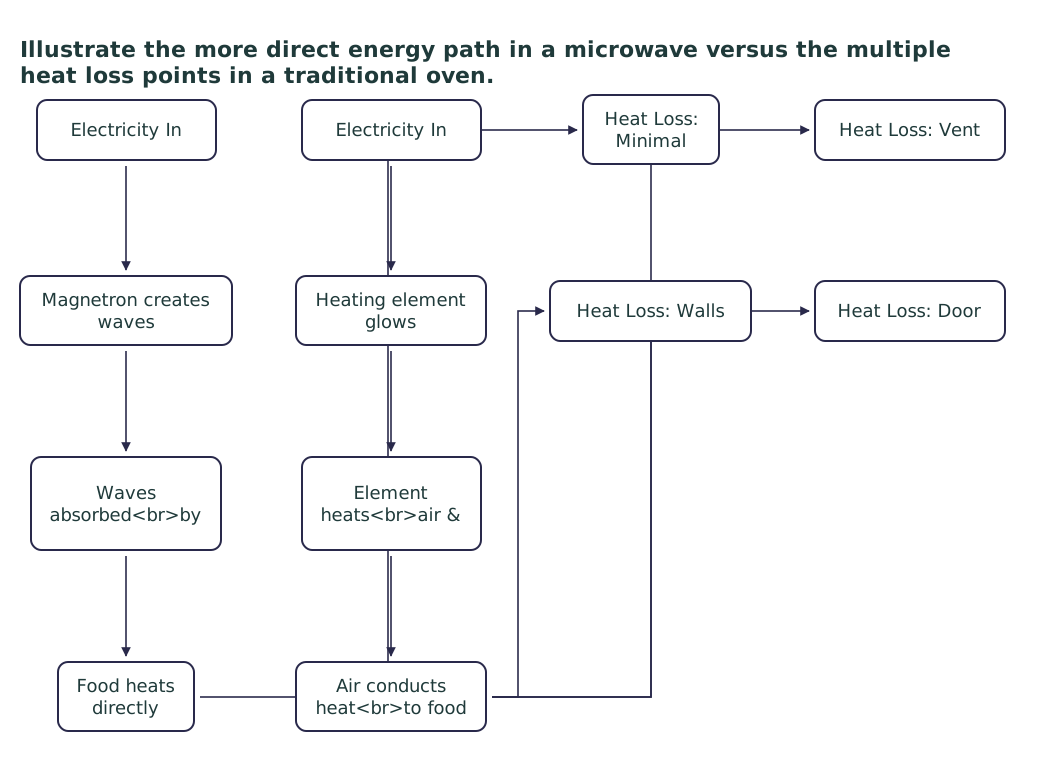
Direct vs. Indirect Heating
A microwave oven excels in thermal efficiency for one reason: direct energy transfer. Its magnetron generates microwaves that penetrate food and cause water molecules to vibrate rapidly, creating heat from the inside out. This process bypasses the need to heat air or cookware first, resulting in minimal wasted energy.
Conversely, a conventional oven or stovetop uses indirect heating. An element heats up, warming the surrounding air and metal walls (thermal mass). This hot air then slowly conducts heat to your food’s surface, which gradually moves inward. At every step—through the oven walls, out the vent, and each time you open the door—heat escapes, requiring more energy to maintain temperature.
This fundamental difference is why microwave cooking efficiency is so high for tasks it can handle, like reheating a plate of food or steaming vegetables. The appliance uses less total energy (watt-hours) because it works faster and loses less heat to its environment.
Appliance Showdown: Energy Use Per Common Task
Knowing the physics is one thing; applying it is another. The most impactful step in energy-saving cooking with microwaves and other tools is to consciously match the appliance to the task. The table below provides a general guide, with “Lowest” indicating the most energy-efficient choice for that specific job.
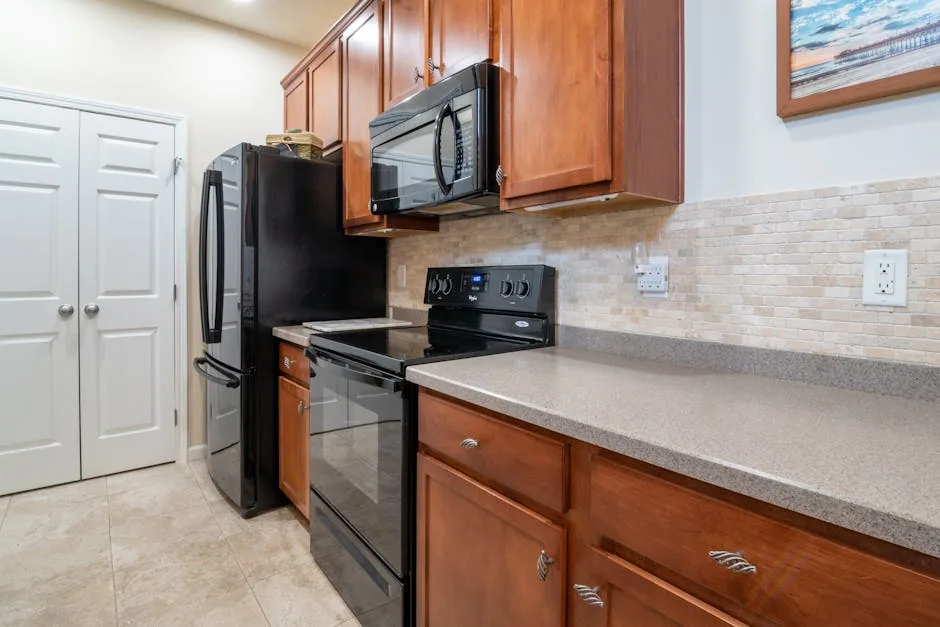
Photo by Curtis Adams on Pexels
| Common Task | Microwave | Toaster Oven / Air Fryer | Electric Stovetop | Conventional Oven | Electric Kettle |
|---|---|---|---|---|---|
| Boil 1 cup of water | Medium | N/A | High | Very High | Lowest |
| Reheat leftovers (1 plate) | Lowest | Medium | High | Very High | N/A |
| “Bake” one potato | Lowest (pierced) | Medium-Low | Medium (boil/steam) | Very High | N/A |
| Cook 2 chicken breasts | Medium (with care) | Lowest | Medium | High | N/A |
| Toast 2 slices of bread | Poor (soggy) | Lowest | N/A | Very High | N/A |
| Small batch roasting (e.g., veggies for one) | Medium (steamed texture) | Lowest | Medium | Very High | N/A |
Quick Decision Guide
- Moist & Small: Microwave or electric kettle wins (reheating, boiling water, steaming).
- Dry & Crispy/Single Serve: Toaster oven or air fryer beats a full oven every time.
- Large Batch & Long Cook: A full oven can be efficient if packed, but a slow cooker or pressure cooker may be better for soups and stews.
- Absolute Avoid: Using a large oven for a tiny task is the biggest energy drain.
Mastering Your Microwave: Beyond Reheating
To unlock true microwave cooking efficiency, move past the “reheat” button. These techniques leverage its direct-heating physics for actual cooking while conserving energy.
Do: Harness the Power of Steam
Place vegetables or fish in a microwave-safe dish with a tablespoon of water. Cover with a vented lid or a microwave-safe plate slightly ajar. The microwaves excite the water molecules, creating a hot steam environment that cooks food quickly and evenly, preserving nutrients and using minimal energy compared to boiling water on the stove.
Don’t: Blast Frozen Solids on High
Defrosting on full power causes the outer edges to cook while the center remains frozen. This wastes energy as you’ll likely need to continue cooking unevenly. Instead, use the defrost setting (typically 30% power) or manually set power to 30-50%. This allows heat to conduct slowly to the center, using less peak power for a better, more energy-conscious result.
Do: Use Lower Power Settings Strategically
The lower power setting (often 50% or 70%) isn’t just a pause between full-power bursts. It allows for gentle, even cooking of delicate items like sauces, custards, or melting chocolate without hot spots or boiling over. This prevents wasted food and the need to redo a task, saving energy in the long run.
For safe practices on materials, refer to guidelines from the U.S. Food and Drug Administration.
The Supporting Cast: Optimizing Toaster Ovens, Air Fryers, and More
Your other energy efficient small kitchen appliances are champions of the “small cavity” advantage. Heating a 0.5 cubic foot toaster oven uses far less energy than heating a 5 cubic foot conventional oven.
Skip the Preheating (Sometimes)
For many tasks like melting cheese on a sandwich or reheating a slice of pizza, preheating a toaster oven or air fryer is unnecessary. The cooking time is so short that the appliance reaches temperature nearly as fast with the food inside. You save the energy used during that empty preheat cycle.
Maximize Airflow
In an air fryer or convection toaster oven, don’t overcrowd the basket or tray. Proper air circulation is what creates crispy results quickly. Blocking it forces the appliance to work longer, using more energy. Cook in batches if needed.
Consider a typical weeknight: you’re making dinner for one and want roasted broccoli and a salmon fillet. Firing up the full oven for 20 minutes of preheat and 15 minutes of cooking is a massive energy sink. Using a toaster oven on the convection setting, you can have the same meal ready in about 15 minutes total, with no preheat, using a fraction of the electricity.
Don’t Overlook the Slow and Fast Specialists
A slow cooker is incredibly efficient for tough cuts of meat and stews because it uses very low wattage over a long period, with excellent heat retention. An electric pressure cooker, like an Instant Pot, is a star for speed and efficiency. It traps steam and pressure, raising the boiling point of water and cooking food like dried beans or pot roast in a fraction of the time of other methods, using less total energy.
The Hidden Energy Drains: Standby Power and Habit Loops
Beyond choosing the right appliance, inefficiency lurks in passive drains and automatic habits. Tackling these can compound your savings.
Phantom Loads
Many appliances—especially those with digital clocks, touchpads, or instant-on features—draw a small amount of power 24/7 when plugged in. This “phantom load” or “vampire power” can add up. A microwave with a clock might use 3-5 watts just sitting there. The fix? Plug clusters of countertop appliances (microwave, coffee maker, toaster) into a smart power strip and turn it off when not in use.
The Preheating Ritual
We preheat ovens by rote, but it’s often wasteful. For casseroles or large roasts that cook for over an hour, preheating is necessary for timing. For many baked goods, yes. But for reheating or roasting vegetables? As noted, skip it in your toaster oven. For a conventional oven, if the dish goes in for 45+ minutes, the impact of a 15-minute preheat is diluted. Be intentional.
The Peeking Problem
Every time you open a conventional oven door, the temperature can drop 25°F or more. The oven then must expend significant energy to recover. Use the light and window instead. This principle of heat loss also applies to lifting the lid on a slow cooker or opening the air fryer basket mid-cycle—it extends cooking time and energy use.
Common Energy-Saving Mistakes (And How to Fix Them)
Even with good intentions, it’s easy to fall into these common traps that undermine efficient small kitchen appliance use.
The Mistake: Using a large oven to bake a single potato or toast a bagel.
The Energy Cost: Extremely high. You’re using 3,000-5,000 watts to heat 5 cubic feet of space for a 4-ounce item.
The Fix: Use the microwave for the potato (pierce it first) or a toaster oven for the bagel.
The Mistake: Running a half-empty dishwasher or underfilling a slow cooker.
The Energy Cost: You’re using nearly the same energy and water for a partial load, drastically reducing efficiency per item.
The Fix: Wait for full loads, or use the half-load/energy-saver setting if your dishwasher has one. For a slow cooker, it should be at least half full for best results.
The Mistake: Using the wrong cookware.
The Energy Cost: On a stovetop, a warped pan or a small pan on a large burner loses heat to the air. In an oven, dark, non-reflective pans absorb more heat, potentially causing over-cooking and wasted energy from opening the door to check.
The Fix: Match pan size to burner size. Use flat-bottomed, light-colored or shiny baking sheets for even browning.
The Mistake: Ignoring maintenance.
The Energy Cost: A toaster oven with a thick layer of grease or an air fryer basket with clogged holes impedes airflow and heat transfer, increasing cooking time. A microwave with a damaged door seal can leak energy.
The Fix: Clean appliance interiors and seals regularly. A well-maintained appliance operates at peak efficiency.
Strategic Kitchen Planning: From Shopping to Daily Routines
True mastery of energy-saving cooking with microwaves and other appliances involves forward-thinking strategy, turning efficient choices into a seamless routine.
Smart Shopping for Efficiency
When buying new energy efficient small kitchen appliances, look beyond features. Check the wattage (lower isn’t always better—it can mean longer cook times) and size. Will a 4-slice toaster oven suit your needs better than a 2-slice? An appropriately sized appliance avoids waste. Features like convection fans (in ovens) and programmable timers can also contribute to overall efficiency by cooking faster or shutting off automatically.
Kitchen Layout for Flow
Place your most-used efficient appliances—microwave, toaster oven, electric kettle—in easily accessible locations. If your microwave is tucked away, you’re less likely to use it over the stove. Creating a dedicated “efficiency station” can mentally reinforce the habit of reaching for the right tool first.
The Batch-Cooking Mindset
Plan your weekly cooking to maximize the use of your most efficient appliances. Use your microwave to steam a large batch of rice or quinoa for the week. Use your pressure cooker to make a big pot of beans or shredded chicken. This leverages the appliance’s efficiency at scale, saving you from multiple, less-efficient cooking sessions later.
Your Weekly Energy-Saving Checklist
- Audit: For one week, consciously ask “Can I use a smaller appliance?” for every cooking task.
- Prep: Chop vegetables for the week and store them for quick microwave steaming or air frying.
- Maintain: Wipe down one appliance interior to ensure optimal performance.
- Unplug: Use a power strip to fully disconnect your appliance cluster one night.
Your One-Week Efficiency Challenge
The science is clear, and the tactics are practical. The final step is action. We challenge you to a one-week “appliance audit.” Your mission: consciously choose your microwave, toaster oven, or air fryer over your conventional stove or oven for at least three common tasks. Reheat yesterday’s pasta in the microwave, roast your broccoli in the toaster oven, and boil water for tea in the kettle.
Track the subtle shift in your routine and notice the lack of a giant heat plume from your oven. This isn’t about deprivation; it’s about working smarter with the physics already in your kitchen. The cumulative impact of these informed choices—on your bill and your carbon footprint—is real and entirely within your control. Start with your next meal.
To master energy-saving cooking with small appliances, internalize these four core principles:
- Match the Tool to the Task: Use the smallest, most thermally efficient appliance for the job. Your microwave and electric kettle are champions for moist foods and liquids, while toaster ovens and air fryers excel at small-batch roasting and crisping.
- Embrace Direct Heating: Favor methods that transfer energy directly to food (microwave, pressure cooking) over those that must heat air and cavities first, as they are inherently faster and lose less energy.
- Eliminate Hidden Waste: Be ruthless about phantom loads, unnecessary preheating, and heat loss from peeking. These habitual drains quietly undermine your efficiency efforts.
- Maintain for Performance: Clean appliance interiors, check seals, and use appropriate cookware. A well-kept appliance operates at its designed efficiency, saving you energy and time.
Choose one principle to implement today and build from there.
Q: Does using the microwave’s lower power setting actually save energy?
A: Yes, but not in the way you might think. The lower setting doesn’t reduce peak wattage; it cycles the magnetron on and off. The energy saving comes from preventing overcooking, hot spots, and food waste. For tasks like defrosting or simmering sauces, it uses energy more effectively, often completing the job with less total power than a failed full-power attempt.
Q: Is it more energy-efficient to boil water in an electric kettle or a microwave?
A: For boiling water alone, a modern electric kettle is typically the most efficient appliance. It uses a heating element in direct contact with the water and is extremely well-insulated. A microwave is very efficient too, but some energy is lost in heating the cup itself. For single cups, the difference is minor, but for larger volumes, the kettle wins.
Q: Do air fryers really use less energy than a conventional oven?
A: Almost always, yes. An air fryer is a small, powerful convection oven. Because its cavity is so much smaller (often 2-5 quarts vs. an oven’s 15-30+ quarts), it requires far less energy to heat up and maintain temperature. Cooking a small batch of fries or chicken wings in an air fryer can use up to 50% less energy than using a full-sized oven.
Q: Should I unplug my toaster oven and microwave when not in use?
A: If they have digital clocks or displays, unplugging them (or using a switched power strip) will eliminate their small phantom load. For a microwave, this might save 3-5 watts continuously. Over a year, it can add up to a few dollars per appliance. If it’s inconvenient, focus first on larger savings from efficient