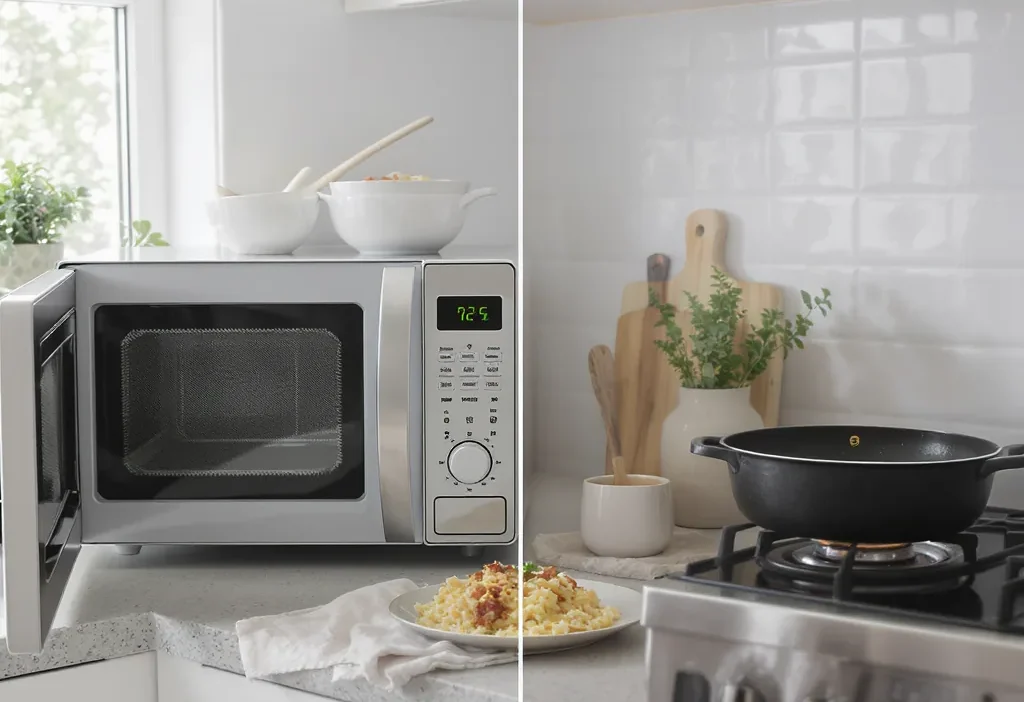
You’ve probably heard the rule of thumb: for saving energy, the microwave is always king. But what if that common wisdom isn’t the whole story? The truth about microwave vs stovetop reheating energy use is more nuanced. While the microwave is incredibly efficient at its specific job, blindly using it for every leftover can sometimes be a missed opportunity for both your meal’s quality and your energy bill. This isn’t about declaring one appliance the winner; it’s about becoming a more intentional cook. By understanding how each tool works and matching it to the task—whether you’re reviving a single serving of stew or crisping up a large batch of fried rice—you can master efficient reheating methods that save power without sacrificing the results on your plate.
The best way to reheat food for lower energy use depends on what you’re reheating. For small portions of moist foods like soup or a single plate of leftovers, the microwave wins. For larger quantities, foods that need crisping, or dishes where texture is key, the stovetop can be more efficient and effective. The core rule for microwave vs stovetop reheating energy decisions is simple: match the tool to the task.
The Core Science: How Each Method Uses Energy
To understand which appliance is more efficient for a given task, it helps to know the basic science of how each one heats your food. The difference is all about how energy is transferred.
A microwave oven generates electromagnetic waves that excite water molecules inside your food. This causes the molecules to vibrate rapidly, creating heat from the inside out. It’s a direct, targeted process that heats the food itself, not the container or the surrounding air. This is why microwave energy consumption is often lower for quick jobs—it skips the intermediate step of heating a surface.
In contrast, a stovetop (whether electric coil, gas, or induction) heats a cooking surface—a burner or a pan. That heat then conducts through the pan and into your food, working from the outside in. This method provides excellent control and is fantastic for browning or crisping, but it involves heating more mass (the pan, the air around it). The efficiency, or stovetop reheating efficiency, depends heavily on using the right-sized burner and keeping a lid on to trap heat.
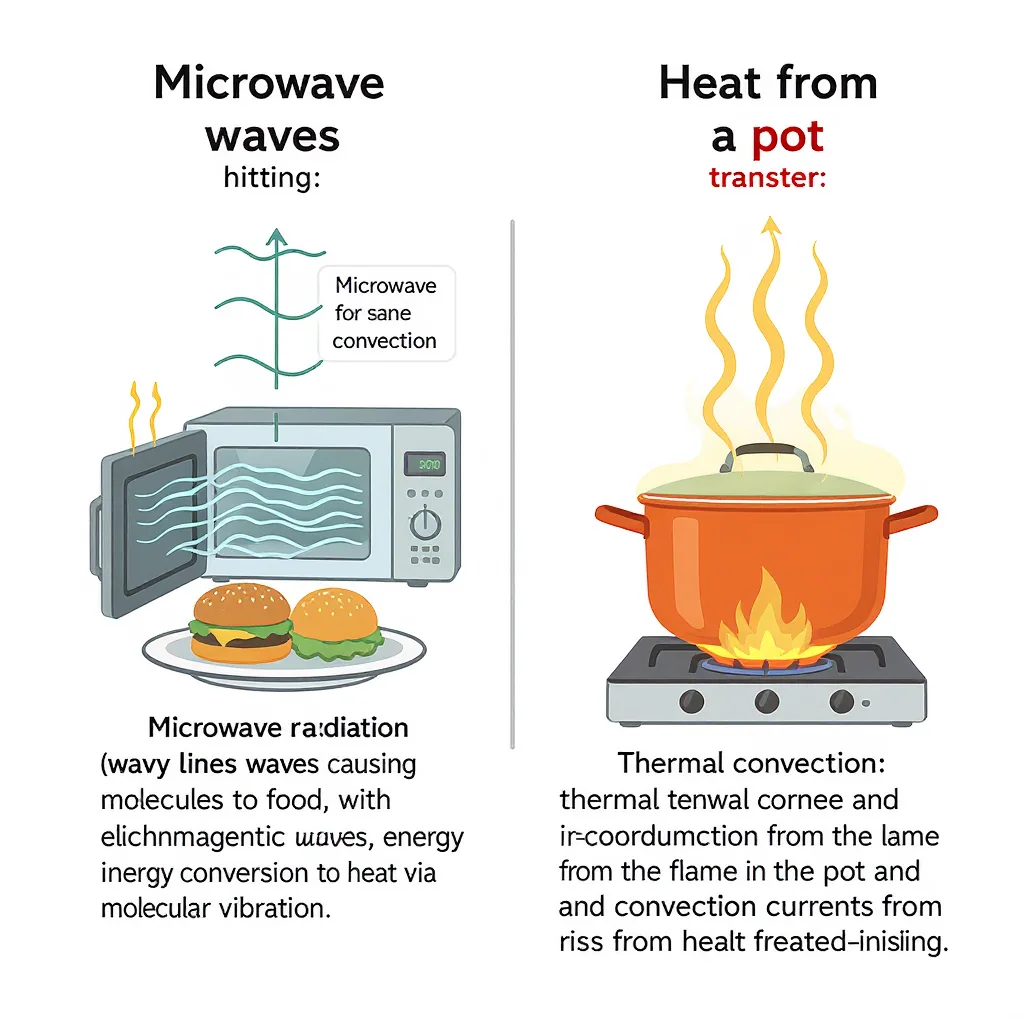
This fundamental difference sets the stage for our decision guide: direct internal heating versus controlled external heating. For a deeper dive, the FDA explains microwave oven radiation and safety.
Decision Guide: When to Choose Which Appliance
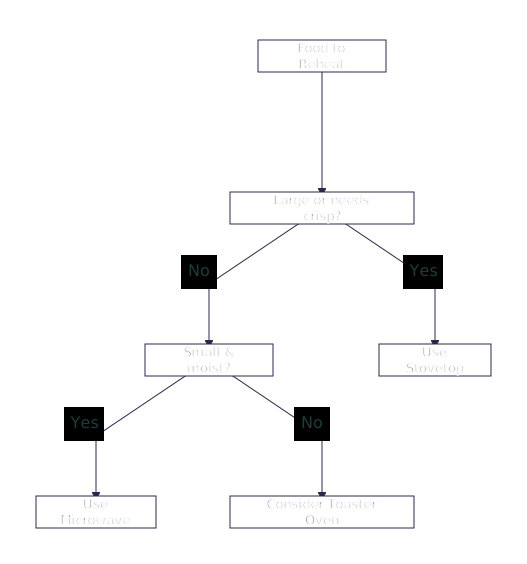
Forget blanket rules. The best way to reheat food save energy is to match the tool to the specific food, portion, and texture you want. Use this simple framework to decide.
Factor 1: Food Type & Desired Texture
Choose the Microwave for: Moist foods that don’t rely on a crispy exterior. Think soups, stews, saucy pastas, steamed vegetables, or a plate of mixed leftovers where sogginess isn’t a deal-breaker. The microwave’s steam-friendly environment is perfect here.
Choose the Stovetop for: Foods where texture is king. This includes anything you want to re-crisp (like fried chicken, roasted potatoes, or stir-fry), foods that benefit from a sear (meats, sausages), and most sautés. The direct, dry heat of a pan restores texture far better than a microwave can.
Factor 2: Portion Size
This is a critical, often overlooked, part of efficient reheating methods. A microwave excels at quickly heating a single bowl of chili or a lunch plate. However, if you’re reheating an entire pot of soup for the family, the stovetop often becomes more efficient. Heating a large mass on the stove allows for even, controlled warming, whereas microwaving a big batch would require stopping, stirring, and running the microwave for multiple long cycles, which can use more total energy.
| Factor | Microwave | Stovetop |
|---|---|---|
| Best For | Small, moist portions; soups; speedy single servings. | Large batches; foods needing crisping/searing; texture-sensitive dishes. |
| Energy Efficiency For… | Quick, direct heating of the food itself with minimal waste. | Even, controlled heating of larger volumes where its power can be fully utilized. |
| Typical Wattage/Energy Use | High wattage (800-1200W) but very short run time (1-3 mins). | Lower constant wattage but longer run time (5-15 mins). Efficiency depends on burner size and lid use. |
| Speed | Very fast for small items. | Slower, but often faster for large quantities. |
| Texture Outcome | Can make crispy foods soggy; heats unevenly if not stirred. | Excellent for restoring crispness and browning; provides even heat. |
| Common Pitfall | Using full power for everything, leading to dried edges and cold centers. | Using a burner too large for the pan, wasting heat to the surrounding air. |
Remember, this guide is for education—your kitchen, your rules. The goal is to make an intentional choice that saves power and gets you the best result.
Common Reheating Mistakes That Waste Energy
Using the right appliance is step one. Step two is using it correctly. Here are common errors that undermine your efforts to save electricity reheating leftovers.
- Microwaving on High Power Always: The “high” setting is great for water-based soups, but for dense or uneven foods (like a thick casserole), it leads to hot spots and cold centers. Use 50-70% power and a longer time for more even, gentle heating.
- Using the Wrong Burner Size: Placing a small pot on a large burner wastes a tremendous amount of energy, as heat escapes around the sides. Always match the burner to the bottom of your pan.
- Skipping the Lid on the Stove: Reheating soup or sauce? Always cover the pot. A lid traps steam and heat, bringing food to temperature much faster and using significantly less energy.
- Not Stirring or Spreading Food: In both appliances, dense food needs help for even heating. Stir midway in the microwave. Spread food in a thin, even layer in a pan on the stove.
- Reheating Tiny Portions in the Oven: Using a full-size oven to reheat a single slice of pizza is arguably the least efficient method. A toaster oven, stovetop skillet, or even the microwave (with a crisping plate) is far better for energy efficient food reheating.
Beyond the Binary: Other Efficient Options
The compare reheating methods discussion doesn’t end with two appliances. For specific tasks, another tool might be your best bet for both quality and efficiency.
A toaster oven or air fryer is often the most efficient way to reheat foods that need to be crispy and are small to medium in portion size. Think french fries, pizza, egg rolls, or chicken wings. These appliances are smaller than a full oven and use convection (circulating hot air) to crisp food quickly and evenly, often beating both the microwave (sogginess) and stovetop (inconvenience for some shapes) for these items.
The conventional oven is generally the least efficient option due to its large cavity and long preheat time. Reserve it for when you need to reheat a very large casserole or dish for a crowd, where its size is actually an advantage. The core principle remains: choose the smallest, most targeted appliance that can do the job well.
Making the Smart Choice for Your Kitchen
So, what’s the final verdict on the microwave vs stovetop debate? It’s a trade-off. The microwave is the undisputed champion of speed and efficiency for small, moist items—your go-to for a fast lunch. The stovetop, however, offers superior control and texture for larger batches or foods that need a revival of their crispy exterior.
The most energy-efficient kitchen isn’t about using one appliance exclusively. It’s about using the right tool intentionally. By understanding how each method works and applying our simple decision guide, you can consistently reheat food to save power without sacrificing the quality of your meal. Start with your next plate of leftovers and make the choice that saves energy and tastes better.
Q: Does reheating food in the microwave use a lot of electricity?
A: Not typically. While microwaves have high wattage, they run for very short times (often 1-3 minutes). Heating a plate of leftovers usually consumes about as much energy as running a standard lightbulb for the same duration. For small portions, it’s one of the most efficient methods.
Q: Is it cheaper to reheat soup on the stove or in the microwave?
A: For a single bowl, the microwave is almost always cheaper due to its speed and targeted heating. For a large pot meant for several servings, the stovetop can be more cost-effective, especially if you use a lid and the right burner size, as it heats the entire batch evenly in one go.
Q: Can I reheat rice safely in both appliances?
A: Yes, but safety is key regardless of method. Rice can harbor bacteria that produce toxins not destroyed by heat. Always cool rice quickly after cooking, store it in the fridge within an hour, and reheat it until it’s steaming hot all the way through (165°F or 74°C). The stovetop with a splash of water often yields better texture.
Q: Why does my food get soggy in the microwave?
A: Microwaves excite water molecules, creating steam. Without a way for that steam to escape (like a crisping element or dry heat), it gets trapped, making crispy coatings soft. For foods like pizza or fried chicken, use a lower power setting, a microwave crisping plate, or opt for the stovetop or toaster oven to preserve texture.