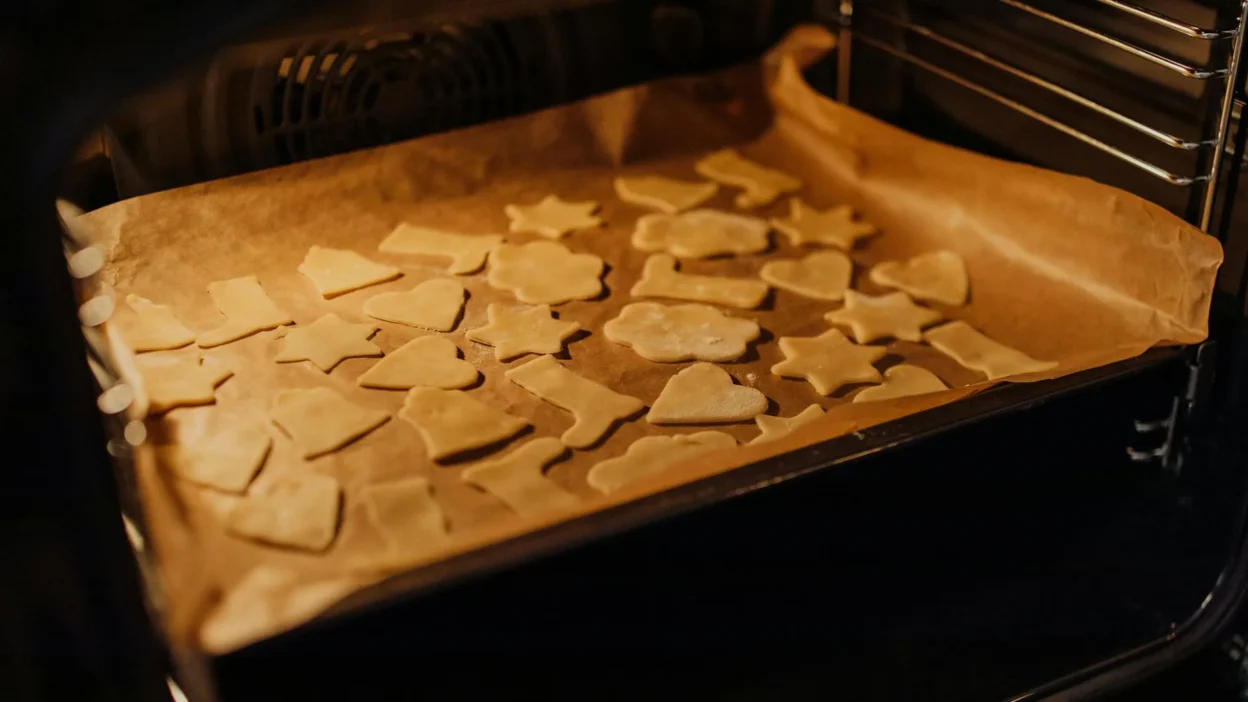
You’re standing in your kitchen, a single tray of cookies ready to go, your hand hovering over the oven dial. A familiar hesitation sets in: firing up the entire full-size oven for this tiny bake feels… excessive. You know it will make the kitchen hot and your energy bill a little higher, but is there really a better option? This small moment of doubt points to a bigger, practical question about toaster oven vs full oven energy use. For home cooks, apartment dwellers, and anyone focused on small batch baking energy saving, choosing the right appliance isn’t just about convenience—it’s a direct way to cut costs and reduce waste. Let’s walk through the simple physics and real-world scenarios to find your most efficient kitchen path.
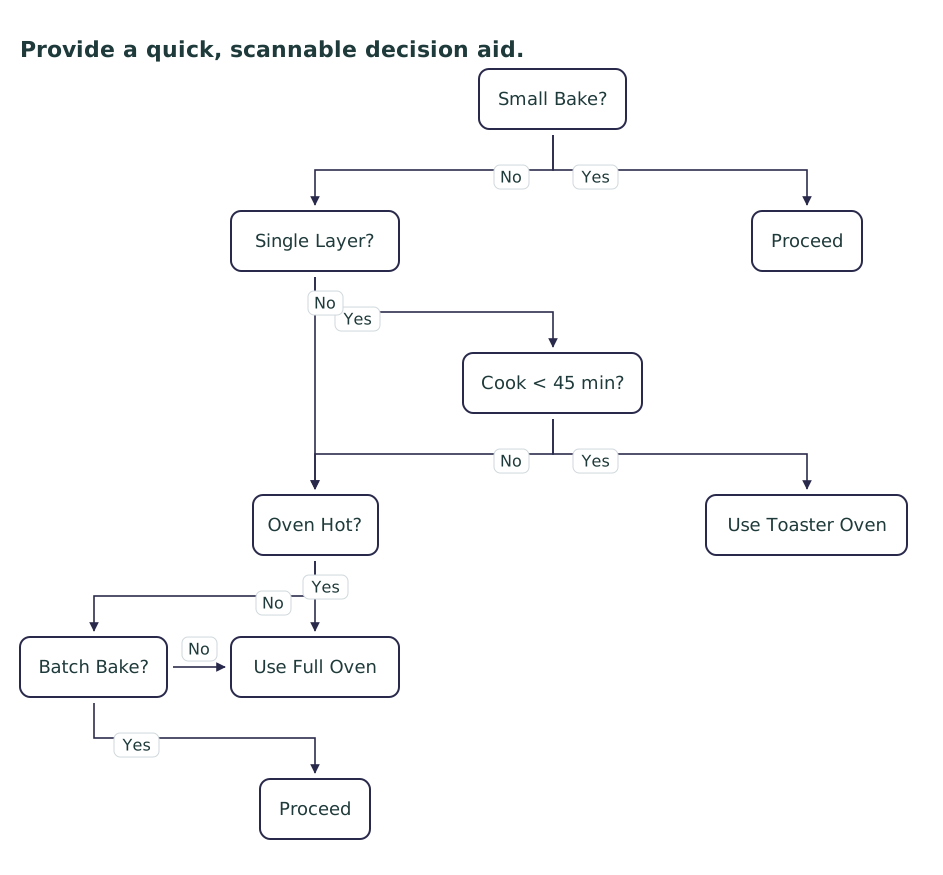
The best way to save energy on small bakes is to use a toaster oven for most tasks under 30 minutes. For a single tray of cookies, reheating pizza, or roasting vegetables, a toaster oven uses significantly less energy because it heats a smaller space faster. Reserve your full-size oven for large roasts, multiple racks, or dishes that require precise, even heat distribution.
The Core Energy Equation: Size, Speed, and Heat
To understand the debate over toaster oven vs full oven energy use, you need to grasp a simple principle: you’re paying to heat empty air. A full-size oven’s cavity is huge, often 3 to 5 cubic feet. Heating that entire space from room temperature to 375°F (190°C) requires a lot of energy, even before your food goes in. This is why preheat time is a major factor in appliance energy consumption.
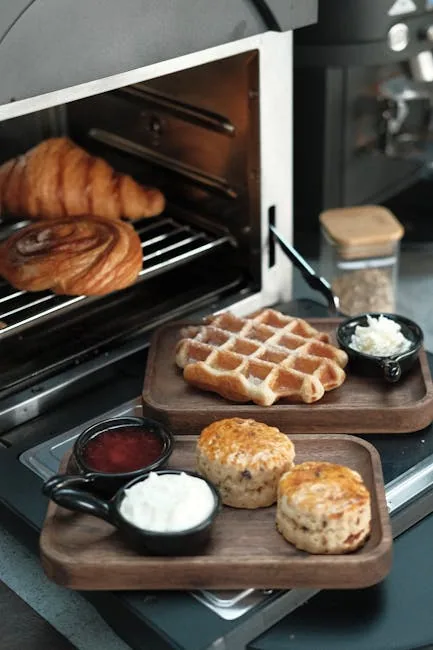
Photo by Hoài Nam on Pexels
A toaster oven, with a cavity of 0.5 to 1 cubic foot, has a massive advantage for small batch baking energy saving. It reaches the target temperature much faster, using less energy to get started. While a toaster oven’s toaster oven wattage (typically 1200-1800W) might be similar to a full oven’s heating element, it runs for a much shorter duration. The total energy used (wattage x time) is what hits your bill, and for small tasks, the toaster oven wins on time every time.
Side-by-Side: A Practical Comparison for Common Bakes
Let’s move from theory to practice. The table below compares estimated energy use for typical small kitchen tasks. Remember, these are illustrative figures based on average models; your exact savings will vary with your appliances and local electricity rates. But the scale of the difference is clear.
| Baking Task | Toaster Oven | Full Oven |
|---|---|---|
| 6 Cookies | Estimated Energy: ~0.15 kWh Time: 10-12 min bake + 3 min preheat Best For: Quick, single-serve treats with minimal heat output. | Estimated Energy: ~0.75 kWh Time: 10-12 min bake + 15 min preheat Best For: Only if you’re baking multiple trays simultaneously. |
| Small Casserole (1 qt) | Estimated Energy: ~0.25 kWh Time: 25-30 min bake + 5 min preheat Best For: Perfectly sized for a countertop oven’s space. | Estimated Energy: ~0.9 kWh Time: 25-30 min bake + 15 min preheat Best For: Dishes that require perfectly even browning on top. |
| Reheating 2 Slices of Pizza | Estimated Energy: ~0.08 kWh Time: 5-7 min (no preheat needed) Best For: The ultimate reheating tool for crispiness. | Estimated Energy: ~0.65 kWh Time: 10 min + 15 min preheat Best For: Extremely inefficient for this task. |
| Roasting 1 lb of Vegetables | Estimated Energy: ~0.2 kWh Time: 20-25 min + 5 min preheat Best For: Excellent toaster oven efficiency for small sides. | Estimated Energy: ~0.85 kWh Time: 20-25 min + 15 min preheat Best For: Roasting a large sheet pan full for meal prep. |
Reading the Results
The key takeaway is that for tasks under 30 minutes of active cooking, the toaster oven’s shorter preheat and smaller cavity lead to significantly lower energy draw. The full oven’s massive energy cost is front-loaded in that long preheat cycle. For a deeper dive into how specific appliances are tested for efficiency, you can review resources from the U.S. Department of Energy.
Your Baking Profile: Which Path Saves You More?
So, which appliance is your champion for cost-effective baking? The answer depends less on the gadgets and more on you. Think of your kitchen habits as one of two paths.
Path A: The Toaster Oven Champion
This path is ideal if you: live alone or with one other person, primarily cook single portions or small sides, value speed and convenience for weeknight meals, and have a bit of counter space to spare. Your energy-efficient baking strategy is simple: default to the toaster oven for 90% of your bakes. You’ll save energy, avoid heating up your kitchen, and get dinner on the table faster.
Path B: The Full Oven Strategist
This path makes sense if you: regularly cook for a family of four or more, bake large items like whole chickens or big casseroles, are a perfectionist about even browning and rise (critical for delicate pastries), or have zero counter space. Your strategy is about maximizing the full oven’s capacity. When you do turn it on, bake in batches—roast two trays of vegetables, bake a loaf of bread alongside a casserole—to amortize that high energy cost over multiple meals.
Beyond the Bake: Other Factors in Your Choice
Energy savings are the headline, but your final decision involves other practical trade-offs. A toaster oven is a multi-tool; many modern models air fry, toast, dehydrate, and rotisserie, saving you from buying more single-use appliances. However, they can have hot spots, leading to uneven browning—a deal-breaker for some bakers.
A full oven, while less efficient for small tasks, provides unmatched, consistent heat distribution, which is essential for delicate soufflés or picture-perfect layer cakes. Also, consider upfront cost and kitchen real estate. A good toaster oven is an investment, but it uses no permanent kitchen space. If you’re unsure about specific model performance, consult reputable, hands-on review sites before purchasing.
Ultimately, the most energy-saving choice isn’t about buying a new gadget—it’s about intentionally matching the appliance size to the task at hand, a habit that saves money regardless of what’s in your kitchen.
Making the Smart Choice for Your Kitchen
There’s no single “best” appliance for every home. The real win in the toaster oven vs full oven debate comes from understanding their strengths. For the small, quick bakes that make up most of our daily cooking—a handful of cookies, a single serving of roasted veggies, last night’s pizza—the toaster oven is the undisputed champion of efficiency. It heats less air, works faster, and keeps your kitchen and energy bill cooler.
Reserve your full-size oven for the tasks that truly need it: large holiday meals, big batch meal prep, or dishes where perfect, even heat is non-negotiable. By consciously choosing the right tool for the job, you turn everyday cooking into an act of small batch baking energy saving. So next time you reach for that oven knob, pause for a second. That moment of consideration is the first step toward more cost-effective baking.
Q: Is it ever more efficient to use a full oven for a small bake?
A: Rarely. The only potential exception is if you are ‘batch baking’—using the full oven’s entire capacity to cook multiple items at once for future meals, thereby amortizing the high energy cost over several dishes.
Q: How much money can I actually save using a toaster oven?
A: Savings depend on your local electricity rate and usage. As a rule of thumb, a toaster oven uses about 1/3 to 1/2 the energy of a full oven for the same small task. If you avoid preheating the large oven for small bakes 3 times a week, you could save a noticeable amount on your annual energy bill.
Q: My toaster oven doesn’t bake evenly. Does that change the advice?
A: It adds a trade-off. Uneven baking can lead to wasted food (burnt edges, raw centers), which is its own form of inefficiency. If your toaster oven has poor performance, the energy savings might be negated. In this case, focus on using the full oven more strategically (batch baking) or consider upgrading to a higher-quality convection toaster oven.