Think of your air fryer basket like a suitcase. Pack it perfectly, and everything arrives crisp and ready. Overstuff it, and you get a soggy, uneven mess. Under-pack it, and you’re wasting energy and space. Finding the best way to cook in an air fryer by portion size isn’t about memorizing a hundred different recipes; it’s about mastering a few flexible principles that work whether you’re making a solo dinner or feeding a hungry family. This guide is your toolkit. We’ll start with the three non-negotiable rules that apply to every cook, then build a simple, adaptable routine you can use for any meal size. By the end, you’ll move from guessing to knowing exactly how to adjust for perfect results every time.
The best way to cook in an air fryer by portion size is to treat your basket like a stage: give each piece its own space for hot air to circulate. For small batches, use a lower rack or a smaller container to keep food centered. For large family-sized loads, shake or toss more frequently, add a few extra minutes, and don’t be afraid to cook in sequential batches for perfect crispness.
Your Air Fryer Portion Toolkit: The Three Non-Negotiables
Before we adjust for one person or a family of four, we need to agree on the fundamentals. Think of these as the three tools you’ll use for every single cook, regardless of what’s in the basket. Master these, and adjusting for portion size becomes intuitive.
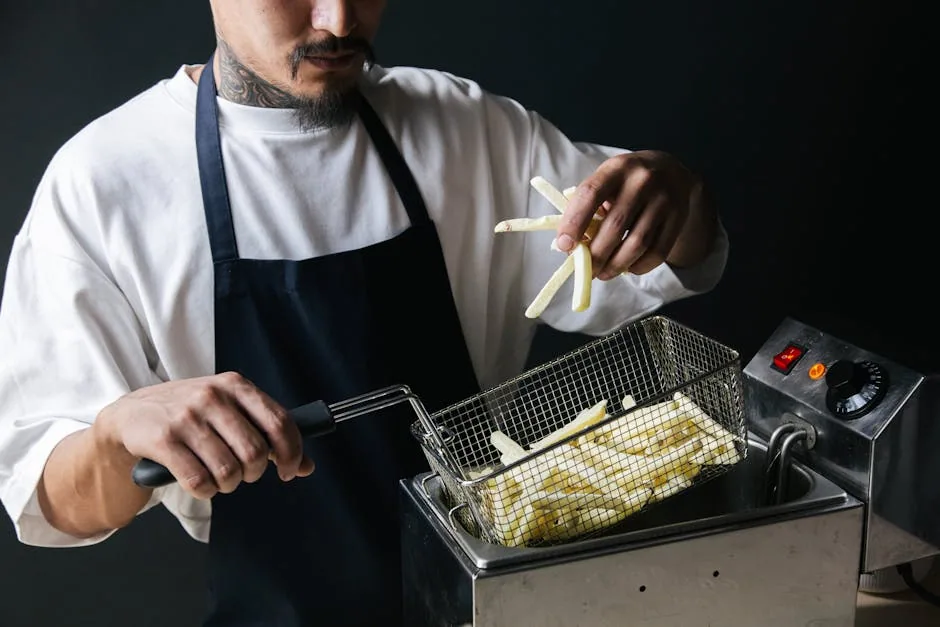
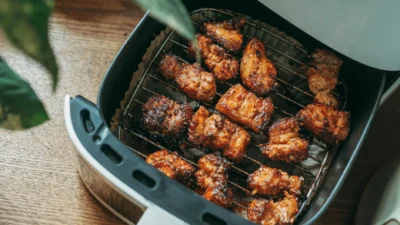
Photo by Ron Lach on Pexels
1. Air Flow Is King
This is the core principle of air frying. Hot air needs to circulate freely around each piece of food to create that signature crispness. Overcrowding is the number one reason for soggy, uneven results. A good mental model is to treat your basket like a stage—every item should have its own space to perform.
2. The Cold Spot Rule
Every air fryer has a slightly cooler spot, often near the front or the center, depending on the fan design. You’ll discover yours with time. The rule is simple: whatever cooking method you choose, you must move food from the colder area to the hotter zone at least once during the cycle. This is non-negotiable for even cooking.
3. The Power of Preheating
While some models and recipes say it’s optional, preheating for 2-3 minutes is your secret weapon for consistent timing. It ensures the cooking environment is immediately at the right temperature, which is especially crucial for small batches that cook quickly or frozen items. Skipping it can add several unpredictable minutes to your cook time.
The Solo Act: Mastering Small-Batch Cooking
Cooking for one or two in a large-capacity air fryer can feel inefficient, but it’s a chance for perfection. The key challenge is that a tiny amount of food in a big basket can get blasted by the fan or cook too quickly. Here’s how to nail air fryer small batch cooking.
First, consider your arrangement. Placing a single chicken breast or a handful of fries directly on the wide basket mesh can lead to uneven airflow. Instead, use a lower rack or a small, oven-safe ceramic or stainless steel dish to create a concentrated “cooking zone.” This mimics a fuller basket and helps food cook more evenly. For very lightweight items like kale chips or herbs, a perforated parchment liner can prevent them from flying around.
Now, timing. It might seem logical to drastically reduce the time, but often you only need a slight reduction—sometimes just a minute or two—because the hot air has less thermal mass to heat up. Your best bet is to check early and often. A bonus? This approach is inherently energy-efficient for small batch cooking, as you’re heating a smaller amount of food for a shorter active time.
Feeding the Crew: Strategies for Family-Sized Loads
When you’re cooking for a family, the goal is to get a great result for everyone without spending all night at the appliance. You generally have two smart strategies, and the best choice depends on your priority: speed or perfect crispness.
The Single-Layer Spread
This is your go-to for foods that don’t mind a little crowding, like roasted veggies, chicken wings, or meatballs. You fill the basket in a single, snug layer where pieces are touching but not piled. The trade-off? You must shake or toss the basket more frequently—sometimes every 5 minutes—to ensure all sides get exposed to the heating element. Expect to add 15-20% more time to the recipe’s suggested duration for a full basket.
Sequential Batch Cooking
For the crispiest fries, chicken tenders, or anything breaded, this method wins. Cook in two or three perfect, uncrowded batches. While the first batch is cooking, prep the second on a tray. The first batch will stay hot and crisp in a low oven (200°F) while the second cooks. This method takes longer but guarantees restaurant-quality results for every serving. In terms of air fryer family size energy use, running multiple shorter cycles can be surprisingly comparable to one long, overloaded cycle that struggles to circulate air.
Building Your Flexible Portion Routine
Let’s turn these principles and strategies into a simple, foolproof routine you can follow for any meal. This is your decision-making flow for perfect air fryer portion cooking every time.

Step 1: Assess Your Load. Look at your raw food. Will it cover less than one-third of your basket area in a single layer? That’s a small batch. More than two-thirds? That’s a family-sized load.
Step 2: Choose Your Setup. For small batches, grab a lower rack or small oven-safe dish. For large loads, decide: “Single-Layer Spread” for speed with frequent shaking, or “Sequential Batches” for ultimate crispness.
Step 3: Preheat & Arrange. Preheat your air fryer (2-3 mins). Arrange your food according to your choice from Step 2, respecting the air flow rule.
Step 4: Cook, Monitor, Adjust. Start with your recipe’s recommended time and temp. For small batches, check a few minutes early. For a full basket, plan to add a few extra minutes and shake/toss at least twice.
That’s it. This routine removes the guesswork and lets you adapt any recipe for your needs, making it the true best way to cook in an air fryer by portion size.
Your Kitchen, Your Rules
Mastering portion size in your air fryer isn’t about memorizing rigid rules—it’s about understanding how hot air moves and having the flexibility to guide it. Whether you’re whipping up a quick solo dinner or feeding a hungry family, the same core principles apply. Start with space for air to flow, respect your appliance’s quirks, and don’t be afraid to cook in batches for that perfect crunch.
The most reassuring part? Even if your timing is slightly off or you overcrowd the basket once in a while, the result is almost always still perfectly edible. Consider every cook a small experiment. You now have the toolkit and the routine to make those experiments delicious successes, no matter how many plates you’re setting.