What if your favorite kitchen gadget for quick meals could also be your biggest ally in cutting the electricity bill? For many of us, the air fryer is a hero for its speed, but its potential for energy efficient air fryer use is an often-overlooked superpower. This guide cuts through the hype to give you a clear, practical understanding of how your air fryer saves power compared to a traditional oven and, more importantly, how you can maximize those savings with every meal. We’ll start with the simple science behind why it’s so efficient, then move to actionable habits that put more money back in your pocket. Think of it not just as a tool for fast food, but for cost-effective air fryer cooking that’s kinder to both your wallet and the planet.
Yes, an air fryer is typically more energy-efficient than a traditional oven for fast meals, often using 20-30% less electricity. This efficiency comes from its compact size, rapid air circulation, and shorter preheat and cook times, directly translating to lower energy costs per meal. By understanding and leveraging these inherent advantages, you can make it a cornerstone of an energy-conscious kitchen.
The Science of Speed: Why Air Fryers Use Less Energy
At its core, an air fryer is a highly focused convection oven. Understanding a few simple principles of physics reveals why this design is a powerhouse for energy efficient air fryer use. It all comes down to moving heat to your food as directly and quickly as possible.
1. Targeted Heating in a Small Space
Imagine trying to heat a small, well-insulated room versus a large, drafty hall. An air fryer is the small room. Its cooking cavity is compact, meaning the heating element and fan have to work on a much smaller volume of air than a full-sized oven. This directly reduces the air fryer power consumption needed to reach and maintain cooking temperature.
2. The Power of Rapid Air Circulation
This is the “convection” part. A powerful fan constantly circulates super-heated air around the food. This constant bombardment dramatically improves heat transfer efficiency. Food cooks faster because the hot air isn’t just sitting around it; it’s actively stripping away the cooler boundary layer. Faster cooking time equals less time the appliance is drawing power.
3. Minimal Thermal Mass
Thermal mass refers to how much “stuff” needs to be heated up. A large oven has heavy metal walls, racks, and a big ceramic or stone base that all soak up energy before your food even starts to cook. An air fryer’s basket and small cavity have far less mass to heat, so more of the energy goes directly into cooking your meal.
In short, the air fryer energy efficiency guide boils down to this: smaller space + aggressive air movement = faster cooking = less total electricity used. It’s a more direct pathway from outlet to plate.
Real-World Energy Savings: Air Fryer vs. Oven vs. Microwave
Let’s translate that science into scenarios you face daily. For the “fast meals” promised in the title, the air fryer vs oven energy battle is often a clear win for the countertop gadget. The key variable isn’t just wattage; it’s time.
Consider cooking a single serving of frozen fries. A typical oven (2-3 kW) might need 10 minutes to preheat to 400°F and then 20-25 minutes to cook, running for 30+ minutes total. A 1.7 kW air fryer needs just 3-5 minutes to preheat and cooks the fries in 12-15 minutes—halving the active cook time. Even if both drew the same power, the air fryer wins by finishing sooner. When you save energy with air fryer cooking, you’re primarily saving time-based energy.
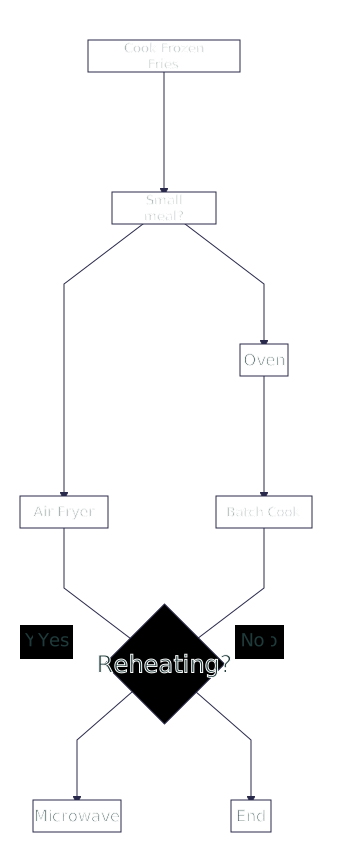
What about a microwave? For reheating, a microwave is incredibly efficient due to its direct heating method. But for achieving crispy, browned, “cooked” textures, the air fryer is superior. The best approach is a hybrid: use the microwave to quickly heat something through (like a baked potato), then finish in the air fryer for a few minutes to crisp the skin. This leverages the strengths of both for ultimate air fryer cooking efficiency tips.
Your Action Plan: 7 Habits for Maximum Efficiency
Knowing the science is great, but your daily habits unlock the real savings. Here’s your actionable plan to maximize efficiency every time you cook.
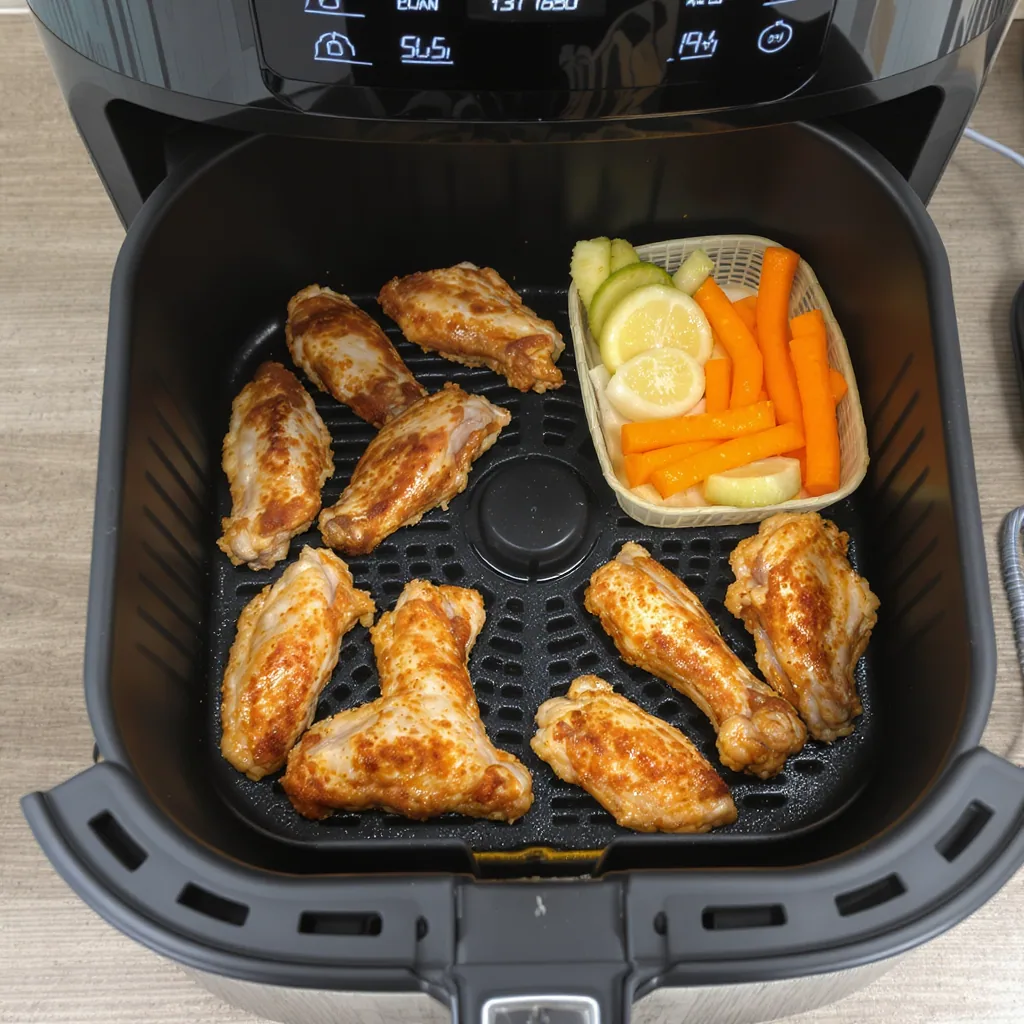
Do: Skip preheating for many foods. For frozen items, breaded foods, or anything that doesn’t require immediate searing, you can often add food to a cold air fryer. The cook time might extend by a minute or two, but you save the energy of an empty preheat cycle.
Don’t: Overcrowd the basket. This is the #1 mistake. Overcrowding blocks air circulation, creating cold spots and forcing longer, uneven cooking. Cook in batches if needed.
Do: Shake or flip halfway. This ensures even exposure to the hot air, leading to consistent cooking and preventing the need for extra time to fix undercooked spots.
Don’t: Peek constantly. Every time you open the basket, you let heat escape, making the appliance work harder to regain temperature.
Do: Use it for batch cooking. While great for single servings, it’s also perfect for weekly prep. Cook a large batch of roasted veggies, chicken breasts, or tofu at once to use in meals all week.
Don’t: Neglect cleaning. A layer of baked-on grease and crumbs on the basket and element insulates them, reducing heating efficiency. A quick clean after use maintains peak performance.
Do: Thaw frozen foods first when possible. Cooking from frozen takes longer. A quick thaw in the fridge or microwave can reduce electricity with air fryer use by shortening the active cooking cycle.
Common Efficiency Mistakes (And How to Fix Them)
Even with the best intentions, small errors can chip away at your savings. Here are the common pitfalls and their simple fixes.
Mistake: Preheating for everything. Fix: Only preheat for foods where a quick sear or crisp is critical, like fresh steak or certain pastries. For most frozen or reheated items, start cold.
Mistake: Underfilling the basket. Fix: While overcrowding is bad, cooking one single chicken wing is also inefficient. If cooking a very small amount, consider using a toaster oven or grouping it with another item (like roasting a head of garlic alongside your main dish).
Mistake: Not patting food dry. Fix: Excess moisture on wet-marinated foods or thawed veggies must evaporate before browning can occur, wasting energy. A quick pat with a paper towel speeds up the cooking process.
Mistake: Ignoring the appliance’s location. Fix: Ensure your air fryer has several inches of clearance on all sides, especially the back exhaust. Blocked vents cause the appliance to overheat and cycle less efficiently, and can be a safety hazard.
Mistake: Assuming “more time = better.” Fix: Air fryers work fast. Set a timer for the lower end of the recommended cook time and check. You can always add time, but you can’t un-cook (or un-use electricity on) burnt food.
Beyond the Kitchen: The Bigger Picture on Appliance Efficiency
Your eco-friendly air frying habits are a smart piece of a larger puzzle. Home energy use is cumulative, and every bit counts.
Consider “vampire” or standby power. Many modern appliances, including some air fryers with digital displays, draw a tiny amount of power when plugged in but off. If your model has a constant clock or light, plugging it into a smart plug or simple power strip you switch off can eliminate this drain. It’s a small saving, but it reinforces a mindful habit.
Ultimately, choosing an energy-efficient appliance like an air fryer for appropriate tasks is a practical form of cost-effective air fryer cooking. It reduces demand on your home’s largest kitchen energy hog—the oven—and aligns with a broader goal of conscious consumption. The beauty is that the reward is immediate: lower bills and faster meals, with no sacrifice in taste.
Your Efficient Kitchen, Simplified
The verdict is clear: your air fryer is engineered for speed, and that speed inherently translates to energy savings when used thoughtfully. You don’t have to choose between quick meals and a conscious kitchen. The efficiency is built-in; your role is simply to unlock it with a few smart habits.
Your decisive next step? Don’t try to overhaul everything at once. For your very next meal—whether it’s fries, wings, or veggies—commit to implementing just one tip from the action plan. Maybe you’ll skip the preheat, or perhaps you’ll be extra mindful not to overcrowd the basket. Feel the difference in cook time, and know you’re saving energy with every minute shaved off the clock. That’s the power of practical, efficient cooking.
To maximize your air fryer’s energy efficiency, remember these core takeaways. First, it saves power primarily through its compact size and rapid air circulation, cooking food faster than a traditional oven. Second, for small-to-medium batches, it’s typically the most efficient appliance choice, beating both the oven and microwave for achieving crispy, cooked-from-raw results. Finally, your daily habits—like avoiding unnecessary preheating, never overcrowding the basket, and keeping it clean—are the essential keys to turning its potential into real savings on your electricity bill. Fast meals and lower energy use can truly go hand-in-hand.