Think of your air fryer not just as a convenient countertop cooker, but as a tiny, powerful convection oven that thrives on a specific routine. Just as a well-planned road trip uses less fuel and gets you there faster, an efficient air fryer workflow built on a solid checklist saves significant energy and guarantees that satisfying crunch we all crave. This isn’t about complicated techniques; it’s about mastering a few simple, pre-cook habits and in-process tweaks that align perfectly with how the appliance works. By following a deliberate air fryer cooking checklist for energy saving, you transform from a passive user into an efficient operator, slashing your cook time and electricity use while banishing soggy fries and limp wings for good.
The most efficient air fryer cooking checklist starts with smart preheating, strategic batch loading, and using the right accessories to minimize cook time and maximize crispiness, saving energy with every meal. Focus on a tight pre-cook routine: pat food dry, cut items uniformly, and only preheat when necessary for certain foods. During cooking, never overcrowd the basket, shake or flip items midway, and layer foods wisely for batch cooking to use one heat cycle for multiple components.
Your Pre-Cook Checklist: The Foundation for Efficiency
Photo by Ron Lach on Pexels
Think of this as your pre-flight routine. A few minutes of smart prep prevents the two biggest energy wasters: needing multiple cook cycles and ending up with uneven, soggy food. This is the core of an energy-efficient air fryer routine.
- Check Food Size & Dryness: Cut items to uniform sizes for even cooking. Crucially, pat proteins like chicken or tofu completely dry with a paper towel. Excess moisture creates steam, which fights crispiness and can extend cooking time.
- Preheat Strategically: For frozen foods or anything where a crispy exterior is key (fries, wings, pastries), preheating for 2-3 minutes is a worthwhile investment. It ensures cooking starts immediately at the right temperature. For reheating leftovers or cooking vegetables, you can often skip it and add 1-2 minutes to the cook time, saving that preheat energy.
- Select the Right Accessory: Use a rack for multi-layer cooking or a parchment liner for easy cleanup with wet batters. The wrong accessory can block airflow, the engine of your air fryer’s efficiency.
- Arrange for Optimal Airflow: This is non-negotiable. Place food in a single layer with space between pieces. Overcrowding is the enemy of crispness and forces longer cook times, directly contradicting your air fryer power-saving checklist goals.
The In-Cook Workflow: Maximizing Crisp, Minimizing Watts
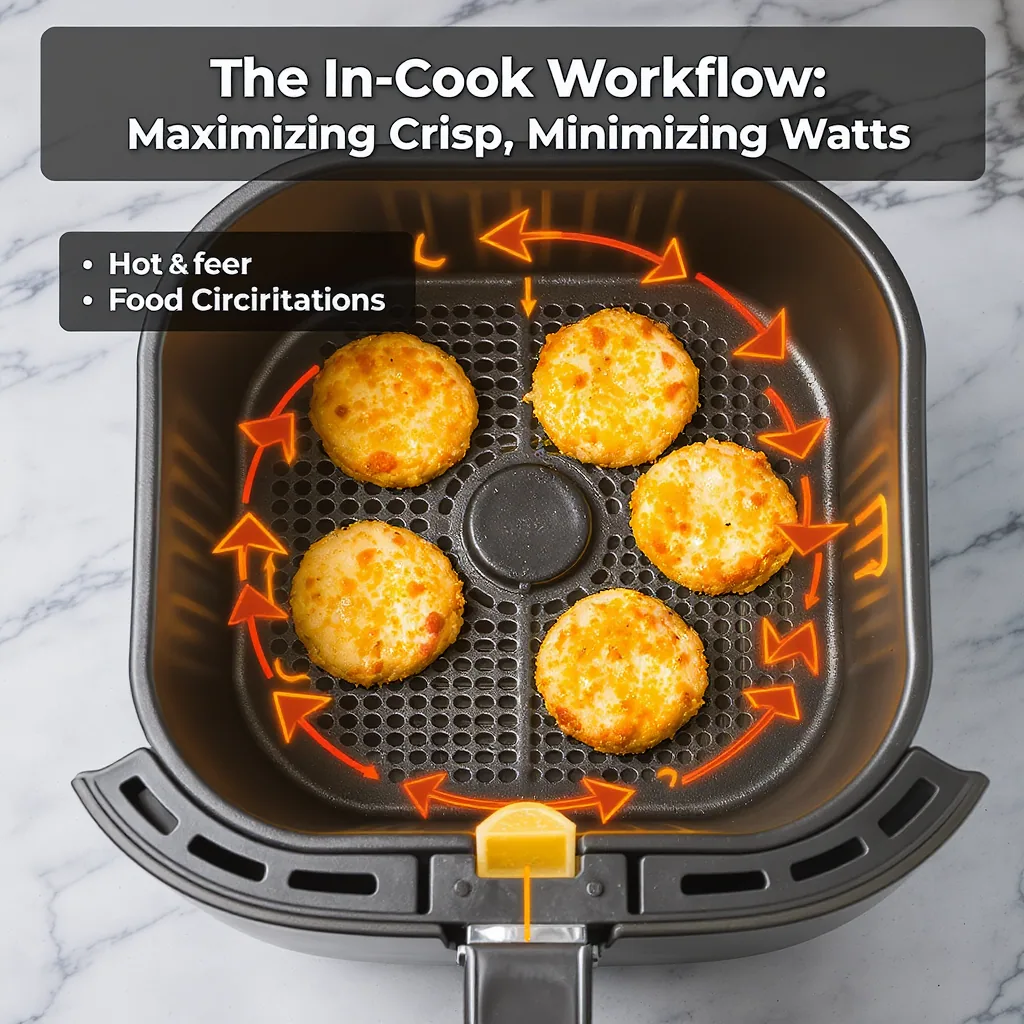
Let’s walk through a common scenario: you’re cooking frozen fries and chicken tenders for a family dinner. This is where your efficient air fryer workflow pays off in both time and energy.
Start by setting the right temperature (usually 380°F-400°F for this combo). Instead of cooking them in separate, small batches, use batch cooking for energy savings. Place the tenders on the bottom and the fries on a rack above, ensuring neither layer is crowded. The hot air needs to circulate around all items. Halfway through, give the basket a firm shake or flip the tenders. This mid-cycle action ensures even browning and crispiness, preventing the need for extra minutes of cooking because one side is underdone.
This integrated approach—using the full capacity smartly and managing the cook cycle with a shake—uses one heating cycle to cook a complete meal. It’s dramatically more efficient than running the appliance three times for small portions.
Post-Cook & Maintenance: Locking in Long-Term Savings
Efficiency isn’t just about the cook time; it’s about keeping your appliance in peak condition. A clean air fryer with clear vents heats faster and more evenly, which translates directly to lower energy use over its lifetime.
Do:
- Let the appliance cool completely before cleaning. This is safer and prevents thermal shock.
- Empty the crumb tray after every use. Built-up debris can smoke, impart off-flavors, and even insulate the basket, making the heater work harder.
- Periodically check the heating element (once cool) for any large food particles and wipe it gently with a damp cloth if your model’s manual allows.
Don’t:
- Use abrasive cleaners or scouring pads. They damage the non-stick coating, causing food to stick and making cleaning harder, which can lead to inefficient heating over time.
- Block the air intake or exhaust vents when storing the appliance. Proper airflow is critical for air fryer cooking efficiency.
- Run consecutive high-heat cycles without giving the appliance a few minutes to cool down. This stresses the components and can shorten its lifespan.
Common Energy & Crispness Mistakes (And How to Fix Them)
Even with the best intentions, it’s easy to fall into habits that undermine your goals. Here are the frequent culprits that sabotage both your electricity bill and your dinner.
Mistake: Overcrowding the Basket. Piling food in blocks airflow, leading to steamed, soggy results. The center stays undercooked while the edges burn, often requiring a second round in the fryer.
The Fix: Commit to the single-layer rule. Cook in batches if you must, using the “keep warm” function of your oven for the first batch.
Mistake: Skipping the Preheat for Certain Foods. While you can skip it for some items, putting frozen fries or wet-battered foods into a cold air fryer is a recipe for a longer, less effective cook cycle.
The Fix: Follow the air fryer preheat and batch tips: preheat for 2-3 minutes when cooking from frozen or when ultimate crisp is the goal.
Mistake: Not Patting Proteins Dry. That surface moisture must evaporate before browning can begin, adding unnecessary minutes to your cook time.
The Fix: Make patting dry with paper towels an unskippable step in your air fryer cooking checklist for energy saving.
Mistake: Ignoring Manufacturer Guidelines. Every model has slight variations in heating element power and airflow design.
The Fix: Use your manual’s recommended times and temperatures as a starting point, then adjust based on your results. This prevents under- or over-cooking from the get-go.
Your Path to Smarter, Crispier Cooking
Mastering your air fryer isn’t about complicated techniques; it’s about building a few intentional habits. By following this practical checklist—prepping smartly, cooking in efficient batches, and maintaining your appliance—you create a powerful air fryer time and energy management system. The result is a win-win: you’ll notice a difference in your energy consumption over time, and you’ll be rewarded with consistently perfect, crispy results that make every meal feel like a success. Start with one or two tips from this list, and you’ll quickly see how small changes lead to better cooking and real savings.