You’ve likely heard that batch cooking is a powerhouse for saving time and money, but here’s the counterintuitive truth most guides miss: the real energy savings—or shocking waste—happens long after you turn off the stove. The initial cook is just the first chapter in your meal’s energy life cycle. The true strategy lies in managing the thermal journey from pot to plate, where decisions about cooling, storage, and reheating methods have a far greater impact on your utility bill and carbon footprint than the size of your batch alone. This guide moves beyond simple meal prep to explore the science of efficient thermal mass management, providing a practical framework for a complete batch cooking reheating leftover energy strategy. We’ll break down how to harness your kitchen appliances intelligently, turning your routine into a conscious system that saves energy at every step, from the Sunday cook to the Wednesday reheat.
The most energy-efficient batch cooking and reheating strategy focuses on the entire energy lifecycle. It involves cooking dense, high-thermal-mass foods in bulk using your most efficient appliance (like a pressure cooker), cooling and storing them in portion-sized containers to preserve their “thermal potential,” and then reheating individual servings with targeted, low-energy methods like a microwave or toaster oven instead of the full-sized oven. This end-to-end approach minimizes total energy input from initial cook to final bite.
The Thermal Science of Leftovers: Your Food’s Hidden Energy
To master an energy-saving leftovers reheating strategy, you first need a basic mental model of the physics at play. The core principle is that cooked food isn’t just sustenance; it’s a vessel for stored thermal energy. How you manage that energy—from initial input to final reheat—determines your overall efficiency.
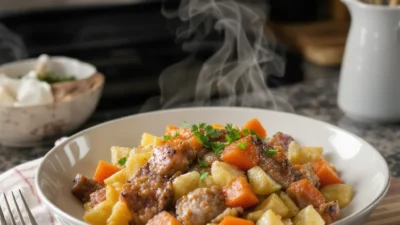
The key concepts are thermal mass and specific heat capacity. Thermal mass refers to an object’s ability to absorb and store heat energy. Foods with high water content (like soups, stews, and cooked grains) have a high specific heat capacity, meaning they require a lot of energy to heat up but also release that energy slowly as they cool. Conversely, foods with more fat or air (like roasted vegetables or breaded items) have lower specific heat capacities. This is why a dense chili stays hot in a thermos for hours, while fries go cold in minutes.
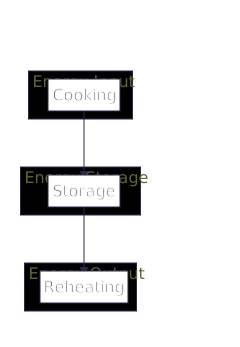
Understanding this helps you make smarter decisions. A successful batch cook and reheat efficiently plan starts by choosing ingredients that form a good “thermal battery.” Dense, water-rich meals store energy potential more effectively, making the initial energy investment pay off over multiple reheats. The goal is to minimize the total energy input across the food’s entire lifecycle, not just during the first cook. For a deeper dive into the underlying physics, resources like the Physics Classroom’s guide to heat can be helpful.
The Batch Cooking Protocol: Maximizing Initial Efficiency
The first major energy decision point is the bulk cook. Your goal is to get the maximum amount of edible, storable food for the lowest possible energy input. This isn’t just about volume; it’s about matching your food to the most efficient appliance for the job.
Appliance Efficiency Hierarchy for Bulk Cooking
- Pressure Cooker / Instant Pot: The undisputed champion for dense, water-based foods like beans, stews, and tough cuts of meat. It uses high pressure to raise the boiling point, cooking food 2-3 times faster while using less energy than a stovetop or oven.
- Slow Cooker: Excellent for unattended, low-power cooking over many hours. Ideal for turning inexpensive, tough ingredients into tender meals with minimal energy draw, perfect for a batch cooking for efficiency day.
- Stovetop (with a lid): Efficient for one-pot meals, especially on induction or gas burners where you can match the pot size to the burner. Always use a tight-fitting lid to trap heat and reduce cooking time.
- Convection Oven / Air Fryer: Best for roasting vegetables or proteins in batches. The fan circulates hot air, cooking food faster and at a lower temperature than a conventional oven.
- Conventional Oven: The least efficient for most batch tasks due to its large cavity and long preheat time. Use it only when necessary (e.g., for casseroles or multiple sheet pans at once) and always fill it to capacity.
Beyond appliance choice, technique matters. Cook in large, flat, wide vessels (like a Dutch oven or large skillet) to maximize surface area and heat transfer. Utilize residual heat by turning off the burner or oven a few minutes before the food is fully done, letting the stored heat in the pot finish the job—a classic energy-saving cooking method.
The Cooling & Storage Gap: Where Efficiency Is Lost
This is the silent phase where poor decisions can sabotage your entire food storage energy strategy. The objective is to safely transition your food from “hot cooked mass” to “ready-to-reheat portions” with minimal energy cost to your kitchen.
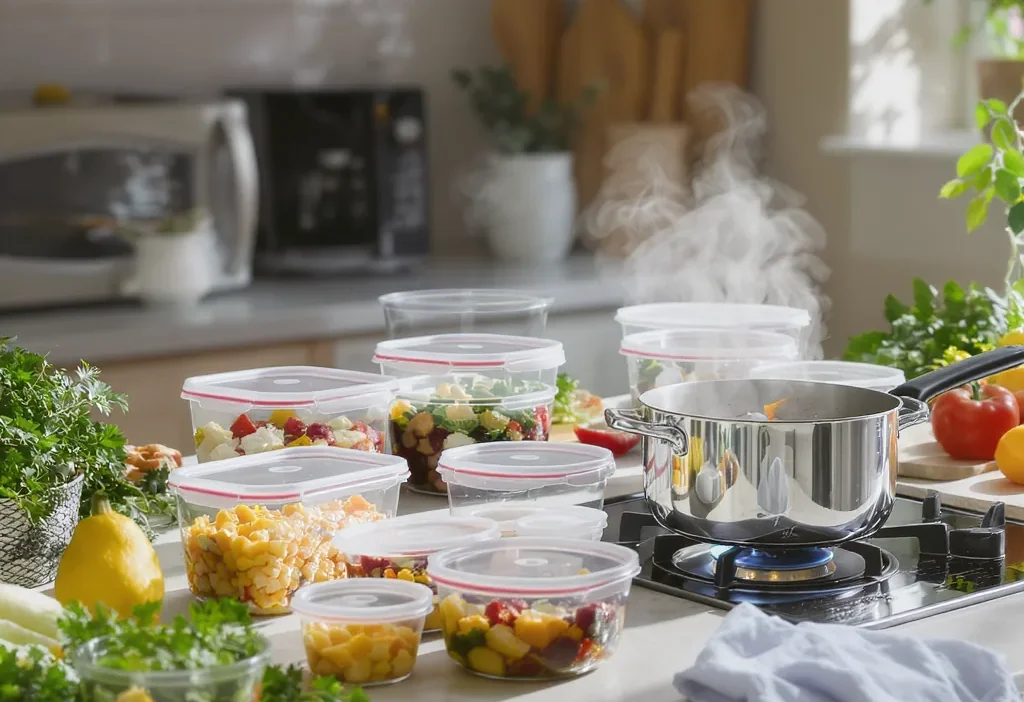
First, cool food rapidly but safely. Leaving a large pot of hot soup on the counter for hours forces your refrigerator’s compressor to work overtime to cool it down, wasting electricity. Instead, portion the food into shallow, wide containers (like glass or stainless-steel trays) to increase surface area, which speeds up cooling. You can place these containers in an ice bath for a quick chill before refrigerating.
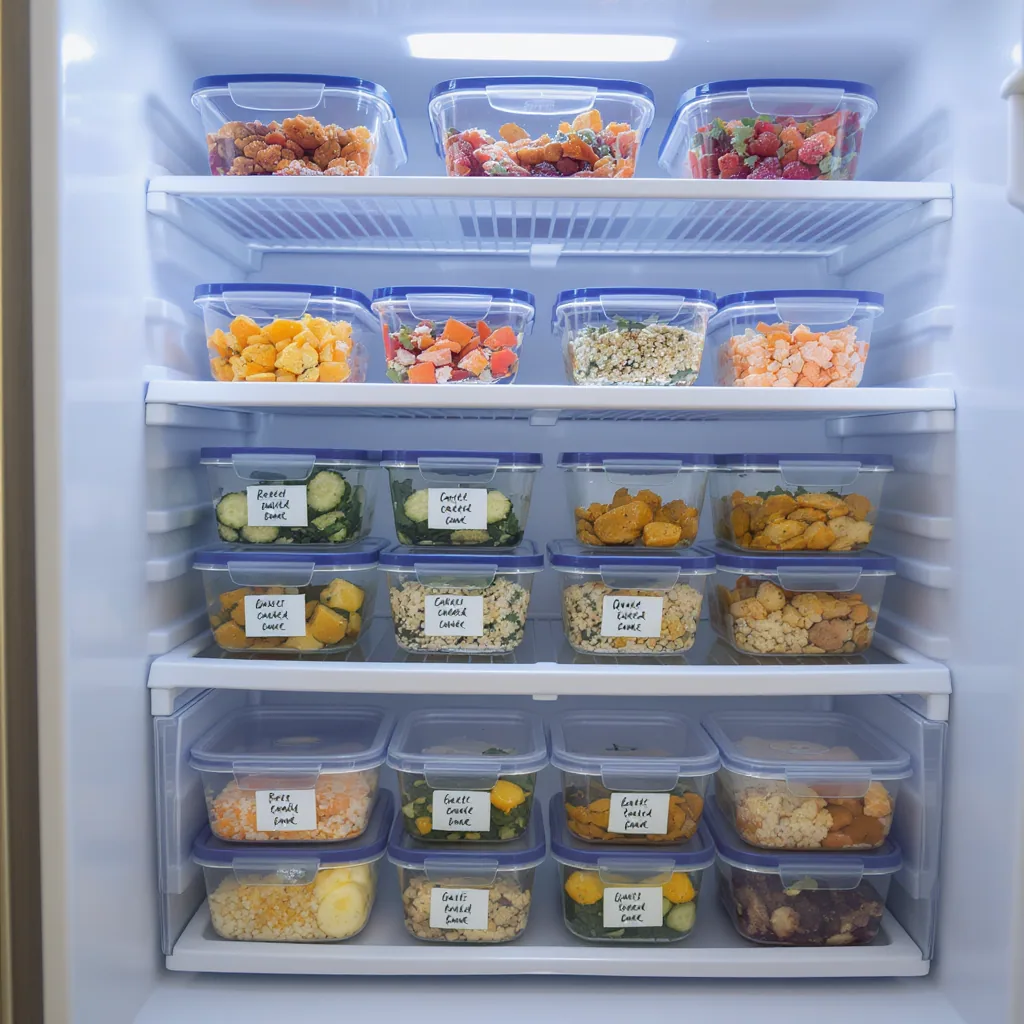
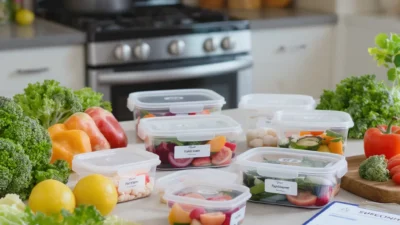
Storage configuration is critical for reheating efficiency. Always store in single-meal or single-serving portions. Reheating a large container to take out one portion is incredibly wasteful. Use clear, stackable containers that are appropriate for both fridge/freezer and your intended reheating method (e.g., microwave-safe glass). Organize your fridge so these pre-portioned meals are easily accessible, reducing the time the door is open and making your batch cook and reheat efficiently routine seamless.
The Reheating Matrix: Choosing Your Weapon Wisely
This is where the rubber meets the road. Your choice of reheating appliance has a dramatic impact on reheating food energy consumption. The rule of thumb: use the smallest, most targeted appliance that can do the job well.
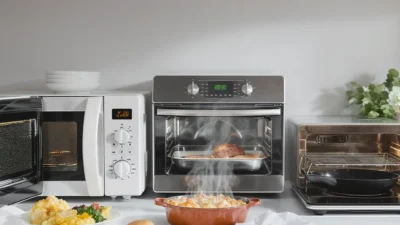
For single portions of most foods (soups, rice, veggies): The microwave is your most energy-efficient tool. It excites water molecules directly inside the food, heating it quickly with minimal energy loss to the surrounding air. It’s the champion of energy saving leftovers reheating for moist foods.
For restoring crispness or reheating dry items (pizza, fries, roasted veggies): A toaster oven or air fryer is ideal. They use a fraction of the energy of a full-sized oven and deliver far better texture than a microwave. They are perfect for that “Wednesday night lasagna for one” scenario.
Let’s consider a common experience: You have a portion of baked pasta and some garlic bread from Monday’s big cook. Nuking it all in the microwave leaves the bread soggy. Instead, reheat the pasta in the microwave (2 minutes) while the toaster oven preheats for the bread (1-2 minutes). The bread goes in for the last minute. You’ve used two targeted appliances for a perfect result in about 3 minutes total, using a fraction of the energy it would take to heat your full-sized oven for 15 minutes.
For large family-sized portions or casseroles: The stovetop (for wet foods) or a conventional oven may be necessary. If using the oven, avoid preheating for too long and place the food inside while it heats. Always cover dishes with foil or a lid to speed up heating and retain moisture.
Common Energy Mistakes in the Kitchen Cycle
Even with the best intentions, it’s easy to fall into habits that quietly drain energy. Here are the most frequent pitfalls and how to correct them.
Reheating a single serving in a full-sized oven. This is the cardinal sin. An oven uses 2000-5000 watts to heat its entire cavity. Using it to warm a single plate of food is massively inefficient. Do: Use a microwave, toaster oven, or stovetop for small portions.
Using the wrong container for the appliance. Putting a plastic container in the oven or a metal one in the microwave is dangerous, but even suboptimal choices waste energy. A deep, narrow container heats unevenly in a microwave. Do: Use shallow, wide, microwave-safe dishes for even heating. For oven reheating, use metal or glass that conducts heat well.
Refrigerating or freezing food while still piping hot. As mentioned, this forces your fridge to work much harder, raising its energy consumption and potentially warming other foods. Do: Use the rapid cooling methods described earlier before storing.
Reheating more than you need. Repeatedly heating and cooling the same large batch degrades food quality and uses extra energy each time. Do: Portion before storage and only reheat what you’ll consume immediately.
Leaving appliances on standby or preheating for excessive times. Many modern ovens reach temperature quickly. A 20-minute preheat is rarely necessary. Do: Time your preheat, and consider reheating some foods (like casseroles) from a cold start in the oven, adding a few extra minutes to the cook time.
Your Energy-Efficient Kitchen Starts Now
The most effective batch cooking reheating leftover energy strategy isn’t a single trick; it’s a mindset of managing the entire thermal lifecycle of your food. You’ve seen how the savings hinge on conscious choices at three key points: the efficient bulk cook, intelligent storage, and, most critically, the targeted reheat.
This isn’t about perfection. It’s about progress. The biggest lever for change is your reheating habit. Tonight, before you warm up dinner, pause. Ask yourself: “Is the oven truly the right tool, or is there a faster, lower-energy method that will give me a better result?” Implementing that one moment of awareness is the decisive next step. Audit your most-used appliance this week, and plan one “high-thermal-mass” batch cook—like a hearty stew or bean chili—designed from the start for efficient future reheats. Your wallet, your schedule, and your kitchen will feel the difference.
To save the most energy through batch cooking and reheating, focus on the complete cycle:
1. Efficient Bulk Cook: Use your most efficient appliance (pressure cooker, slow cooker) for the initial cook, matching the tool to the food. Maximize thermal mass with water-rich ingredients.
2. Intelligent Storage: Cool food rapidly and store it in single-serving, ready-to-reheat portions. This preserves quality and minimizes the energy needed for future reheats.
3. Targeted Reheat: Choose the smallest, most appropriate appliance for the job. Use the microwave for moist single servings, a toaster oven for crispness, and the full oven only for large family-sized portions. Conscious appliance choice at this stage is where the greatest savings are realized.