You might think that reheating leftovers is just a quick zap in the microwave—a tiny blip on your home’s energy radar that doesn’t really affect your utility bill. It’s a common assumption, but it’s one that overlooks how small, daily choices in the kitchen add up to significant waste. The truth is, many of our default reheating habits are surprisingly inefficient, quietly draining power and money with every warmed-up meal. By understanding a few key principles and avoiding common leftover reheating mistakes, you can achieve genuine energy savings without sacrificing a hot, delicious dinner. It’s not about buying new gadgets; it’s about using the ones you already own much smarter.
The best way to reheat leftovers for energy savings is to match the appliance and method to the food type and quantity. For most single servings, a microwave is the most efficient. For larger quantities or crispy foods, a toaster oven or conventional oven (preheated only if necessary) can be better than repeatedly microwaving in batches. Avoid using a full-size oven for small items and always cover food to reduce cooking time.
Myth: The Microwave is Always the Most Efficient Choice
It’s a common piece of kitchen wisdom: for energy savings, always use the microwave. While this is often true, it’s not an absolute rule. The efficiency of a microwave comes from its ability to directly excite water molecules in your food, heating it from the inside out. This makes it a champion for quickly reheating moist, single-serving items like a bowl of soup, a plate of pasta, or steamed vegetables.
However, this same mechanism is its limitation. Microwaves struggle to create a crispy, browned texture. Trying to reheat a slice of pizza or fried chicken in the microwave often leads to a soggy result, which might tempt you to run a second cycle or finish it in another appliance—wiping out any initial energy savings. For larger, denser items like a whole casserole or a thick piece of meat, microwaves can heat unevenly, requiring frequent stirring and longer cook times. The key to reheating leftovers efficiently isn’t blind loyalty to one appliance, but matching the tool to the task.
The Toaster Oven vs. Big Oven Energy Trap
Picture this: you have last night’s roasted vegetables and a couple of chicken thighs to warm up. The default move for many is to turn on the big oven, set it to 350°F, and wait for it to preheat. This is one of the most common leftover reheating mistakes energy savings enthusiasts spot. A full-size oven is a power hog, typically drawing between 2,400 to 5,000 watts. Preheating it for 10-15 minutes to warm a small amount of food is like using a semi-truck to deliver a single letter.
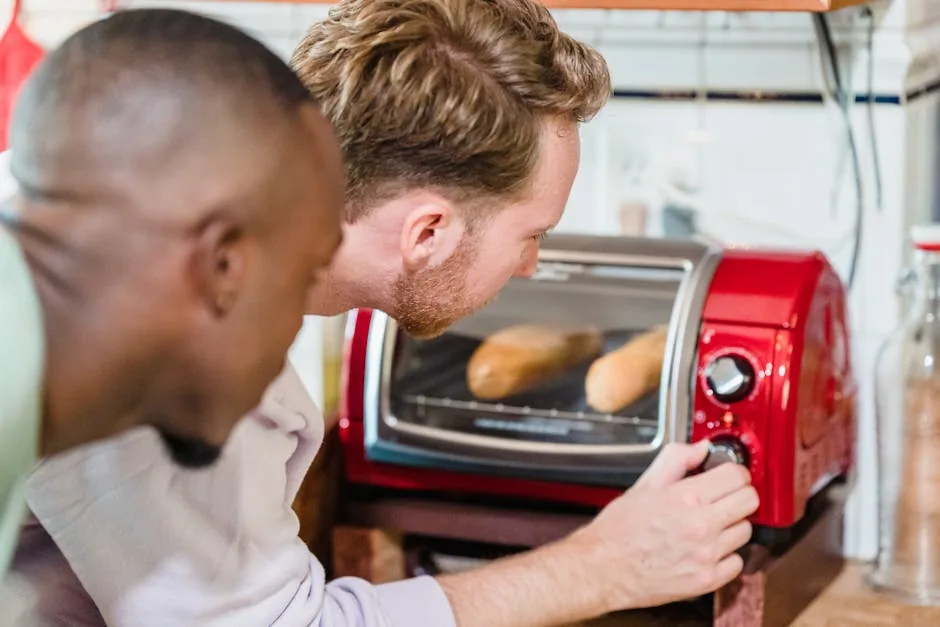
Photo by Mizuno K on Pexels
Enter the toaster oven or air fryer. These countertop appliances use a fraction of the space and energy, usually between 1,200 and 1,800 watts. They also reach their target temperature much faster. For that same plate of roasted veggies and chicken, a toaster oven can have your food hot and crispy in the time it takes the big oven just to preheat. This simple switch is a core appliance reheating energy tip that can lead to significant savings over a year of meals.
Stealth Energy Drains: Preheating, Uncovered Food, and Batch Size
Beyond choosing the wrong appliance, smaller habits quietly waste electricity. Avoiding these errors is where real energy-efficient leftover reheating happens.
Don’t preheat your oven for every reheating job. For simply warming through already-cooked food, you can often place it in a cold oven and start the timer once you turn it on. Do skip the preheat for tasks like reheating bread or a casserole that doesn’t need a crisp top.
Don’t reheat food uncovered. Exposing food to the open air allows heat and steam to escape, increasing the time needed to get it hot. Do use a lid, microwave-safe cover, or even a damp paper towel to trap steam. This drastically cuts down cooking time, whether on the stovetop or in the microwave.
Don’t use a large appliance for a tiny portion. Reheating a single meatball in a full oven or a cup of soup in a large stockpot wastes energy heating empty space. Do scale your appliance to your portion. Use a small pan on a small burner, or the microwave for that one meatball.
Don’t reheat in multiple small batches. If the family is eating the same leftover lasagna, heat it all at once. Do consolidate and reheat in one larger batch. Running the microwave or oven several times for individual plates uses more total energy than one slightly longer cycle for everything.
Your Leftover Reheating Strategy for Maximum Savings
Putting it all together, your strategy for reheating food to save electricity is a simple three-step mental checklist. First, assess your food: Is it moist or saucy? Is it a single serving? If yes, the microwave is your best bet. Is it something crispy, baked, or a medium-sized portion? A toaster oven or air fryer will give you the best texture without the energy penalty of the big oven. Is it a soup, stew, or a very large batch? The stovetop (using a pot with a well-fitting lid) or the big oven might be justified.
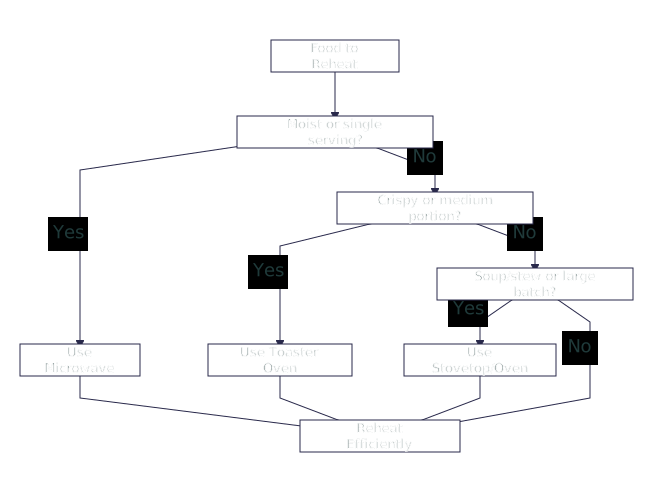
Second, apply the efficiency rules: cover your food, avoid unnecessary preheating, and match the appliance size to your portion. Third, be mindful of the cumulative effect. According to the U.S. Department of Energy, cooking accounts for a notable portion of home energy use, and small changes add up. By making smarter choices each time you warm up last night’s dinner, you’re avoiding common reheating errors that waste energy and putting money back in your pocket.
Smart Reheating is a Habit, Not a Hassle
The path to energy savings with leftovers isn’t about buying new gadgets or making complicated calculations. It’s about using the tools you already have more thoughtfully. By questioning the default “zap it” or “oven it” reflex and considering the food type, quantity, and a few simple rules, you can avoid the subtle drains on your power bill.
This preventive approach means you’re not just saving energy reactively; you’re building habits that prevent waste from happening in the first place. The impact might seem small with one plate of food, but over weeks and months, these choices lead to noticeable savings. The next time you open the fridge, take two seconds to choose your method wisely. Your wallet—and the planet—will thank you for that small bit of extra thought.