If you’ve ever stood in your kitchen staring at a preheating oven, wondering if that wait is truly necessary, you’re not alone. The rule to “always preheat” is one of the most persistent kitchen commandments, creating a quiet tension between following instructions and the desire to save time, energy, and money. But what if this rule is more of a guideline? The truth is, blindly preheating every appliance is a fast track to wasted electricity and unnecessary delays. This article cuts through the confusion, offering clear, appliance-specific guidance on when you can confidently skip preheat to save energy and when preheating remains non-negotiable for perfect results.
You can often skip preheating to save energy, especially for stovetop cooking, reheating, or roasting vegetables, but preheating is non-negotiable for delicate baked goods and some meats. The key is knowing which appliance and task demands it. For most home cooking, the decision hinges on whether the food requires an immediate, precise blast of heat to set its structure or cook safely. This simple principle will help you streamline meal prep and cut down on your energy use without sacrificing the quality of your food.
The Great Preheat Debate: Why It’s Not One-Size-Fits-All
For decades, the rule was simple: always preheat. It was printed in every cookbook and recipe card, presented as the non-negotiable first step to culinary success. But this blanket rule is a major source of confusion and, frankly, wasted energy in modern kitchens. The truth is, preheating serves specific purposes—achieving consistent results and ensuring food safety—but it’s not a universal requirement.
The key to deciding is understanding the “why.” Preheating is crucial when the recipe depends on an immediate, specific temperature to trigger a chemical reaction, like the rapid rise of leavening agents in baked goods. However, for many other tasks, starting in a cold appliance simply means adding a few extra minutes to the cook time. The energy saved by skipping preheating to conserve energy over hundreds of meals is far more impactful than a minor adjustment to your cooking routine. Smart cooking is about knowing which battles require precision and where you can afford to be flexible.
Oven Rules: When Precision Baking Demands Heat
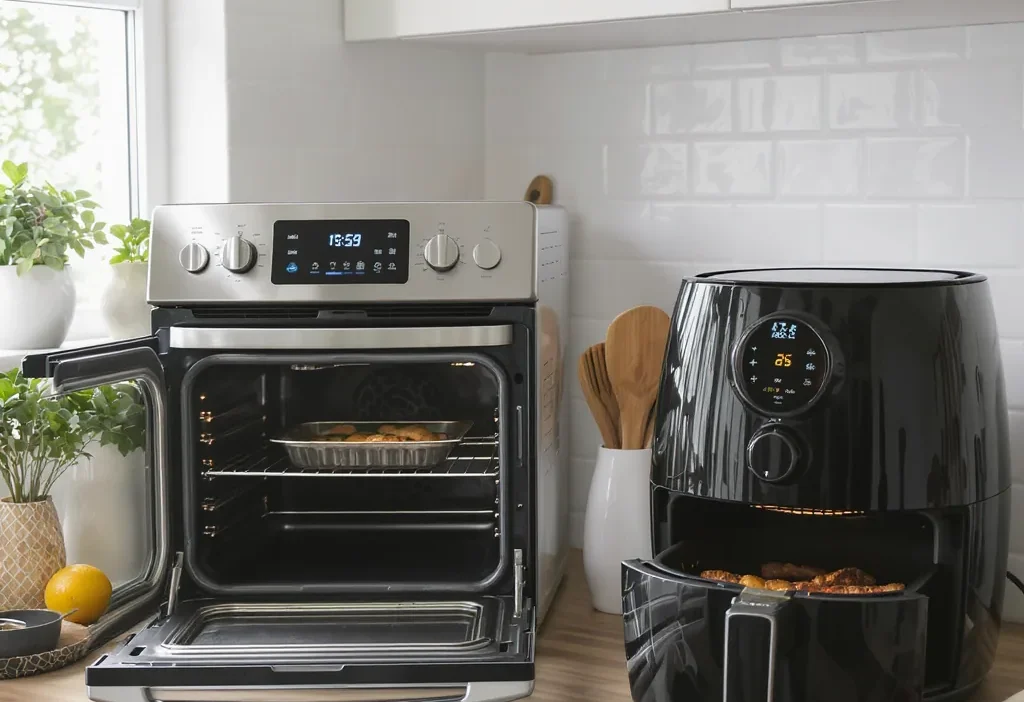
Your oven is where the preheat rule is most rigid, but even here, there’s a clear divide. The decision hinges entirely on whether your food’s structure is set by chemistry or simply by heat.
Always Preheat For:
This is non-negotiable for delicate baked goods. Cookies, cakes, pastries, and bread rely on a burst of hot air to activate baking powder or soda, causing them to rise before their structure sets. A cold start leads to dense, flat, or greasy results. The same goes for recipes with precise cooking times, like a tenderloin you want medium-rare, or anything involving puff pastry.
You Can Usually Skip For:
Many savory dishes are far more forgiving. Casseroles, roasted vegetables, baked potatoes, and frozen pizzas are essentially being cooked through by ambient heat. Putting them in a cold oven just means they’ll heat up with the appliance, adding 5-10 minutes to your total time but using significantly less energy. The same logic applies to reheating leftovers. Understanding your preheat oven energy use in these scenarios empowers you to make the efficient choice without sacrificing your meal.
Stovetop & Skillet: The Preheat-Free Zone
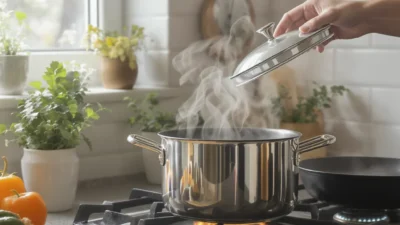
This is the most flexible area of your kitchen for the preheat vs skip preheat decision. For the vast majority of stovetop cooking—sautéing vegetables, pan-frying chicken, searing a steak—you can confidently start cooking as the pan heats up.
The process is intuitive: add your oil or food to a cold pan, turn on the heat to your target setting, and adjust as it comes to temperature. You’re essentially preheating with the food inside, which is incredibly efficient. The only exceptions are for hyper-precise techniques like tempering chocolate or using a sugar thermometer, where controlling the exact rate of temperature increase is critical. For everyday cooking, skipping the empty preheat phase is a straightforward way to cut down on preheat oven energy use (or, in this case, stovetop energy use).
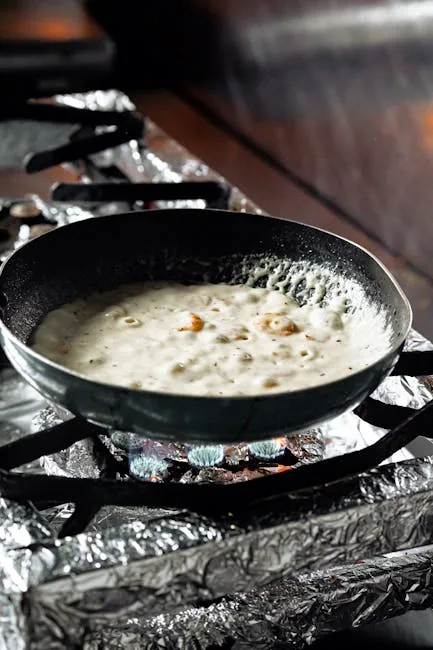
Photo by pedro furtado on Pexels
Air Fryer & Toaster Oven: Small Appliance, Big Confusion
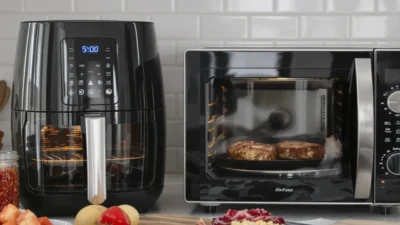
These countertop convection ovens are where questions about preheat air fryer tips really pile up. Their manuals often insist on preheating for optimal crispiness, which can feel mandatory. But here’s the practical truth: preheating is most important when you’re cooking from-scratch items where you want maximum browning and crunch from the first moment, like homemade french fries or fresh chicken wings.
For reheating pizza, cooking frozen nuggets, or warming pastries, it’s often unnecessary. These items are already cooked or par-cooked; the goal is to heat them through and re-crisp the exterior. Throwing them into a cold air fryer simply extends the cook time slightly. Given how quickly these small appliances heat up, skipping the preheat cycle can save a meaningful percentage of their total energy use for these common tasks.
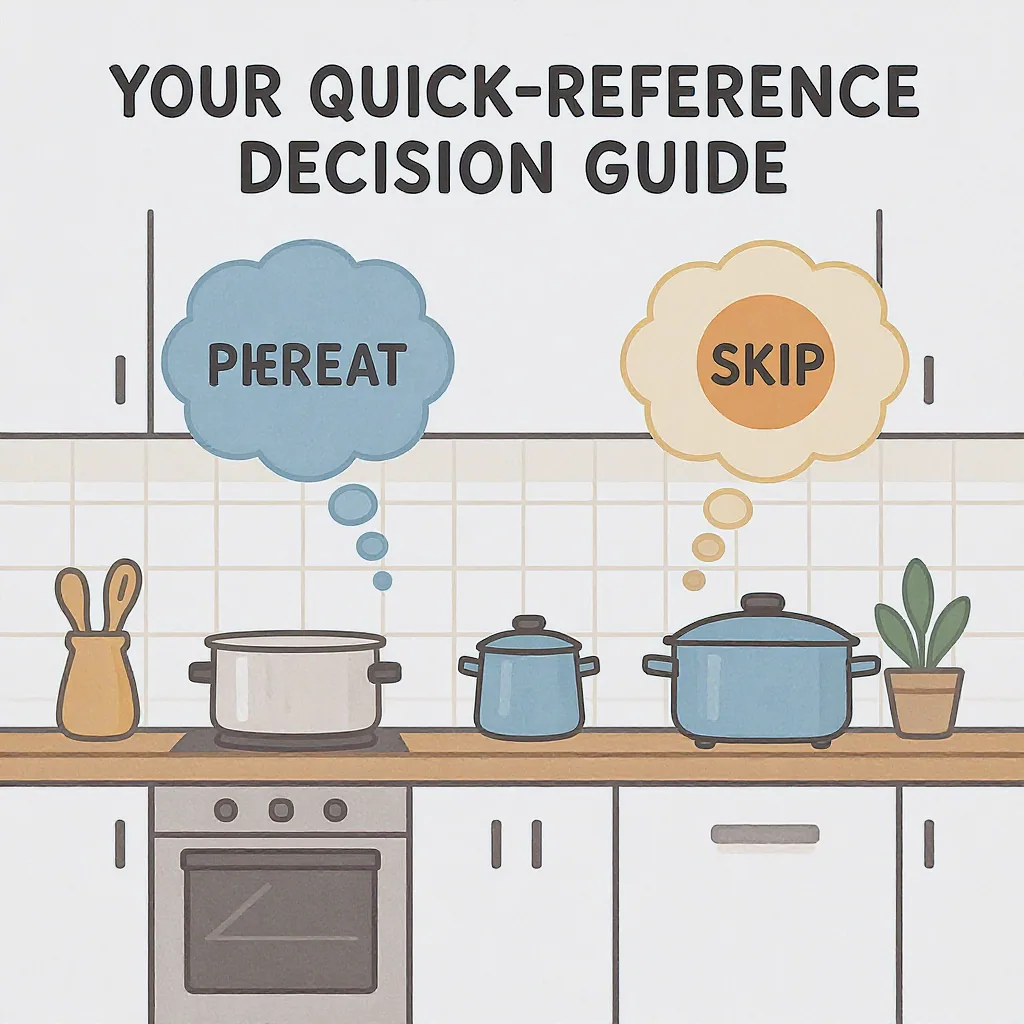
Your Quick-Reference Decision Guide
When you’re in a hurry, use this simple checklist to decide. It consolidates the core principle: preheat for chemistry-dependent precision, skip for heat-through cooking.
Oven
- Always Preheat: Cakes, cookies, bread, pastries, precise meat roasts, soufflés.
- Can Usually Skip: Casseroles, roasted veggies, baked potatoes, reheating, frozen foods.
Stovetop/Skillet
- Always Preheat: Almost never. (Exception: precise candy/syrup work).
- Can Usually Skip: Sautéing, pan-frying, searing, scrambling eggs.
Air Fryer & Toaster Oven
- Always Preheat: From-scratch crispy foods (fresh fries, chicken wings).
- Can Usually Skip: Reheating anything, cooking frozen/pre-cooked items.
Microwave
- Always Preheat: Never. It doesn’t work that way.
Cooking Smart, Not Just By The Book
The goal isn’t to break rules for the sake of it, but to understand them. Knowing when you can skip preheat to save energy cooking turns a rigid instruction into a flexible tool. It gives you more confidence to streamline meal prep on busy nights and reduces your kitchen’s energy footprint without compromising on results for your most important dishes.
Embrace this practical approach. You’ll save time, save money, and realize that a lot of kitchen dogma exists to be questioned. Happy, efficient cooking.