If you’ve ever watched a cooking show, you’ve seen the dramatic shot of a pot at a furious, rolling boil—the very picture of culinary power. But here’s a counterintuitive truth: for everyday cooking, that aggressive boil is often just wasted energy, money, and time steaming up your kitchen windows. True stovetop efficiency isn’t about maximum heat; it’s about intelligent control. The good news is that mastering it doesn’t require fancy equipment, just a simple, three-part protocol you can start using tonight. This stovetop efficiency checklist breaks down the sequential decisions of Burner Choice, Lid Use, and Timing into actionable steps that will help you cook faster, use less energy, and gain more consistent results with the tools you already have.
Maximize your stovetop efficiency by following a simple three-part protocol: always match your pan size to the burner, keep a lid on to trap heat and speed cooking, and use precise timing to turn off the heat before food is fully done. This checklist saves energy and time by focusing on the core actions of proper burner selection, strategic lid use, and proactive clock management every time you cook.
The Protocol: Burner, Lid, Timing
Think of this as your core mental model for efficient stovetop use. Every time you cook, you make three sequential decisions that directly impact energy use and cooking time. Master this simple protocol, and you’ll turn efficiency from a vague concept into a repeatable habit.
The three parts are:
- Burner Choice: Your first and most critical decision. This is about matching your cookware to the heat source to prevent waste.
- Lid Use: The act of containment. A lid traps heat and moisture, dramatically speeding up the cooking process.
- Timing: Proactive control. This isn’t just about a timer; it’s about understanding when to turn heat off to leverage residual energy.
Follow this order every time, and you’ll have a solid stovetop efficiency checklist to guide you.
Photo by Stephane Fabrice Bassangue on Pexels
Step 1: The Burner Choice Rule
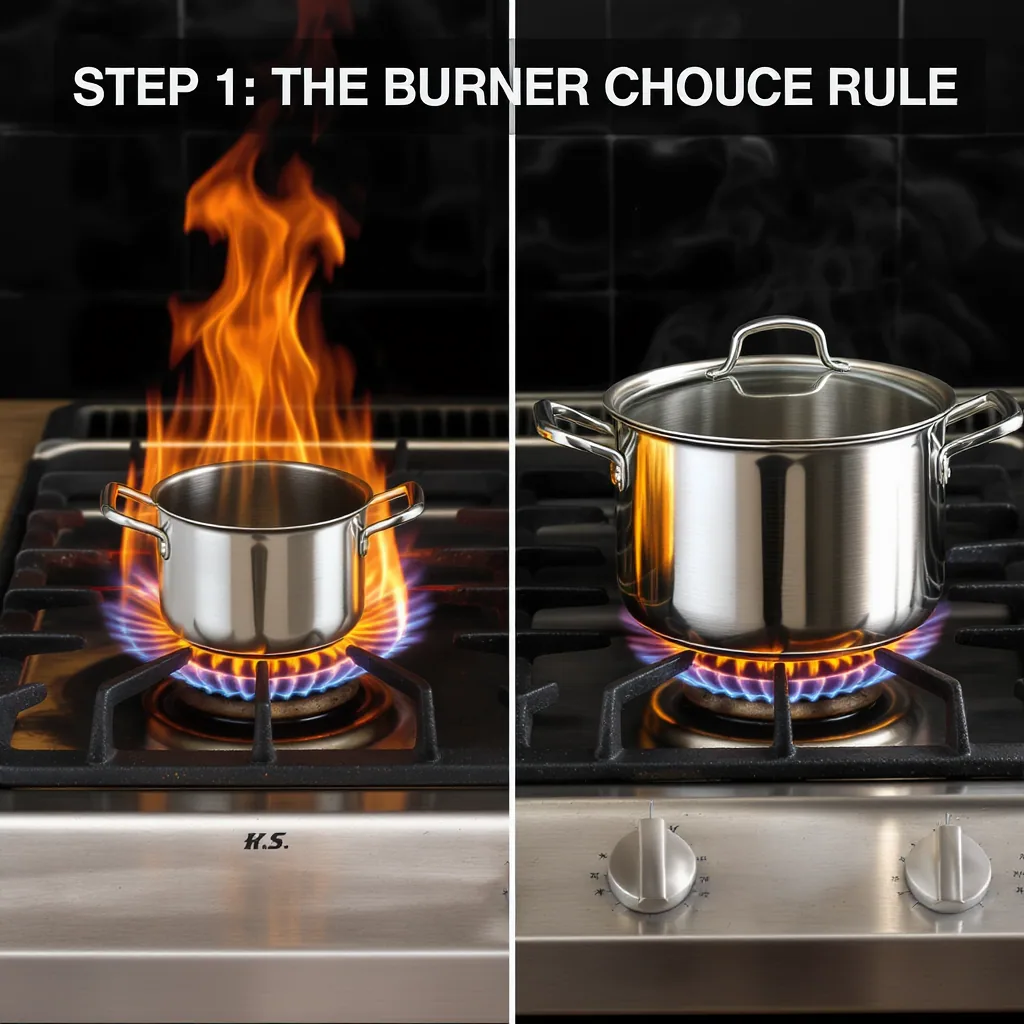
This is the foundation of burner selection cooking energy savings. Using a burner that’s too large for your pan is like heating your entire kitchen to warm a cup of tea—it wastes a tremendous amount of energy as excess heat escapes around the sides of the cookware. Conversely, a pan that’s too large for a small burner will cook unevenly and take forever, also wasting energy through prolonged use.
Your Mini-Checklist for Perfect Matching
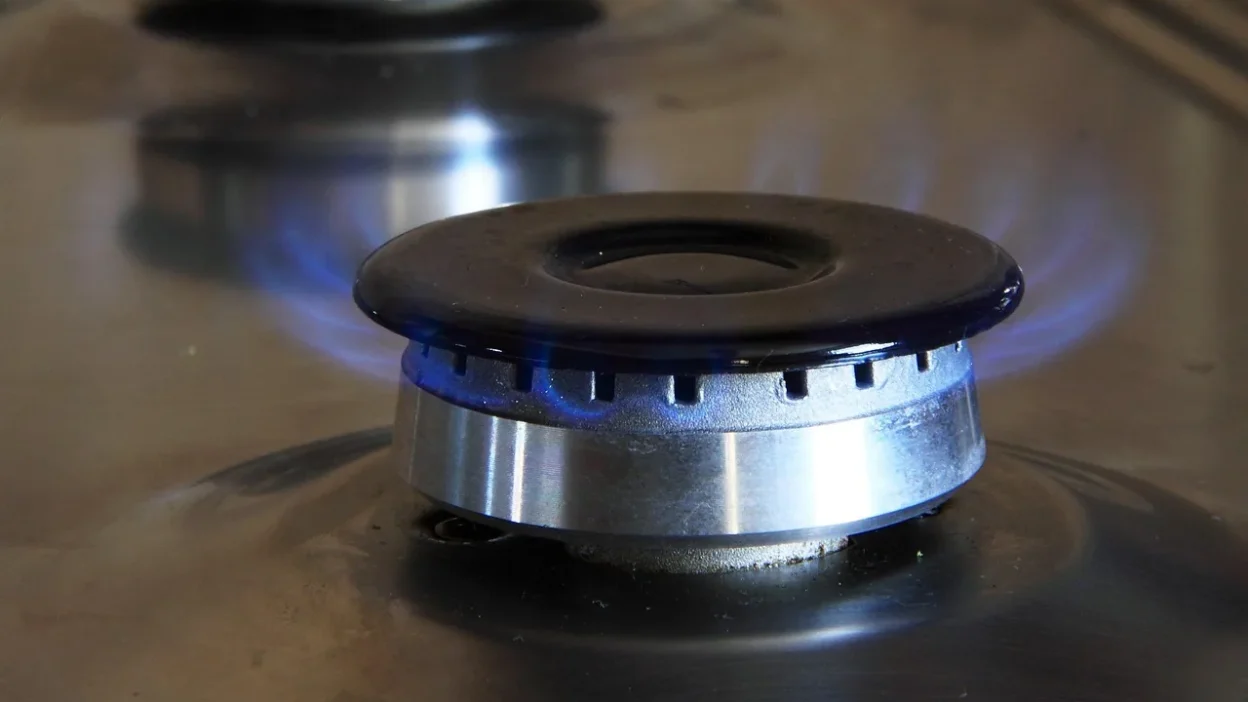
- For Gas Stoves: The flames should stay neatly under the base of the pan. If flames are licking up the sides, your burner is too large.
- For Electric Coils: The coil should be completely covered by the pan’s bottom. You shouldn’t see any glowing red coil around the edges.
- For Smooth-Top Electric/Gas: The pan’s base should cover the marked heating element or burner ring entirely. A good pot size to burner ratio means the pan is within an inch of the element’s diameter.
Getting this right ensures direct heat transfer to your food, not to the air around it. It’s the single biggest adjustment you can make for better cooktop energy saving.
Step 2: Lid Use – Your Secret Weapon
A lid is your most powerful tool for heat conservation cooking. It works by creating a sealed environment, trapping steam and heat that would otherwise escape. This simple action can reduce cooking time by up to 30%, meaning you use your burner for less time. The physics are straightforward: trapped heat raises the temperature and pressure inside the pot, cooking food faster.
When to Use It (and When Not To)
Your default should be “lid on.” Specifically, use a lid when you need to bring liquids to a boil quickly (like for pasta), maintain a simmer (for soups or grains), or steam vegetables. The related concept of stovetop lid timing tips comes into play here.
For example, when boiling water, keep the lid on tightly until you reach a full boil. Once you add pasta and return to a simmer, you can offset the lid slightly to prevent boil-overs while still retaining most of the heat. The key exception is when you are actively reducing a sauce or need liquid to evaporate, as in frying or sautéing.
What usually happens? You start boiling potatoes without a lid. The kitchen gets steamy, the window fogs up, and 15 minutes later the water is still not boiling. With a lid, you’d be halfway done. This is the experience of wasted energy—visible steam is literally your heat and time escaping.
Step 3: Master the Clock (It’s Not What You Think)
Efficient kitchen cooking timing is proactive, not reactive. It’s about understanding that your stovetop and cookware retain heat long after you turn the burner off. This “carryover cooking” can finish the job for you, using zero additional energy.
Two Key Timing Strategies
1. The Early Shut-Off: For many dishes, you can turn off the heat 1-3 minutes before the food is fully done. For scrambled eggs, turn off the heat when they are still slightly wet; the residual heat in the pan will finish them perfectly. For rice or steamed veggies, turn off the heat and let them sit, covered, for the last few minutes of cooking.
2. Smart Pre-Heating: Pre-heating is essential for tasks like searing meat to get a good crust, but it’s often wasteful for simply boiling water. There’s no need to blast an empty pot for five minutes before adding water. For boiling, add water to a cold pot, put the lid on, and then turn on the heat to high. You’ll reach a boil just as fast, if not faster, because the water helps distribute the heat evenly from the start.
This step turns you from a passive timer-setter into an active energy manager.
Putting It All Together: A Real Cooking Scenario
Let’s cook a pot of white rice using the entire protocol to see the cumulative effect on gas/electric stove efficiency.
- Burner Choice: Select a medium-sized saucepan. Place it on a medium burner, ensuring the base fully covers the heating element. Perfect match.
- Lid Use: Add water and rice to the pot. Immediately put the lid on tightly. This traps all heat, bringing the water to a rolling boil in the shortest possible time.
- Timing: Once boiling, reduce the heat to the lowest simmer and set a timer for the recommended cook time (e.g., 18 minutes). When the timer goes off, turn off the heat completely. Do not remove the lid. Let the pot sit on the hot burner for 5 final minutes. The residual heat will finish steaming the rice perfectly.
By following this system, you used the least amount of burner energy, minimized heat loss, and leveraged free residual heat. The result is perfectly cooked rice with less active cooking time and lower energy use. Apply this three-part system to boiling pasta, simmering soup, or steaming vegetables, and you’ll see consistent results.
Start Your Efficient Cooking Habit Tonight
Transforming your stovetop efficiency doesn’t require a kitchen overhaul or expensive new gear. It starts with a single, deliberate choice. Tonight, pick just one part of the protocol—maybe commit to using a lid every time you boil water—and notice the difference. Does the water boil faster? Is there less steam in the kitchen?
Efficiency is a skill built one meal at a time. By consciously applying the principles of matching, containing, and proactive timing, you’ll naturally cook faster, reduce your energy bills, and gain more control in the kitchen. The real win isn’t just saving energy; it’s the satisfaction of mastering a fundamental home skill.