You’re standing in front of your oven, ready to roast some vegetables for dinner. You see two buttons: one for “Bake” and one for “Convection Bake.” Which one do you press? If you’re like most people, you probably default to the regular bake setting without a second thought. But that simple choice could be costing you more on your energy bill than necessary. Understanding the difference between a convection vs conventional oven for energy saving isn’t about appliance specs—it’s about matching the tool to the task. This guide cuts through the confusion with practical, scenario-based advice, so you can cook efficiently, save money, and still get perfect results every time.
The best way to save energy with your oven is to match the cooking mode to the food. Use convection for roasting meats, baking multiple racks, or crisping vegetables, as it cooks faster and at a lower temperature. Use conventional for delicate baked goods, custards, or quick reheating where even, gentle heat is key. This simple switch can cut cooking time and reduce your oven’s energy use by up to 20%.
The Core Difference: How Heat Moves in Your Oven
To understand the convection vs conventional oven energy saving debate, you need to start with the basics of how each mode cooks your food. It all comes down to how heat moves inside the cavity.
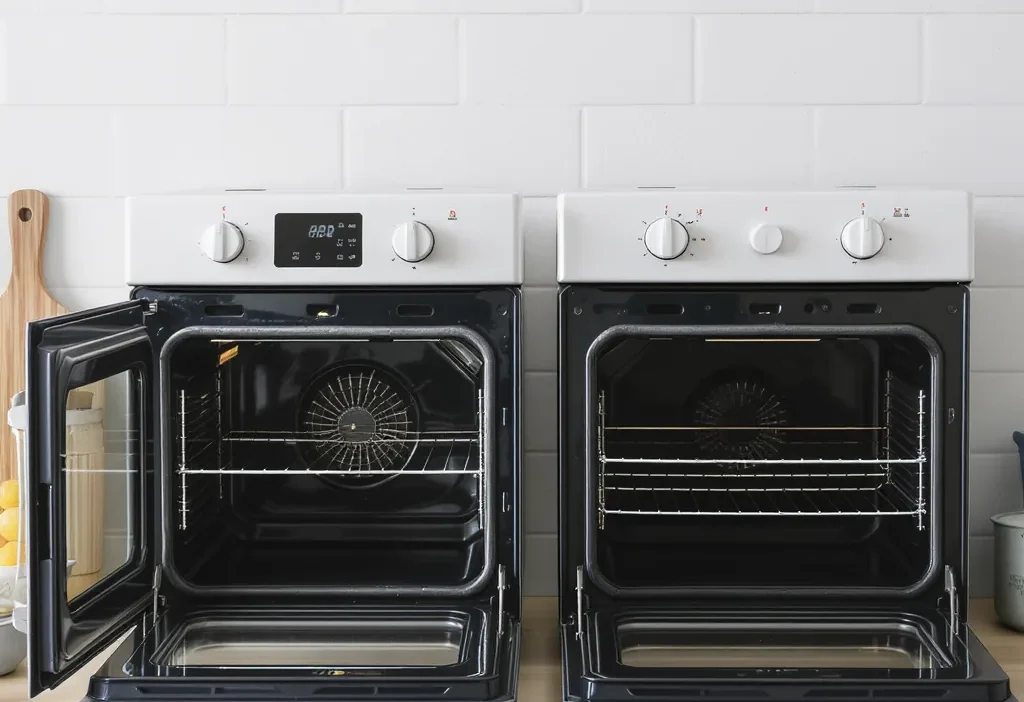
A conventional oven (often labeled “Bake”) uses heating elements, typically at the top and bottom. These elements radiate heat, which naturally rises and creates hot and cool spots. This is why you sometimes need to rotate a baking sheet halfway through. It’s a simple, time-tested method, but it can be less uniform and slower.
A convection oven (usually a button labeled “Convection Bake” or with a fan symbol) adds a crucial component: a fan and exhaust system. This fan actively circulates the hot air around the food. Think of it as a strong, warm wind inside your oven. This constant circulation does two key things: it cooks food more evenly by eliminating cold spots, and it transfers heat to the food’s surface much more efficiently.
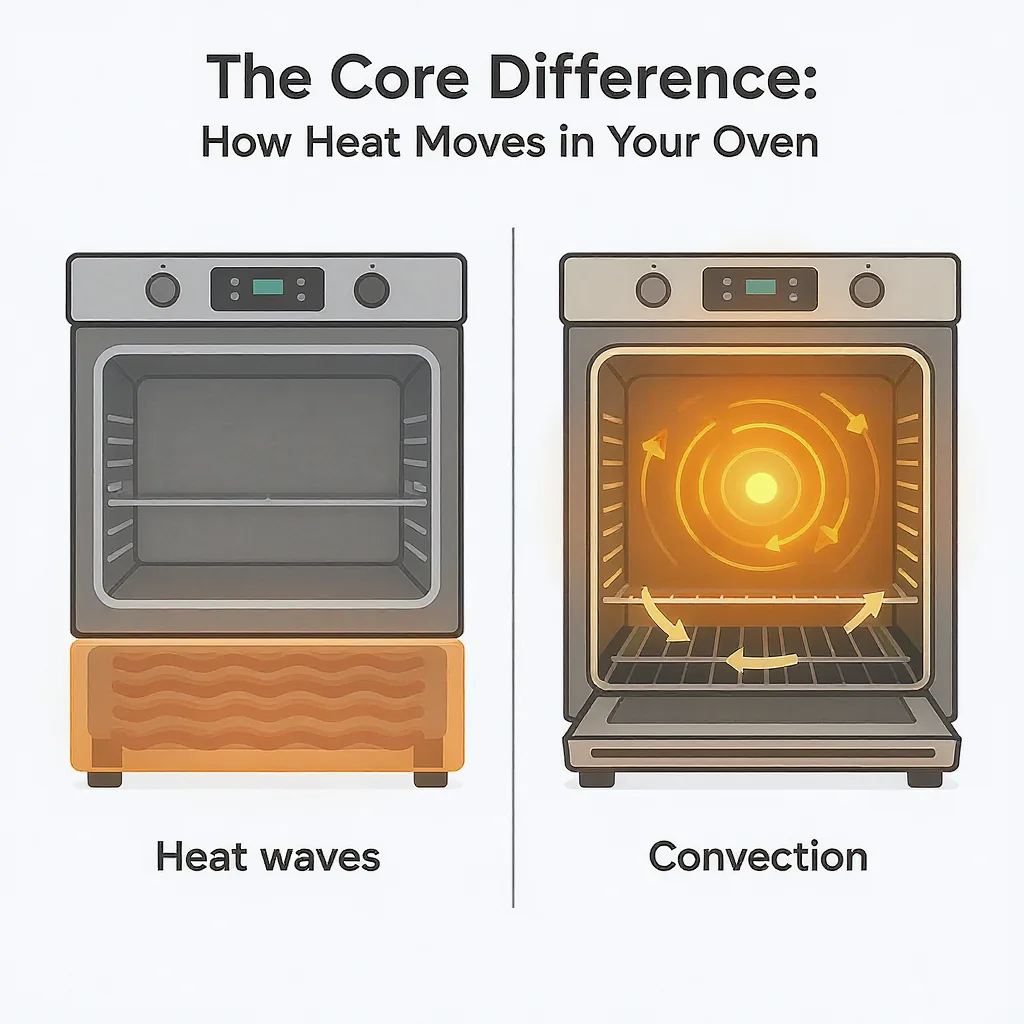
This efficient heat transfer is the heart of convection oven efficiency cooking. Because the hot air is constantly in contact with the food, it cooks faster and often at a lower temperature. This fundamental difference in oven mode energy use is what leads to potential savings on your energy bill. For more general tips on appliance efficiency, resources like ENERGY STAR’s guidelines are a great reference.
The Energy-Saving Path: When Convection Wins
If your primary goal is to reduce energy consumption, this is your go-to path. The convection fan’s ability to cook faster and more evenly makes it the champion for several common tasks. The general rule of thumb: when using convection, you can often reduce the recipe’s temperature by 25°F (about 15°C) and expect a shorter cooking time. Less time and lower temperature directly translate to less energy used.
Roasting Meats and Poultry
Convection is ideal here. The circulating air creates a beautifully browned, crispy exterior (thanks to faster moisture evaporation) while cooking the inside evenly. A whole chicken or a roast that might take 90 minutes conventionally could be done in 70-75 minutes on convection, using less overall energy.
Baking Multiple Racks at Once
This is where convection truly shines for saving energy with oven settings. Trying to bake three sheets of cookies in a conventional oven usually leads to uneven baking and constant rack-swapping. The convection fan ensures hot air reaches all racks equally, allowing you to bake everything in one go, cutting total oven-on time significantly.
Toasting and Roasting Vegetables
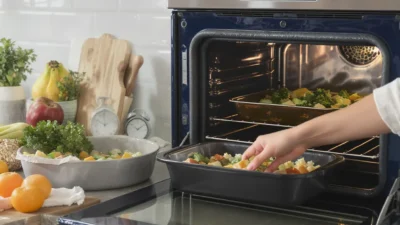
For crispy roasted potatoes, Brussels sprouts, or other veggies, convection is your best friend. The moving air wicks away surface moisture quickly, leading to better caramelization and crispness without steaming. You get perfect results faster, using less energy.
The Traditional Path: When Conventional is Smarter
While convection is great for efficiency, it’s not always the right tool for the job. For some foods, the fan can work against you, leading to poor results with no real energy benefit. In these cases, the conventional “Bake” mode is the smarter choice.
Delicate Baked Goods
Cakes, quick breads, and soufflés rely on gentle, rising heat. The forceful air from a convection fan can cause lopsided rising, crack delicate surfaces, or create a dry crust before the center is set. The consistent, radiant heat of conventional baking provides the stable environment these finicky foods need.
Custards and Cheesecakes
These dishes demand low, even heat to set smoothly without curdling or cracking. The air movement from convection can create uneven cooking and an undesirable texture. Conventional baking is the reliable method here.
Quick Reheating and Using Glass/Pottery
Reheating a single plate of leftovers or baking in a glass casserole dish? Stick with conventional. The energy difference for very short cook times is negligible, and the fan isn’t needed. Furthermore, some glass and ceramic dishes can heat unevenly under the intense, direct airflow of convection, increasing the risk of breakage.
Your Decision Guide: Picking the Mode for What You’re Cooking
Stop overthinking it. Use this simple checklist to make a fast, energy-conscious decision every time you preheat.
Choose Convection For:
- Roasting meats, poultry, and whole fish.
- Baking multiple sheets of cookies, pastries, or vegetables simultaneously.
- Any recipe where you want a crispy, browned, or dry exterior (roast veggies, pizza, toasted nuts).
- Remember: Reduce standard recipe temperature by 25°F and check for doneness earlier.
Choose Conventional (Bake) For:
- Delicate cakes, soufflés, custards, flans, and cheesecakes.
- Quick-bread loaves and muffins where a perfect dome matters.
- Reheating small amounts of food or using glass/Pyrex dishes.
- Any recipe that specifically says “do not use a fan” or that you know is finicky.
Photo by Kostas Exarhos on Pexels
A quick but important note: always check your oven’s manual. Some modern ovens with “true” or “European” convection have a third heating element around the fan and may adjust temperatures automatically, changing these rules slightly.
Make the Conscious Choice
The biggest waste of energy in your kitchen isn’t necessarily picking the “wrong” oven mode—it’s not thinking about it at all. By simply pausing to consider whether convection or conventional is better for tonight’s dinner, you’re taking a small but powerful step. You’ll not only get better culinary results but also shave minutes off cook times and degrees off the thermostat.
Frame it as an easy win. Each time you use the more efficient setting, you’re saving a little money and using a little less electricity. Over a year of regular cooking, those conscious choices add up to real savings for your wallet and a lighter load on the planet. Start with your next meal.
Q: Do I always need to lower the temperature for convection?
A: It’s a strong guideline, not an absolute rule. Most recipes are written for conventional ovens. Lowering the temperature by 25°F (15°C) when using convection helps prevent over-browning or burning due to the more efficient heat transfer. Always check for doneness 5-10 minutes before the recipe’s suggested time.
Q: Can I use convection for everything if I just get used to it?
A: Not ideally. While you can adapt many recipes, convection’s forceful air is genuinely detrimental to delicate items like soufflés, custards, and angel food cakes. The fan disrupts their rise and can create dry, tough textures. It’s best to view convection as a specialized, highly efficient tool for the right jobs.
Q: Is a ‘true’ convection oven (with a third element) more efficient than regular convection?
A: The main advantage of a third “true” convection element (often found in higher-end models) is even more precise and even heating, especially at lower temperatures. In terms of raw energy savings for the home cook, the difference from a standard convection fan is often marginal. Both types are significantly more efficient than conventional-only baking for the right tasks.
Q: Does using convection mode wear out my oven faster?
A: Not in any meaningful way you should worry about. The fan motor is designed for regular use. Modern ovens are built to handle the heat and airflow of convection cooking throughout their lifespan. The potential energy savings and better cooking results far outweigh any negligible wear on the appliance.