You’re staring at a recipe for crispy-skinned chicken, your mind racing. Should you use the oven’s convection setting, fire up the air fryer, or reach for the trusty cast iron skillet? This moment of kitchen indecision—where the right tool could mean the difference between soggy and sublime—is the heart of smart appliance choice and cooking method matching. It’s not about having every gadget; it’s about knowing which one unlocks the result you want, whether that’s a perfect sear, hands-off tenderness, or energy-efficient baking. This guide cuts through the noise with a simple framework built on two mindsets: the Practical Path, which prioritizes versatile, budget-friendly tools for getting reliable dinners on the table, and the Perfectionist Path, which leans on specialized appliances to achieve specific textures and maximize efficiency. By understanding these paths, you can move from guesswork to confident pairing, transforming how you cook.
The right appliance for a cooking method depends on your priority: speed, texture, or energy use. For example, a stovetop skillet is best for a hard sear, while a slow cooker excels at tenderizing tough cuts of meat over hours. If your goal is crispy, fried-like food with less oil, a dedicated air fryer will typically outperform a standard oven. Start by identifying the primary outcome you want from a dish, then match it to the tool designed to deliver that result most effectively.
The Two Paths: Practical vs. Perfectionist Kitchen Logic
Before we dive into specific tools and techniques, it helps to identify your primary cooking mindset. This isn’t about skill level, but about your goals in the kitchen. Your approach will naturally guide you toward the best appliance choice and cooking method matching for your lifestyle.

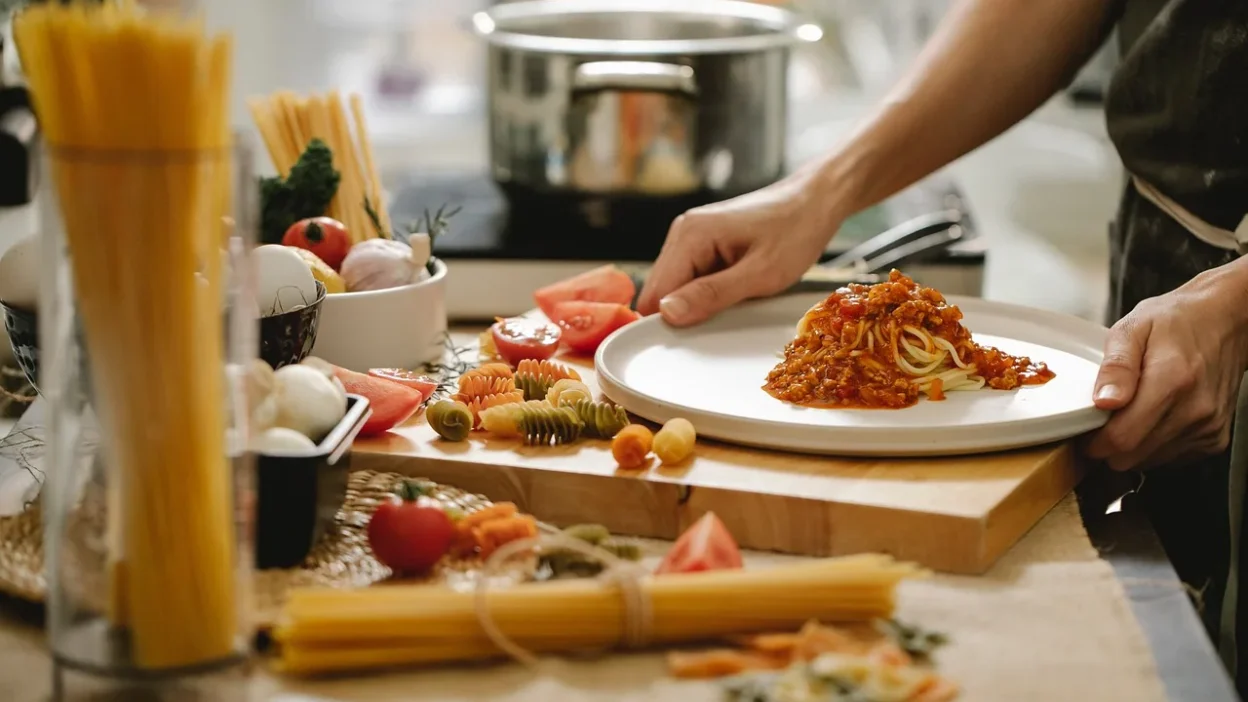
Photo by Pew Nguyen on Pexels
The Practical Path
This path is for cooks who prioritize versatility, budget, and simplicity. The goal is to get delicious, reliable results with a minimal set of multi-purpose tools. Think of a single great chef’s knife, one large, oven-safe skillet (like cast iron or stainless steel), and a basic oven. Here, the philosophy is to master a few core appliances that can handle 80% of your meals. Choosing the right appliance for cooking often means asking, “What tool can I use for three different things?”
The Perfectionist Path
This path is for those who prioritize specific textures, energy efficiency, or specialized culinary results. It’s about having the optimal tool for the job, even if that tool has a narrower focus. This might include a sous vide circulator for edge-to-edge perfect doneness, a high-BTU wok burner for authentic stir-fry, or a combi oven that steams and bakes. The investment is justified by the unique outcome and, often, by greater control and energy efficient cooking methods.
Which path resonates more with you? There’s no wrong answer, and most well-equipped kitchens are a thoughtful mix of both. The following sections will make more sense when viewed through your preferred lens.
High-Heat Heroes: Searing, Sautéing, and Stir-Frying
These methods live and die by immediate, intense heat. The goal is to create a flavorful crust (the Maillard reaction) quickly, without steaming the food. Your appliance and pan choice here is non-negotiable for success.
For searing a steak or getting a crispy skin on chicken, you need a cooking surface that can get very hot and hold that heat when food is added. A heavy cast-iron or carbon steel skillet is the classic champion because it retains heat brilliantly. On the stovetop, a gas burner offers instant visual control, while modern induction cooktops provide even faster, more energy efficient cooking methods by directly heating the pan. However, not all pans work on induction—they must be magnetic.
When to Choose a Different High-Heat Appliance
Sometimes, the best tool isn’t on the stovetop. For achieving a charred, smoky flavor, an outdoor grill is unmatched. For melting cheese or browning the top of a casserole quickly, your oven’s broiler (which is essentially an upside-down grill) is the right call. For authentic stir-frying with “wok hei,” a specialized high-output wok burner provides heat that a standard residential range simply cannot match. Selecting the best kitchen appliance for the job for high-heat cooking means matching the heat source to the desired flavor profile.
The Low & Slow League: Braising, Stewing, and Simmering
These moist-heat methods transform tough cuts of meat and develop deep, complex flavors through gentle, prolonged cooking. The key appliance traits here are consistent, low temperature control and a tight seal to retain moisture.
The humble Dutch oven is the ultimate multi-tasker for this league. Used on the stovetop, it’s perfect for browning and then simmering. Transferred to the oven, it provides enveloping, even heat that gently breaks down collagen. For true hands-off convenience, a slow cooker excels, though it often sacrifices the reduction and concentration of flavors you get from an oven braise. A multi-cooker (like an Instant Pot) speeds up the process dramatically using pressure, which is great for time but can sometimes alter texture compared to traditional braising.
To help you visualize the best cooking method and appliance pairing across all categories, refer to the comparison table below. It breaks down which tools are “Best,” “Good,” or “Not Ideal” for common techniques.
| Cooking Method | Best Appliance Match | Good Alternative | Not Ideal / Notes |
|---|---|---|---|
| Searing | Cast Iron Skillet (on Gas/Induction) | Heavy Stainless Steel Skillet, Outdoor Grill | Non-stick skillet (can’t handle highest heat) |
| Sautéing | Sloped-Sided Skillet (Any Stovetop) | Wok, Multi-cooker “Sauté” function | Slow Cooker (no direct heat) |
| Braising/Stewing | Dutch Oven (in oven) | Slow Cooker, Multi-cooker (Pressure) | Air Fryer (dry heat only) |
| Baking (Cakes, Bread) | Conventional Oven | Convection Oven (may need temp adjustment) | Air Fryer (too small, uneven for large items) |
| Roasting (Veggies, Chicken) | Convection Oven | Air Fryer (small batches), Conventional Oven | Slow Cooker (won’t brown) |
| Simmering (Sauces, Soup) | Heavy-Bottomed Pot (Stovetop) | Dutch Oven, Multi-cooker (slow cook setting) | Toaster Oven (not designed for liquids) |
Dry Heat Domains: Baking, Roasting, and Air Frying
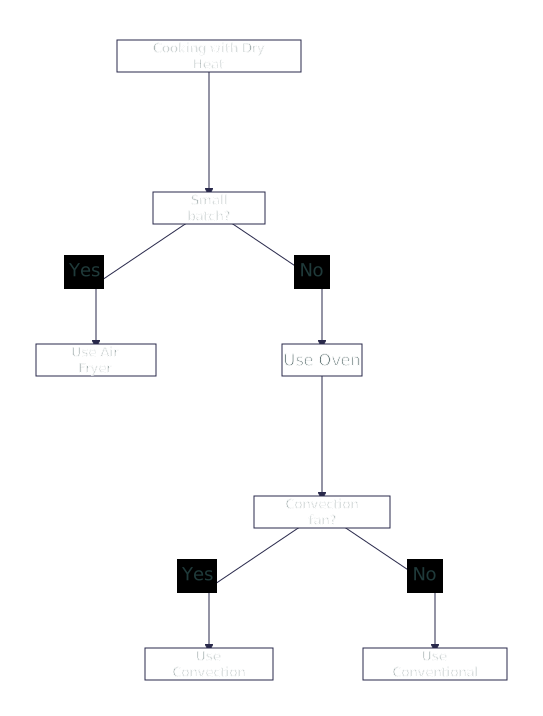
This category is all about circulating hot air. The differences between appliances come down to the speed of that circulation, the size of the cavity, and how that affects browning and cooking time.
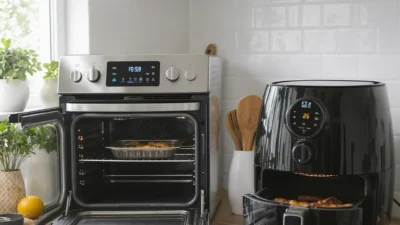
A conventional oven relies on natural heat rise and radiant heat from elements. It’s the universal workhorse for baking loaves of bread or casseroles. A convection oven adds a fan to circulate air, cooking food more evenly and often faster, which can lead to appliance efficiency for different foods like roasted vegetables and whole chickens. An air fryer is, in essence, a small, powerful convection oven. Its compact size means the fan effect is extremely intense, creating a crispy exterior on small batches of food very quickly.
Pro Tip for Crispy Roast Vegetables
- Appliance Choice: Convection oven or air fryer will outperform a conventional oven.
- Technique: Cut veggies to even sizes, toss with a thin coat of oil, and don’t overcrowd the pan. Overcrowding steams them.
- Temperature: High heat is key—400°F (200°C) or above.
- For Air Fryers: Shake the basket halfway through cooking to ensure all sides get exposed to the rapid air flow.
Understanding this spectrum helps you choose the right appliance for cooking tasks like reheating fries (air fryer wins), baking a delicate soufflé (conventional is often safer), or roasting a large turkey (a full-size convection oven is essential).
Precision & Niche Players: Sous Vide, Steam, and Dehydrating
This is the territory of the Perfectionist Path. These appliances do one thing exceptionally well that generalist tools simply cannot replicate. The decision to invest hinges on how often you crave that specific result.
A sous vide immersion circulator provides water bath precision to within a fraction of a degree. It’s the ultimate tool for achieving perfect doneness from edge to edge in proteins, from a medium-rare steak to tender pulled pork. It eliminates guesswork but requires an additional step (searing) for texture. A dedicated steam oven (or a combi oven with a steam function) delivers moist, even heat that is unparalleled for cooking vegetables, fish, and delicate custards without drying them out. A dehydrator offers low, steady air flow over many hours, ideal for making jerky, dried fruits, or yogurt—things your standard oven can attempt but not control precisely enough.
The question isn’t whether these tools are effective—they are. It’s whether their unique output justifies the counter space and cost for your cooking style and equipment compatibility. If you make yogurt weekly, a dehydrator is a workhorse. If you want restaurant-quality steak twice a year, your trusty skillet is probably enough.
Common Mistakes to Avoid
Even with the right tools, poor technique or assumptions can lead to disappointing results. Here are a few frequent pitfalls related to appliance choice and cooking method matching:
- Using the wrong pan on induction: Not all cookware is magnetic. Test with a fridge magnet before assuming your favorite copper-bottomed pan will work.
- Overcrowding the pan when searing: This is a technique error often caused by using too small a skillet. Adding too much food at once drops the pan’s temperature dramatically, causing food to steam instead of sear.
- Using a slow cooker for recipes requiring reduction: Slow cookers are sealed environments that trap moisture, preventing sauces from thickening and flavors from concentrating. A Dutch oven in the oven is often better for this.
- Assuming ‘Bake’ and ‘Convection Bake’ are interchangeable: The fan in a convection oven cooks faster and can cause uneven browning on delicate items like cakes. Usually, you should reduce the temperature by 25°F (about 15°C) when using convection.
- Buying a single-purpose appliance for a rare task: Be honest about your habits. A pasta maker is fantastic if you make fresh pasta monthly, but a dust collector if you do it once a year.
Crafting Your Personal Kitchen Ecosystem
The real art of appliance choice and cooking method matching isn’t about declaring one path the winner. It’s about building a kitchen ecosystem that serves you. For most of us, that means a solid foundation of Practical Path multi-taskers—a great skillet, a sturdy pot, a reliable oven—that handle daily dinners with ease. Then, perhaps, you sprinkle in one or two Perfectionist Path tools that align with your culinary passions, whether that’s a rice cooker for flawless grains every time or a sous vide for weekend project cooking.
The best next step isn’t another purchase. It’s an audit. Look at the meals you cook most often and ask if your current tools are delivering the results you want in terms of flavor, texture, and efficiency. That honest assessment is the true guide to a kitchen that feels less like a showroom and more like your most trusted partner in creating great food.
Here are the core takeaways for matching your kitchen tools to your cooking goals:
- Identify Your Path: Are you a Practical cook (versatile, multi-use tools) or a Perfectionist (specialized, optimized results)? Most kitchens blend both.
- High-Heat = Heavy Metal: For searing and sautéing, a heavy-bottomed skillet (cast iron, stainless) on a high-output burner (gas or induction) is essential.
- Low & Slow Loves a Lid: For braising and stewing, a Dutch oven (in the oven) provides the best flavor, while slow cookers and multi-cookers offer hands-off convenience.
- Dry Heat Has a Spectrum: Use a conventional oven for baking, convection for even roasting, and an air fryer for fast, crispy small batches.
- Specialized Tools Require Justification: Invest in niche appliances (sous vide, steam oven, dehydrator) only if you frequently desire the unique results they provide.
- Avoid Common Pitfalls: Don’t overcrowd pans, remember to adjust temps for convection, and choose tools based on your actual cooking habits, not aspirational ones.