You’ve probably heard the common kitchen wisdom: cooking fresh every day is the most efficient way to eat. It feels logical—why heat a giant oven or run a slow cooker for hours just for yourself? But here’s the twist that changes everything. The real secret to kitchen efficiency isn’t found in daily freshness, but in the physics of your appliances and, more importantly, your portioning habits. The biggest energy cost for most cooking isn’t the time it runs, but the initial “start-up” phase—preheating, coming to pressure, or heating up from cold. This creates a core tension between the single, large energy spike of a full batch and the cumulative waste of many small, inefficient cycles. So, the pivotal question becomes: does your approach to batch cooking portions for appliance efficiency leverage that science, or work against it?
The best way to use batch cooking for appliance efficiency is to match your portion sizes to your appliance’s optimal capacity. Large, infrequent batches maximize the energy used per cooking cycle, while consistently small, frequent batches waste energy on repeated preheating and partial loads. Aim to fill your oven, slow cooker, or pressure cooker to its recommended capacity, then portion meals for storage, creating a set-in habit that leverages thermal mass and reduces total cycles.
The Science of Appliance Efficiency: It’s All About Cycles
To understand why your portion sizes matter, you need to know how your appliances use energy. For most cooking appliances—ovens, slow cookers, pressure cookers—the biggest energy cost isn’t the cooking itself. It’s the start-up phase.
Think of preheating an oven or bringing a pot of water to a boil. That initial effort to reach the target temperature consumes a significant chunk of power. Once the appliance is hot, maintaining that temperature to cook more food is relatively efficient. This is the principle of cycle efficiency.
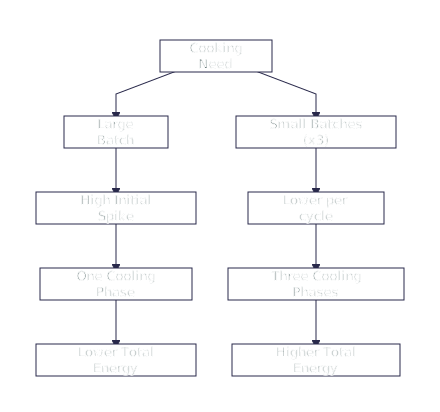
When you cook one large batch, you pay that “start-up tax” just once for a lot of food. When you cook three small batches on different days, you pay that tax three times for the same total amount of food. The repeated moderate energy spikes of small, frequent cycles almost always add up to more total energy use than one larger, optimized cycle. This is the core science behind energy-efficient batch cooking.
Fresh Habit vs. Set-In Habit: Two Portioning Mindsets
Your approach to meal prep portion size typically falls into one of two patterns, each with a direct impact on your appliance’s energy use.
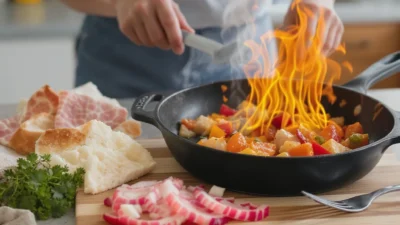
The Fresh Habit: This is the “cook what you feel like tonight” approach. You decide each evening, preheat the oven for two chicken breasts, or boil a small pot of water for pasta for one. It feels spontaneous, but it leads to many partial loads. Your appliance runs through its full, inefficient cycle for a small amount of food, wasting energy on repeated preheating and excess empty space.
The Set-In Habit: This mindset is about design, not deprivation. You plan to cook a large batch of a core ingredient—like roasting a whole tray of vegetables, cooking a big pot of beans, or braising a large cut of meat—specifically to fill your appliance’s optimal capacity. You then portion that output into meals for the week. The appliance runs once at high efficiency, and you leverage that thermal mass (the stored heat in a large amount of food) across multiple meals. This is the essence of smart portioning batch meals for energy saving.
Practical Guide: Portioning for Your Specific Appliances
The key is to find the “sweet spot” for each appliance—the capacity where it operates most efficiently—and build your batch sizes around it. Here’s how to apply portion control for appliances.
Oven & Toaster Oven
Do: Fill the rack. Roast a large sheet pan of vegetables, a whole chicken, or multiple potatoes at once. If your oven has a convection fan, use it; it cooks more evenly and often faster, improving appliance-friendly meal prep.
Don’t: Heat the entire oven for a single small item like a frozen pizza. Use a toaster oven or air fryer for small jobs, as they have a smaller cavity to heat.
Slow Cooker & Instant Pot/Pressure Cooker
Do: Aim to fill the pot between half and two-thirds full. This is typically the recommended range for even cooking and safety. Cook large batches of soups, stews, chili, or pulled meats.
Don’t: Cook a single serving in a 6-quart pot. The large volume of air and small amount of food makes it inefficient. For very small batches, consider a smaller appliance.
Stovetop & Burners
Do: Match your pot to the burner size. A small pot on a large burner wastes heat. Cook large batches of grains, pasta sauce, or sautéed bases (like onions and peppers) to use across multiple meals.
Don’t: Boil a huge pot of water for a single serving of pasta. Use just enough water to cover the pasta, or better yet, cook a larger batch of pasta to use cold in salads or reheated later.
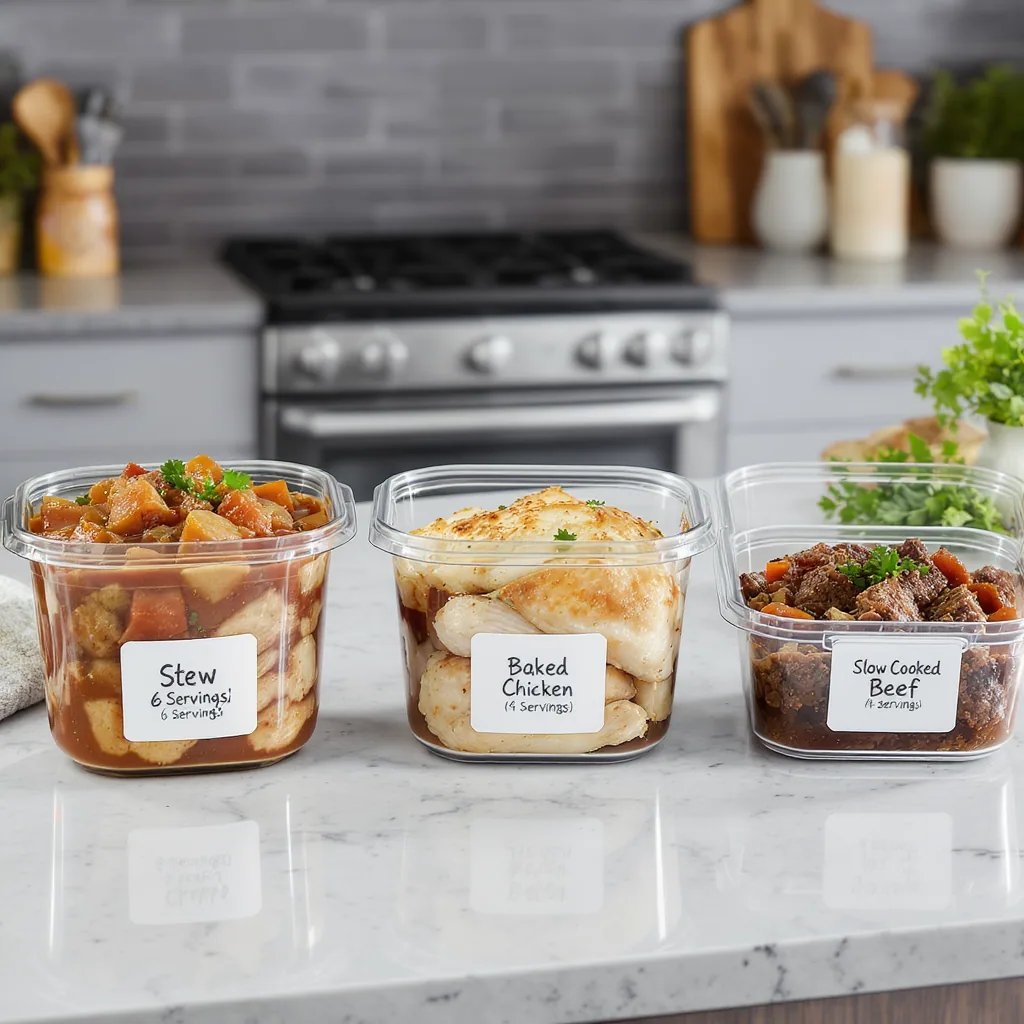
Important: Always cool cooked food quickly before portioning and refrigerating or freezing. Divide large batches into shallow containers for faster, safer cooling.
Building Your Efficient Set-In Habit
Shifting from a Fresh to a Set-In habit doesn’t require a full kitchen overhaul. Start small and focus on consistency.
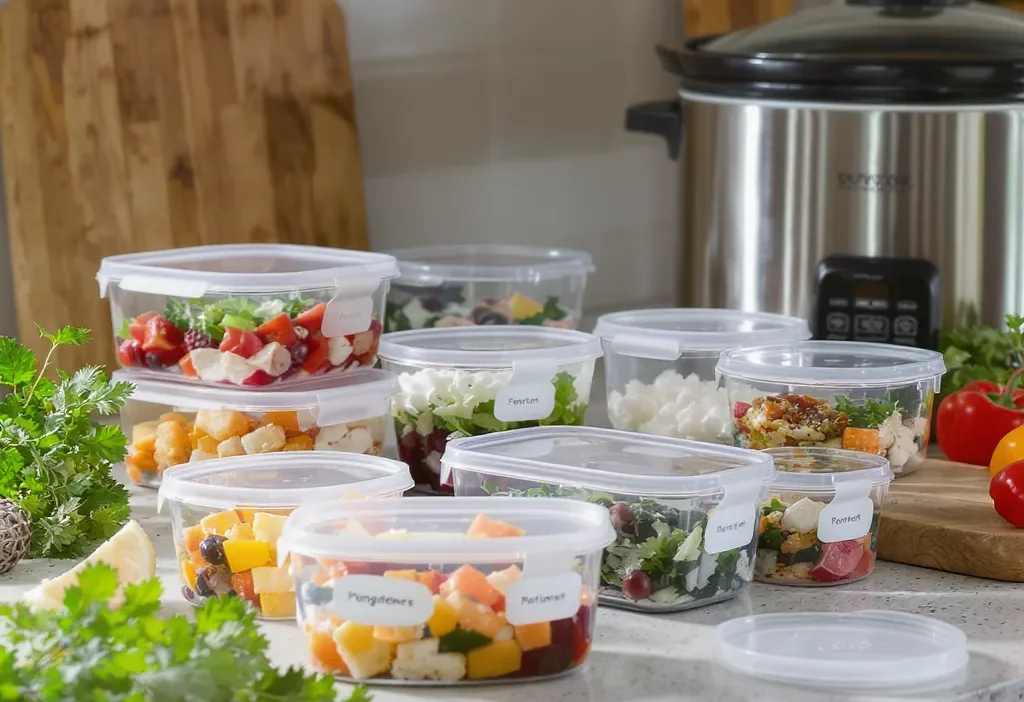
Begin with one appliance and one meal component. For example, commit to roasting two sheet pans of vegetables every Sunday. Once cooked, portion them into containers for easy sides or to add to grain bowls and salads all week. You’ve just optimized your oven’s weekly cycle.
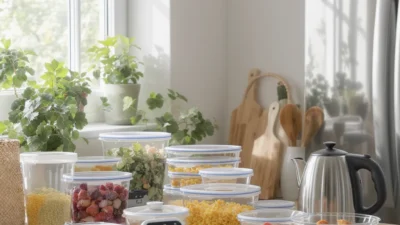
Next, look at your weekly menu. Can two meals use the same cooked protein or grain? Cooking a double batch of rice or quinoa takes virtually no extra time or energy but provides the base for multiple efficient batch meal portions. Finally, invest in good storage. Having a set of uniform containers makes portioning from your large batch intuitive and helps you see exactly what you have ready to eat.
The long-term payoff is twofold: noticeable kitchen appliance energy savings on your bills and a surprising amount of reclaimed time on busy weeknights. The efficiency comes from the smart design of your routine, not from cooking less.
Turn Insight Into Action
The most efficient kitchen isn’t the one with the newest gadgets; it’s the one run with intention. By understanding the cycle efficiency of your appliances and adopting a Set-In habit for cooking in bulk to save energy, you transform batch cooking from a simple storage tactic into a powerful strategy for conservation.
Your decisive next step is simple: before your next grocery shop, audit your planned meals through the lens of “cycle efficiency.” Ask yourself: “Can I group any tasks to run my oven or slow cooker once instead of three times this week?” Start with that one shift. You’ll find that true appliance efficiency is less about restriction and more about working smarter with the tools—and habits—you already have.