Does your kitchen routine feel like a constant battle against the clock, the grocery bill, and that nagging feeling you’re wasting both food and energy? You’re not alone. The typical cycle of cooking, storing, and forgetting leftovers is a triple drain—on your time, your wallet, and your home’s energy use. But what if you could flip the script? The solution isn’t just cooking more or trying harder; it’s cooking smarter with a simple, integrated system. This guide introduces a practical, two-part leftover and batch cooking checklist designed specifically for an energy-smart kitchen. It combines proactive planning to maximize appliance efficiency with a reactive management system to ensure your food is stored safely and reheated wisely. Think of it less as a rigid rulebook and more as your new workflow for saving time, reducing waste, and quietly lowering your energy consumption with every meal you make.
An energy-smart kitchen routine combines proactive batch cooking to consolidate oven and stove time with a reactive leftover management system for safe storage and efficient reheating. The core is a simple two-part checklist that saves you time, reduces food waste, and cuts energy use. This system ensures you cook once to eat multiple times while using your appliances in the most deliberate and economical way possible.
Part 1: Your Proactive Batch Cooking Checklist
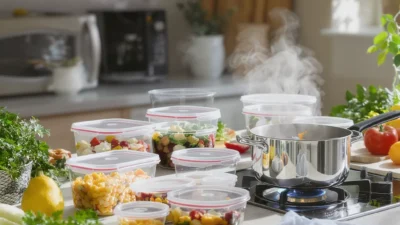
This is your pre-game strategy. The goal here is to consolidate your cooking into one or two highly efficient sessions, minimizing how often you turn on your major appliances. Think of it as a batch cooking workflow designed to get the most out of every minute your oven or stove is on.
1. Strategic Meal Planning
Before you shop or chop, look at your week. Choose 2-3 dishes that can share oven temperature and cook time. For example, roast a tray of vegetables at 400°F while a whole chicken or a pan of meatballs cooks beside it. This single step is the foundation of your energy-saving kitchen routine.
2. Ingredient & Equipment Prep (Mise en Place)
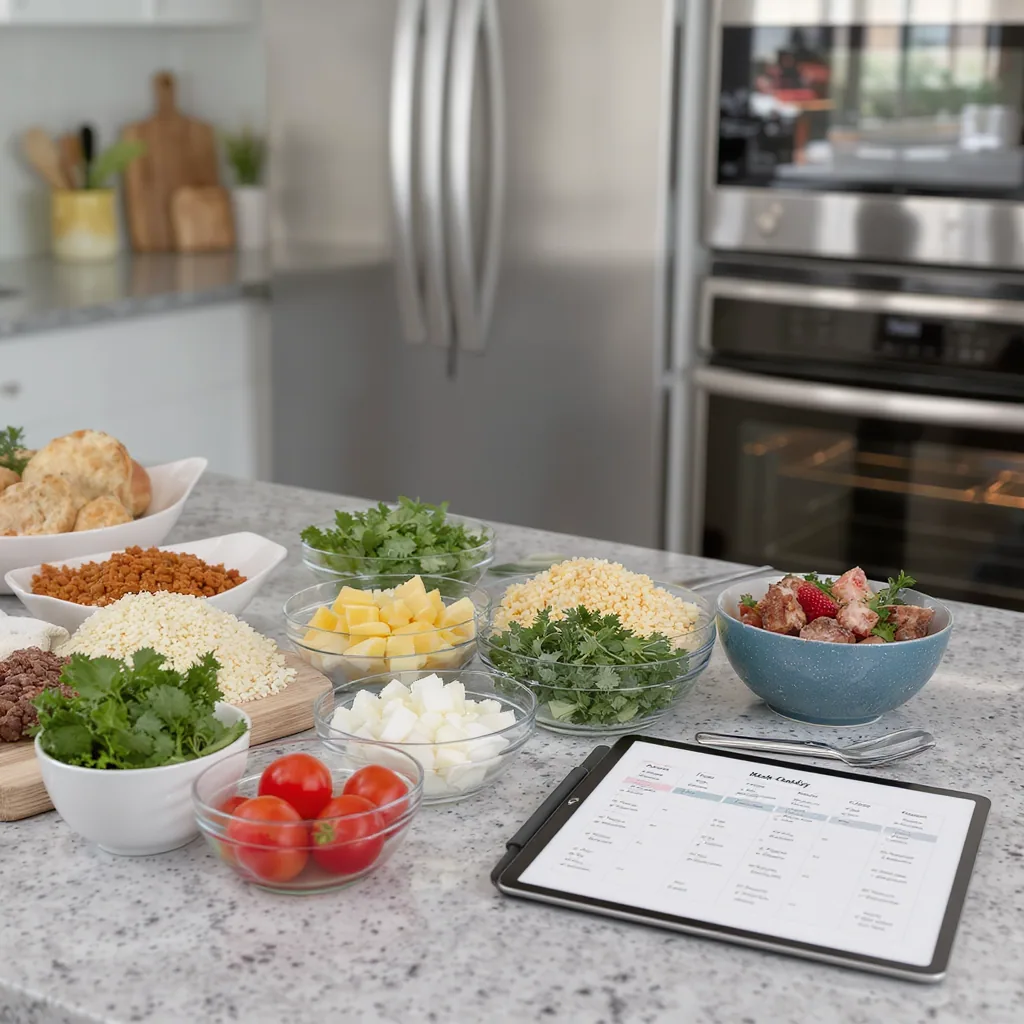
Get everything—chopped veggies, measured spices, cooking oils, baking sheets, pots, and storage containers—ready before you heat a single burner. This “mise en place” prevents your oven from idling at temperature while you scramble to find a lid, wasting energy.
3. Sequential Cooking Order
Start with the item that takes the longest to cook (like a roast or dried beans). While that’s going, use stovetop burners for quicker tasks like sautéing greens or simmering sauces. This overlapping schedule ensures no appliance is waiting on you.
4. The Power-Down Principle
For dishes like rice, pasta, or steamed vegetables, you can often turn off the heat a minute or two before they’re fully done and let them finish cooking in the residual heat with the lid tightly on. This simple habit directly contributes to kitchen energy conservation.
Food Safety Note: Always follow safe cooling practices. The USDA’s FoodKeeper app is a fantastic external resource for specific storage timelines.
Part 2: Your Reactive Leftover Management Checklist
Your brilliant batch cook is done. Now, this system ensures that food gets eaten, not forgotten. This meal prep reheating checklist turns your fridge into a visible, organized menu of ready-to-eat options.
Photo by Robert So on Pexels
Follow this list in order, right after cooking:
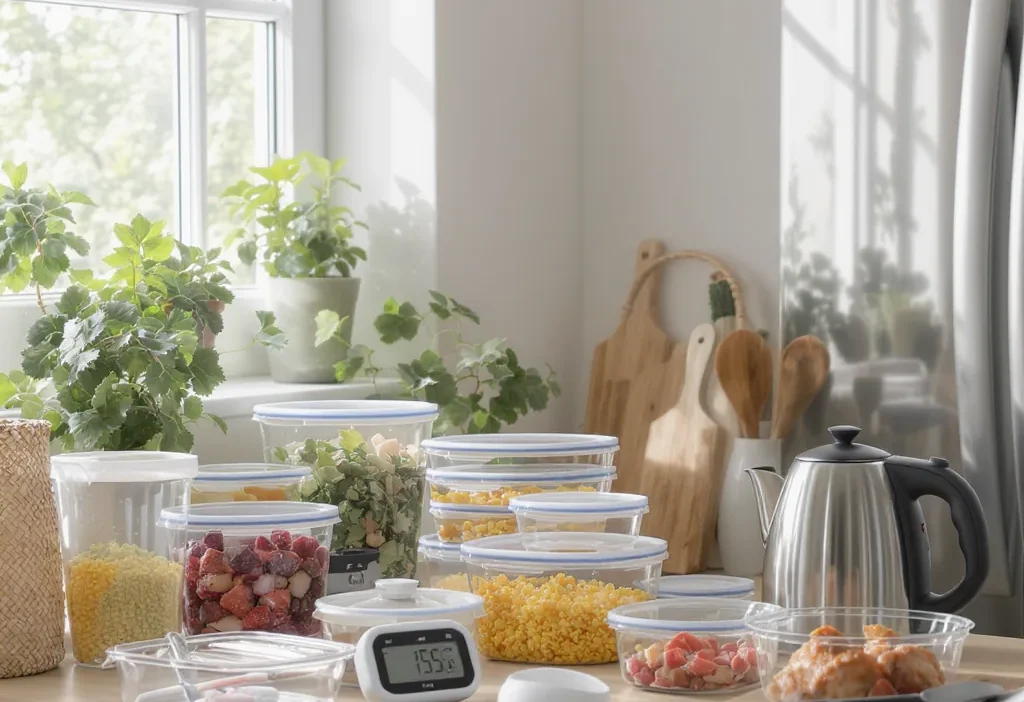
- The 2-Hour Cool & Portion Rule: Let food cool on the counter (uncovered) for no more than two hours to prevent bacterial growth. Then, portion it into single or double-serving containers. Small portions cool faster and reheat more efficiently later.
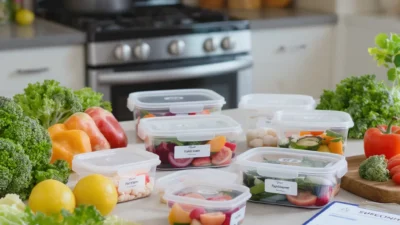
- Label for “Eat First” Priority: Use a piece of masking tape and a marker. Write the dish name and the date it was cooked. This kills “mystery container” syndrome and helps you rotate stock, reducing food waste.
- Strategic Fridge/Freezer Organization: Designate a specific, highly visible shelf or bin for “Ready-to-Eat” leftovers. Place newest items behind older ones. This visual system makes choosing a meal effortless.
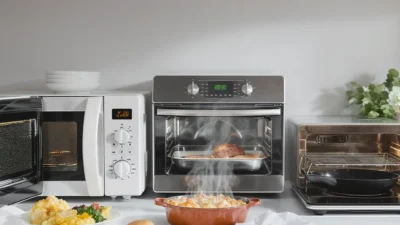
- Reheating Smart: Match the appliance to the portion. Use the microwave, toaster oven, or air fryer for single servings instead of firing up the full-size oven. These smaller appliances use significantly less energy for small tasks, completing your efficient reheating guide.
Common Energy (& Food) Mistakes to Avoid
Even with the best checklist, a few common pitfalls can undermine your savings. Here’s what to watch for.
Don’t: Overstuff your fridge or freezer. Blocked air vents force the compressor to work harder, spiking energy use.
Do: Leave space for air to circulate around items.
Don’t: Reheat a single serving of pasta in a 350°F oven for 20 minutes.
Do: Use a microwave or stovetop with a splash of water for a quick, energy-smart warm-up.
Don’t: Put a large, steaming-hot pot of soup directly into the fridge. It raises the internal temperature, making the appliance work overtime.
Do: Cool it quickly in a shallow container or an ice bath first, then store.
Don’t: Cook or reheat without a lid on your pots and pans.
Do: Always use a lid to trap heat, which significantly reduces cooking time and energy needed.
Don’t: Rely on memory for what’s in the back of the fridge.
Do: Label everything. An unlabeled container is often a wasted container.
Building Your Energy-Smart Kitchen Habit
A tool is only as good as the habit that wields it. The transition from a sporadic effort to a seamless energy-smart kitchen routine is about small, consistent actions.
Start by printing or writing out the two-part checklist and sticking it on your fridge. Before you shop, glance at Part 1. After you cook, run through Part 2. Once a week, do a quick “leftover audit” while making your grocery list to see what needs eating first.
If this feels like a lot, just start with one thing. Maybe this week, you batch-cook a big pot of quinoa and a tray of roasted veggies (Part 1), and you commit to labeling and storing them properly (Part 2). That’s a win. The reward is less time thinking about food, less waste going in the bin, and a lower energy bill—a triple win that makes the habit stick.
Your Kitchen, Smarter and Simpler
An energy-smart kitchen routine isn’t about perfection or spending your Sunday chained to the stove. It’s about working with a bit of strategy so your kitchen works for you, saving you time and money while reducing waste. This leftover and batch cooking checklist energy smart system is your blueprint.
The real goal is progress, not perfection. If you only remember to label your containers this week, you’ve moved the needle. If you reheat your lunch in the toaster oven instead of the big oven once, that’s a success. Each small step builds a more efficient, less stressful kitchen rhythm. Start with one part of the checklist this week and feel the difference it makes.