That quick peek to check on your cake or roast feels harmless, almost instinctual. But what if that single, seemingly innocent act is the very thing sabotaging your dinner? The truth is, opening the oven door is one of the most disruptive things you can do during the cooking process. It’s not just about letting heat escape; it’s about triggering a cascade of events that forces your oven into a frantic recovery mode, wastes a surprising amount of energy, and can lead to uneven, disappointing results. This article isn’t here to scold you for peeking—we’ve all done it—but to provide a practical playbook. We’ll break down the simple science behind oven heat loss while baking and, more importantly, equip you with smarter, safer routines to check your food with confidence, leaving the guesswork (and the cold drafts) behind.
Opening the oven door causes a massive, immediate loss of heat, dropping the internal temperature by 25-50°F or more. This forces your oven to work overtime to recover, which disrupts cooking, wastes energy, and can lead to uneven results. The solution is to break the habit and adopt visual and tool-based methods: use your oven’s light and window for visual cues, rely on a kitchen timer for doneness estimates, and trust an instant-read thermometer for precise checks on meats and baked goods.
The Physics of a Peek: Why Your Oven Hates an Open Door
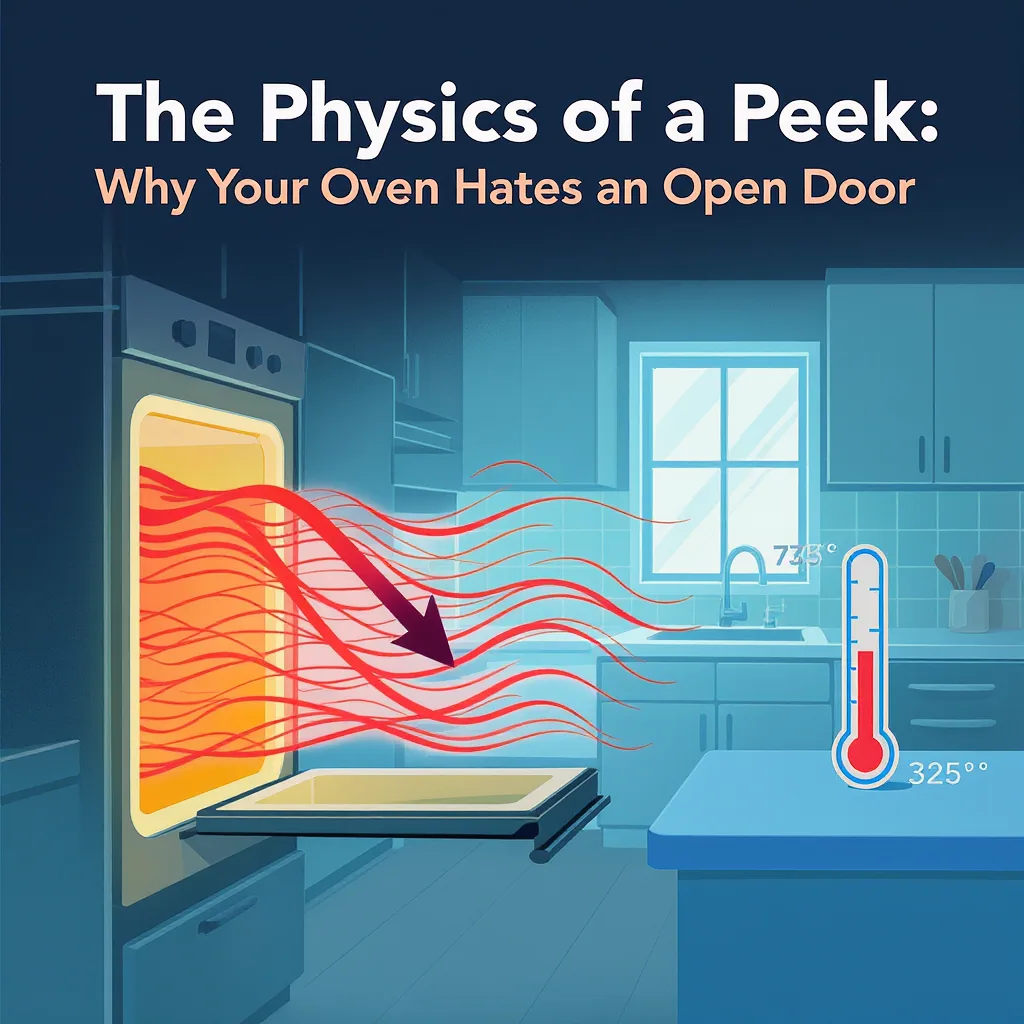
Think of your preheated oven as a sealed, hot box. The air inside is much hotter than your kitchen air, and it’s constantly moving in a convection current, circulating heat around your food. When you open the door, you break that seal. In an instant, that hot, buoyant air rushes upward and out into the cooler room, while denser, cooler air floods in to take its place.
This isn’t a minor change. Studies and appliance tests show that opening the oven door can cause an immediate temperature drop of 25°F to 50°F or more, depending on your oven and how long you leave it open. Your oven’s thermostat then detects this massive oven heat loss while baking and signals the heating element to kick into overdrive to recover. This recovery period isn’t instant; it can take several minutes for the temperature to climb back to your set point, all while your food sits in a suddenly cooler environment.
Modern ovens are better insulated than older models, but they are still vulnerable to this effect. Every time you peek, you’re not just letting heat escape; you’re forcing the appliance to consume extra energy to reheat the cavity, which is the core of opening oven door energy loss. It’s an inefficient cycle that directly impacts your cooking results.
The Real-World Consequences: What Happens to Your Food
That sudden temperature drop and slow recovery don’t just waste energy—they actively work against your culinary goals. Different foods react in specific, often disappointing ways.
For delicate baked goods like soufflés, cakes, and bread, the rush of cool air can be catastrophic. The structure, which relies on steady heat to set, can collapse. Cookies may spread too much or bake unevenly. For meats and roasts, the extended cooking time needed for the oven to recover can lead to dryness, as moisture continues to evaporate without the exterior properly browning or the interior reaching the safe temperature efficiently. Custards and cheesecakes, which depend on gentle, even heat to set without curdling, can crack or become grainy.
In short, frequent peeking turns a controlled cooking environment into a volatile one. You’re not just adding a few minutes to the clock; you’re altering the fundamental physics of the recipe, often leading to underwhelming texture, appearance, and flavor.
Your Safer Checking Protocol: A Step-by-Step Playbook
Breaking the door-peeking habit requires a new routine. This protocol replaces guesswork and anxiety with clear, effective actions that let you check food without heat loss.
1. The Pre-Cook Setup (Your Safety Net)
Before you even turn on the oven, set yourself up for success. Clean the oven window so you can see inside clearly. Ensure the interior light is working. Place an oven-safe thermometer inside to verify the actual temperature matches your dial or digital setting. Finally, set a kitchen timer based on the recipe’s minimum suggested cook time. This prep eliminates the first excuse to open the door: “I just want to see if it’s started.”
2. The “Look, Don’t Touch” Rule
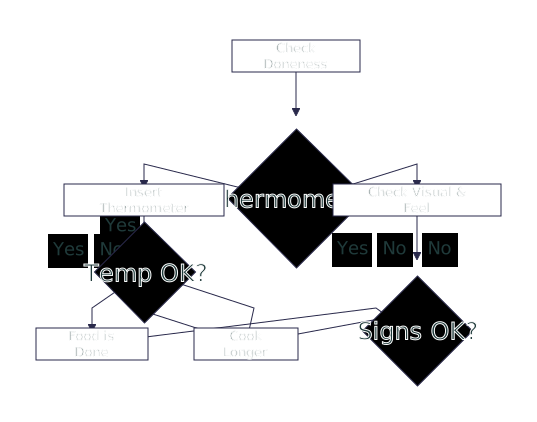
When the timer goes off, your first move is not to grab the handle. Instead, turn on the oven light and look through the window. For many foods—like casseroles, roasted vegetables, or baked pasta—you can assess browning, bubbling, and overall progress perfectly well from the outside. This is your zero-impact check.
3. The Trusted Probe (For Doneness, Not Guesswork)
If visual cues aren’t enough (e.g., for a whole chicken or a meatloaf), use an instant-read thermometer. Carefully open the oven door just enough to insert the probe, close it immediately, and read the temperature. This 3-second intrusion minimizes heat loss compared to a long, curious stare. For baked goods like cakes, the classic toothpick test falls here—make it quick and purposeful.
4. The Strategic, Minimized Peek (Last Resort)
If you absolutely must visually inspect something the window obscures (like the bottom of a pizza), plan for a single, decisive check near the end of the estimated cook time. Open the door as little as possible, for no more than 5-10 seconds, perform your check, and close it firmly. One planned peek is far better than several anxious ones.
Common Door-Peeking Pitfalls (And How to Avoid Them)
Old habits die hard. Here are the frequent missteps that lead to unnecessary oven door heat loss and how to correct them.
DON’T open the oven “to see if it’s done” before the minimum cook time has passed. DO trust your timer and use the window light first.
DON’T assume a recipe’s time is absolute. Ovens vary. DO treat recipe times as a guide and rely on visual cues and internal temperature for the final verdict.
DON’T open the door to “add a little more time” if something looks underdone. DO close the door and let the consistent heat work. Peeking resets the recovery clock.
DON’T crowd the oven window or block the vent. DO keep the area clear so you can see and ensure proper air circulation for even cooking.
DON’T rely on guesswork for proteins. DO invest in a good instant-read thermometer. It’s the only way to know for sure if food is safely and perfectly cooked, eliminating the need for multiple checks.
Upgrade Your Kitchen Intuition
Shifting from door-peeking to strategic checking is more than a energy-saving tip; it’s an upgrade to your fundamental cooking process. By understanding the science of heat loss and adopting a simple protocol, you move from reactive guessing to confident control. Your food will cook more evenly, your recipes will become more reliable, and you’ll save a noticeable amount of energy over time. Break the peek habit not with willpower, but with a better system. Trust your tools, trust the process, and let your oven do its job in a stable, efficient environment.
For a plain-language explanation, see Lid On vs Lid Off Cooking.