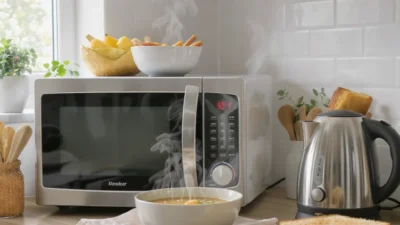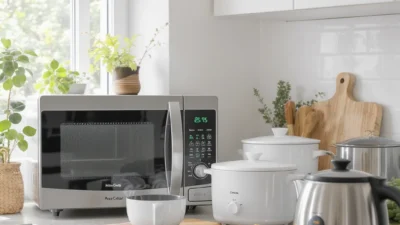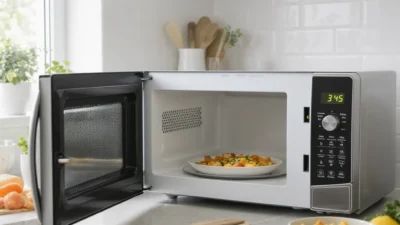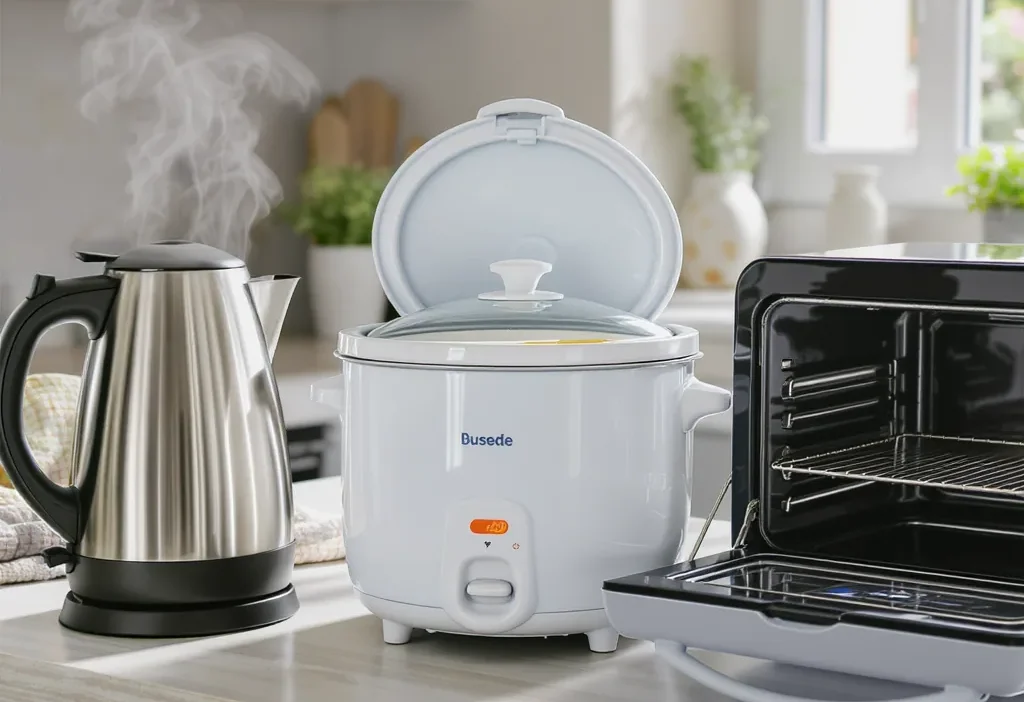
That comforting click of the kettle, the warm glow of the toaster oven, the steady light of your rice cooker—these small kitchen heroes make our daily routines effortless. But here’s the quiet truth many of us miss: their collective hum adds up to a surprisingly large portion of your home’s energy bill. The myth is that “small appliance” automatically means “small energy use,” but the reality is that misuse and simple habits can turn these efficient tools into silent energy drains. Understanding small appliance efficiency for kettles, rice cookers, and toaster ovens isn’t about giving up convenience; it’s about using smarter techniques that save you money, reduce your environmental footprint, and even help your appliances last longer. Let’s start by busting the biggest misconception and then get into the practical, actionable steps for each of these common countertop staples.
True small appliance efficiency is achieved by using the right tool for the job, leveraging their intelligent features like auto-shutoff, and performing simple maintenance. The biggest savings come from avoiding the misuse of large, energy-hungry appliances for small tasks—like using a toaster oven instead of a full-size oven for a single serving. For kettles, boil only the water you need; for rice cookers, be mindful of the extended “keep-warm” function; and for toaster ovens, let them handle anything that fits on the tray. Efficiency is as much about your behavior as it is about the technology.
The Big Myth: “Small” Appliance Means Small Energy Use
Let’s start by busting the biggest myth about small appliance efficiency. It’s easy to think that because these gadgets are compact and quick, their energy draw is trivial. The truth is more nuanced. While a single boil or toast session uses less energy than running your air conditioner, the cumulative effect of daily use—and, more importantly, misuse—can add up to a real chunk of your utility bill.
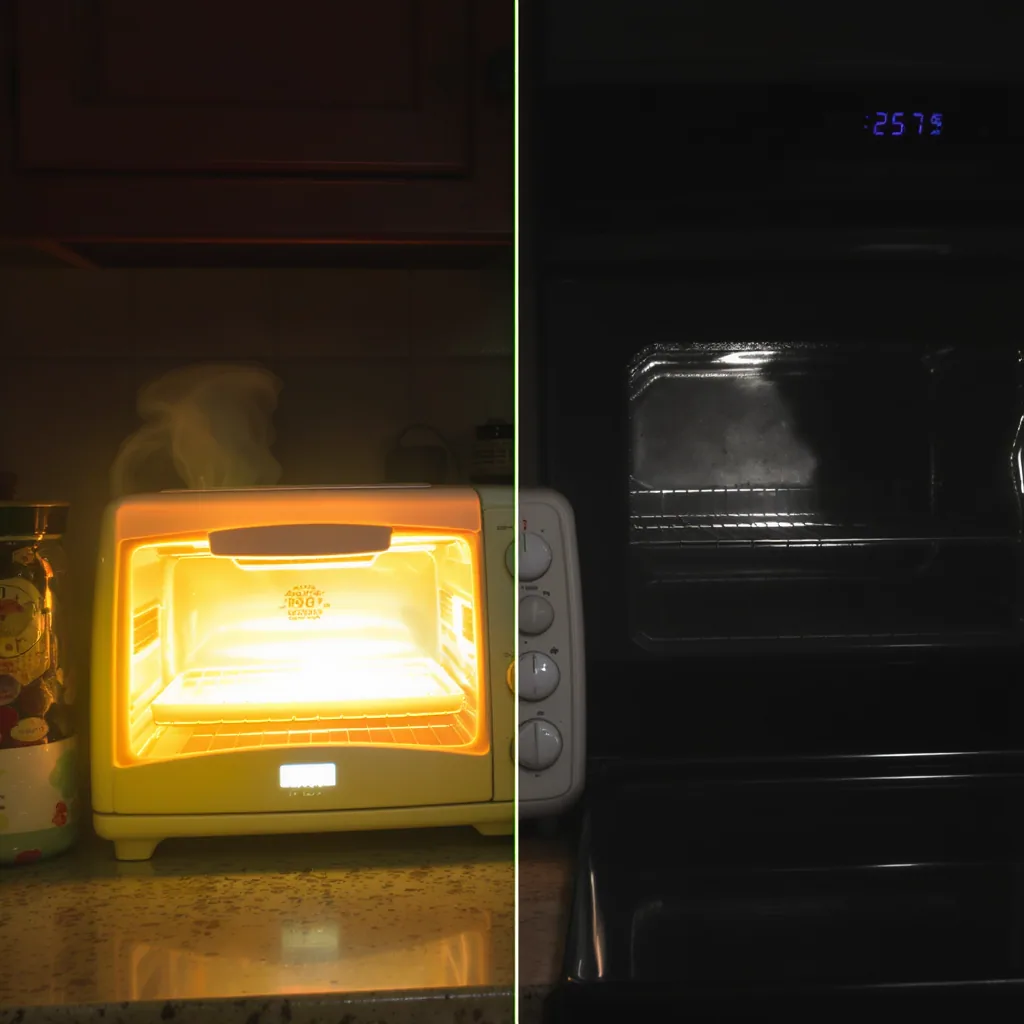
The key concept is task appropriateness. A toaster oven might draw 1200-1800 watts, which sounds high, but it’s heating a tiny, insulated space for a short time. A full-size oven drawing 2400-5000 watts must heat a cavernous chamber, often for much longer. For a small task like reheating leftovers or baking a single potato, the toaster oven can use half the energy or less. The same logic applies to boiling water: an electric kettle is typically faster and more focused than a stovetop burner, which loses much of its heat to the surrounding air. The myth isn’t that they use energy; it’s that we don’t consider the far less efficient alternative we often use by default.
For general data on how appliances compare, resources like Energy Star’s appliance guides are a great reference. True efficiency for your kettle, rice cooker, and toaster oven starts with choosing the right tool for the job, every time.
Electric Kettle Efficiency: Boiling Smarter, Not Harder
Your electric kettle is a champion of focused energy use, but a few bad habits can undermine its electric kettle power consumption advantage. The goal is to get the hot water you need with minimal waste.
Dos and Don’ts for Kettle Efficiency
Do:
- Boil only what you need. This is the single biggest saver. If you’re making one cup of tea, fill the cup first and pour that water into the kettle. Modern kettles have minimum fill lines, but going far above your needs wastes electricity heating water you’ll just let cool down.
- Descale regularly. Mineral scale (limescale) buildup acts as an insulator on the heating element. A scaled kettle takes longer to boil, using more energy. If you hear a loud, rumbling “kettling” sound, that’s scale. A monthly descale with vinegar or citric acid keeps it running like new.
- Consider a gooseneck for precision. If you’re a pour-over coffee enthusiast, a gooseneck kettle lets you measure and pour water more accurately, reducing the chance of overfilling.
Don’t:
- Re-boil water multiple times. While the energy difference for one re-boil is minor, constantly boiling a full kettle, letting it cool, and boiling it again is inefficient. Fresh, cold water also contains more dissolved oxygen, which some say makes better-tasting tea.
- Ignore maintenance. Beyond descaling, ensure the vents are clear and the lid seals properly to retain heat during the boil cycle.
Rice Cooker Secrets: Beyond the ‘Cook’ Button
Rice cookers are marvels of efficient, set-and-forget cooking. They use a thermostat to precisely apply heat until water is absorbed, then automatically switch to a low-power “keep-warm” mode. But this very feature is where most waste happens. Mastering rice cooker energy saving tips turns it from a single-task unit into a kitchen powerhouse.
The “keep-warm” function is fantastic for keeping rice ready for an hour or two. However, it typically draws 30-50 watts continuously. Leaving it on overnight can use nearly as much energy as the initial cook cycle. Make it a habit to turn it off and store leftover rice in the fridge once mealtime is over.
Maximize Your Single Energy Input
Your rice cooker’s real efficiency secret is its ability to cook an entire meal with one cycle. Don’t just cook plain rice on the bottom.
- Use the steamer tray. While rice cooks below, steam vegetables, fish, or dumplings above. You get two dishes for the price of one energy input.
- Try one-pot meals. Many models can handle dishes like jambalaya, congee, or pilaf where ingredients cook together with the rice.
- Batch cook. Making a larger quantity of rice for use over 2-3 days is more efficient than running the cooker daily for small amounts. Cool and store it properly after cooking.
Toaster Oven vs. Big Oven: Your Efficiency Decision Filter
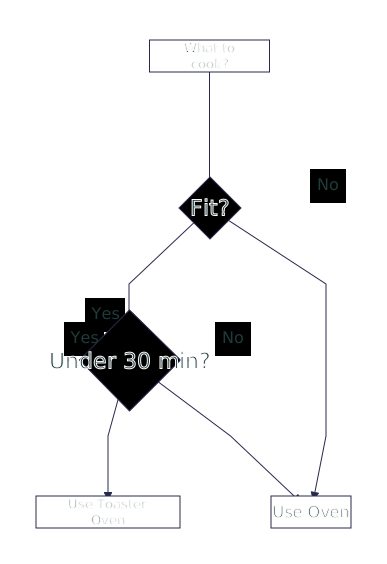
This is your daily decision point for toaster oven efficiency cooking. Using the right oven is not about capability—your big oven can do everything—it’s about energy proportionality. Here’s a simple filter to apply before you preheat anything.
Use the Toaster Oven IF:
- The food fits comfortably on the toaster oven tray without touching the walls or heating elements.
- The cook time is under 30-40 minutes.
- You are reheating, toasting, baking small items, or melting cheese.
- You don’t need to broil a large surface area (like a full steak).
Use the Conventional Oven IF:
- You’re cooking a large roast, a whole chicken, or a big casserole dish.
- You need to bake multiple sheets of cookies or trays of vegetables at once.
- The recipe requires very high, consistent heat (e.g., for artisan bread or pizza).
Also, look for features that aid efficiency: a convection fan circulates heat, cooking food faster and more evenly at a slightly lower temperature. Good insulation (a door that stays cool) and an accurate thermostat prevent energy-wasting temperature swings.
Maintenance & Habits: The Unseen Efficiency Boosters
The final layer of small appliance efficiency has nothing to do with which button you press and everything to do with care and awareness. A clean, well-maintained appliance doesn’t have to work as hard, and good habits prevent silent energy drains.
First, keep them clean. For the toaster oven, regularly wipe out crumbs and grease from the interior and off the heating elements. Buildup can cause hot spots and longer preheat times. Ensure the door seal is tight; if heat is leaking out, the thermostat will cycle the elements on more often. For kettles and rice cookers, descaling and wiping the inner pot clean ensure optimal heat transfer.
Second, be mindful of “phantom load.” Many appliances, even when off, draw a tiny amount of power to run clocks, lights, or standby electronics. If you have a power strip for your countertop appliances, flipping it off when you leave for the day is a simple, effective habit. It also enhances safety. Finally, always plug high-wattage appliances like toaster ovens directly into a wall outlet, not an extension cord, to prevent resistance and potential overheating.
Your Next Step Towards a More Efficient Kitchen
Improving your small appliance efficiency isn’t about buying the latest gadget or making drastic lifestyle changes. It’s about the small, conscious choices that become second nature. The knowledge you have now—matching the appliance to the task, using features wisely, and keeping things clean—is all you need to start saving.
So here’s your immediate, actionable challenge: Tonight, when you make dinner, consciously choose the toaster oven over the big oven for your side dish. That one decision puts every principle here into practice. You’ll save energy, likely save time, and prove to yourself that an efficient kitchen is simply a smarter, more intentional one. The cumulative effect of these choices, over weeks and months, is where you’ll see the real difference on your energy bill and in your environmental footprint.
True efficiency for kettles, rice cookers, and toaster ovens starts by debunking the myth that their size means negligible energy use. The core principle is task appropriateness: using the smaller, focused appliance instead of a large, energy-hungry one whenever possible. Key takeaways include boiling only the water you need in your kettle, limiting the rice cooker’s “keep-warm” function to a few hours, and using a simple decision filter to choose a toaster oven for small, quick jobs. Finally, regular cleaning and mindful habits, like unplugging appliances, are the unseen boosters that keep everything running at its best. Efficiency is less about the technology and more about intelligent, everyday use.